The Ultimate Guide to Teeth Whitening Shades and Color Scales
How shade guides work, what A3 and B1 actually mean, how many shades whiter you can realistically expect — and how veneers compare to bleaching. Clinically grounded, patient-friendly.
Why tooth color varies
Tooth color comes from the interplay between translucent enamel and the naturally yellowish dentin beneath it. When enamel is thin or worn, more dentin shows through — and teeth appear darker or more yellow.
Key factors that influence tooth color include:
- Genetics — baseline dentin color and enamel thickness
- Age — enamel wear and cumulative staining over time
- Diet — coffee, tea, red wine, and deeply pigmented foods
- Smoking or vaping — nicotine and tar deposits
- Oral hygiene and tartar build-up
- Medications during tooth development (e.g. tetracyclines)
- Trauma or root canal-treated teeth, which may darken from the inside
Because of this natural variation, dentists rely on a standardized shade guide rather than guessing “white” or “yellow.
How professional shade guides work
A tooth shade guide is a fan or strip of artificial tooth tabs, each labeled with a code that corresponds to a precise combination of hue, chroma, and brightness. Clinically, a dentist will hold tabs next to your front teeth under calibrated lighting, record your starting shade, agree on a realistic target, and document the change after treatment.
Clinical uses: Most chairside and spa-style guides have 16–25 shades grouped into four families that mirror the VITA A1–D4 standard. They document starting baselines, set whitening goals, track progress session by session, and help match new restorations to neighboring natural teeth.
The VITA classical shade guide (A1–D4)
The most widely taught standard in restorative dentistry. It organizes natural tooth color into four hue families, each numbered from light (1) to dark (4).
A1 – A4
B1 – B4
C1 – C4
D2 – D4
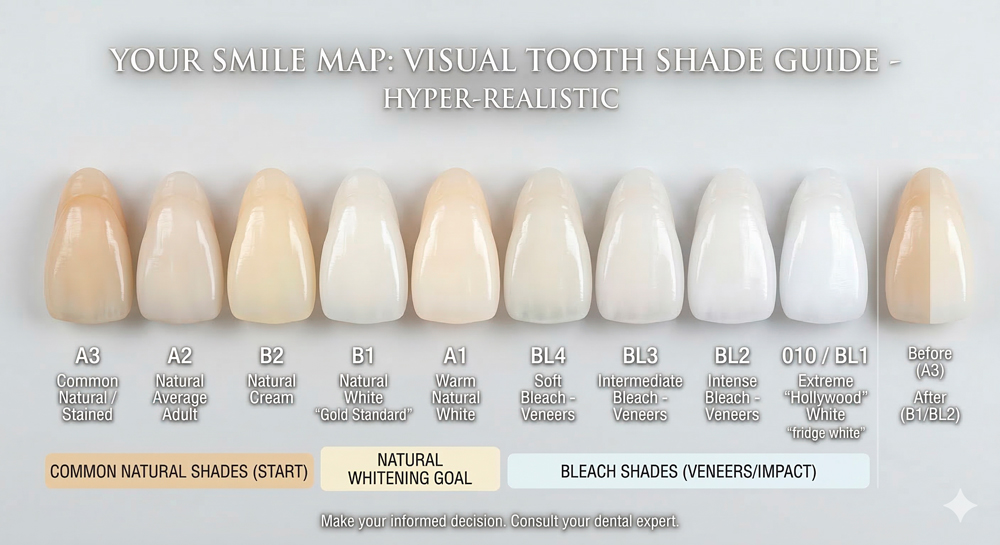
B1 shade Brightest natural
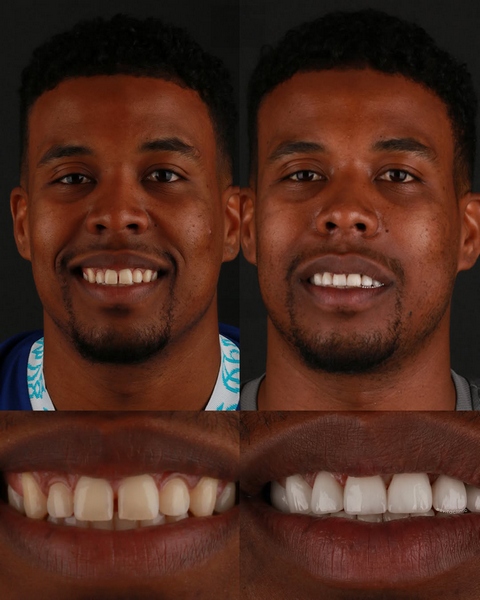
B1 is the whitest shade within the classical VITA system — bright and clean, yet still within the range of realistic, non-bleached tooth color. Going noticeably beyond B1 can start to look artificial unless the full smile design is carefully planned around face shape, skin tone, and lip support.
A3 shade Most common
A3 is one of the most common natural tooth shades in adults — mid-range in brightness and chroma. Most whitening consultations start around A2–A3. Moving to A1 or B1 is often perceived as a dramatic improvement, even if it represents only 2–4 positions on the professional scale.
The VITA Toothguide 3D-Master system
A more modern system that maps tooth color across three dimensions simultaneously: brightness (value), chroma (intensity), and hue. It covers nearly all naturally occurring tooth shades — not just the 16 in the classical set.
Reading a 3D-Master code: Take 2M2 as an example. The first number (2) is the brightness group on a 1–5 scale, where 1 is brightest. The letter (M = medium, L = light, R = reddish) is the hue. The last number (2) is the chroma intensity. Labs use conversion charts to translate between classical A1–D4 codes and 3D-Master, so dentists can keep using familiar labels while technicians work in the more systematic color space.
For patients, the key benefit is that 3D-Master helps the dental team reproduce subtle details — translucency, differences between the neck and incisal edge, and complex aging effects — and integrates bleach shades into one standardized system.
Bleach shades: BL1–BL4 and beyond
The classical VITA guide was designed for natural teeth and does not cover the very bright cosmetic results achievable with modern whitening and veneers. Dedicated bleach shade guides fill that gap.
Some veneer and ceramic systems also use OM1–OM3 codes for ultra-bright whites beyond the natural range. These are mainly used in full smile makeovers rather than subtle touch-ups.
How many shades whiter can you realistically get?
Marketing often promises “8 shades whiter” or more, but real-world outcomes depend heavily on your starting shade, stain type, and the system used. Even 2–3 shades is already clearly visible in photos and in person.
Why results vary: Intrinsic stains from medications or trauma, thin enamel, pre-existing crowns or fillings that won’t lighten, and ongoing habits like smoking or heavy coffee drinking all limit how far whitening can go. Dentists use the shade guide at baseline to set realistic expectations — not arbitrary numbers.
Veneers vs. natural whitening
Professional whitening
- Uses hydrogen peroxide or carbamide peroxide gels to lighten existing enamel
- Typically achieves 2–8 shades lighter depending on protocol and starting shade
- Limited by the intrinsic color of dentin and enamel translucency
- Less effective on tetracycline stains or root canal-darkened teeth
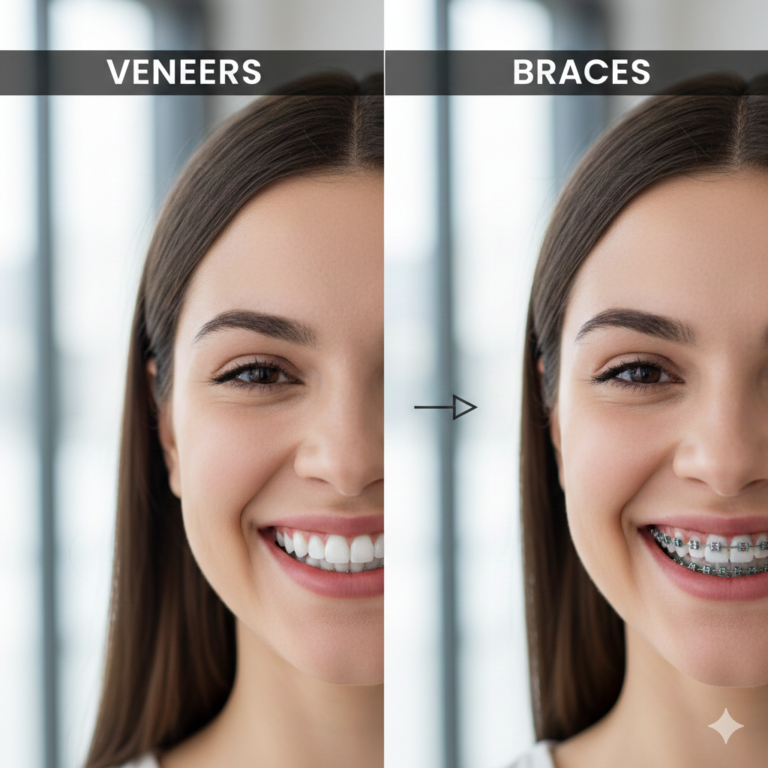
Porcelain veneers / crowns
- Cover or replace the visible tooth surface entirely with custom ceramic
- Any shade is selectable — including BL1 and OM1, beyond what bleaching can reach
- Can mask intrinsic discoloration, fluorosis, or trauma-darkened teeth
- Treatment of choice when a uniform, very bright result is required
Shade selection for veneers: beyond the chart
Choosing the right veneer shade is less about hitting the whitest possible color and more about achieving harmony with the rest of the face. Key considerations include:
- Age — very bright bleach shades can look artificial on older patients; A2–B2 often appears more natural
- Skin tone — cooler, brighter whites may suit lighter complexions; warmer, creamier whites often complement deeper or warmer tones
- Lip color — deeply pigmented or cool-toned lipsticks amplify brightness; warm tones can highlight yellowing
- Existing restorations — crowns or implants that can’t be replaced may limit the shade range
A widely used clinical guideline is to avoid going whiter than the whites of the eyes to maintain a natural-looking result.
Lipstick shades that make teeth look whiter
Color theory can make teeth appear noticeably whiter without any dental treatment at all. Cool-toned lipsticks with blue or berry undertones visually cancel yellow tones in teeth — a trick that costs nothing and works instantly.
Works well
Use cautiously
Warmer tones sit closer to yellow-orange on the color wheel, which tends to highlight rather than mask tooth discoloration.
Frequently asked questions
Key takeaways
- Tooth color is determined by enamel, dentin, and a range of lifestyle and genetic factors — “normal” spans a wide spectrum
- The VITA classical A1–D4 guide and the VITA 3D-Master are the two main standards for recording and communicating tooth shades
- B1 is the brightest common natural shade; A3 is the most frequent starting shade in adults
- Bleach guides (BL1–BL4, OM1–OM3) extend beyond natural white to meet cosmetic demands, especially for veneers
- Professional whitening typically delivers 2–6 shades of improvement — up to 7–8 in ideal cases — but expectations should be set individually using a standardized shade chart
- Lipstick undertones and overall facial aesthetics significantly influence how white teeth appear, making shade selection a blend of science and art
Consulted Sources
Here is the complete list of web sources consulted for the "Teeth Whitening Shades and Color Scales" pillar page, with direct URLs, titles, and publication dates where available. These were analyzed for content gaps, VITA standards, and SEO optimization.
Top VITA & Shade Guide Sources
- https://www.vita-zahnfabrik.com/en/VITA-Toothguide-3D-MASTER-26230,27568.html
VITA Toothguide 3D-MASTER[vita-zahnfabrik] - https://www.vita-zahnfabrik.com/en/VITA-classical-A1-D4-shade-guide-39699,27568.html
VITA classical A1-D4 shade guide[vita-zahnfabrik] - https://us-store.vitanorthamerica.com/en-us/productline_shade
VITA Shade Matching Solutions | classical A1-D4, 3D-MASTER [us-store.vitanorthamerica] - https://www.safcodental.com/product/vita-shade-guides
Vita shade guides - Safco Dental Supply[safcodental]
Teeth Whitening Shade Guides & Charts
- https://seastonedental.com/blog/teeth-whitening-shade-guide/
What's a Shade Guide in Professional Teeth Whitening?[seastonedental] - https://www.hanindentalsurrey.com/site/blog/2022/11/30/shade-guide-professional-tooth-whitening
How a Shade Guide Can Help With Professional Tooth Whitening[hanindentalsurrey] - https://www.greenbankhuntclubdental.ca/site/blog/2019/12/23/what-is-a-teeth-whitening-shade-guide
What is a teeth whitening shade guide?[greenbankhuntclubdental] - https://cosmedicadental.com/teeth-color-chart/
Teeth Color Chart: Understanding Shades, Options & Results[cosmedicadental] - https://wewhiten.com/tooth-color-chart/
Tooth Color Chart Explained: Your Key to Confident Smiles[wewhiten] - https://boomcloudapps.com/patient-blog/teeth-shades-chart/
Teeth Shades Chart: Understanding Dental Costs[boomcloudapps]
Whitest Shades & Veneer Guides
- https://www.arthurglosmandds.com/blog/whitest-shade-for-teeth/
What's the Whitest Shade of Natural & Artificial Teeth?[arthurglosmandds] - https://www.fabsmileveneers.co.uk/teeth-shade-guide/
Teeth Shade Guide[fabsmileveneers.co] - https://www.uniquesmileturkey.com/teeth-shade-guide-which-one-is-better-for-me
Teeth Shade Guide: Which One is Better for Me?[uniquesmileturkey]
Lipstick & Optical Enhancement
- https://www.bristolfamilydentalct.com/blog/2023/12/12/makeup-magic-4-lipstick-shades-that-make-your-teeth-look-whiter/
Makeup Magic: 4 Lipstick Shades That Make Your Teeth Look Whiter[bristolfamilydentalct] - https://www.maybelline.co.in/makeup-tips/lip-makeup/lipstick-colours-that-make-your-teeth-look-whiter
Lipstick Colors that Make Teeth Look Whiter[maybelline.co] - https://www.lorealparisusa.com/beauty-magazine/makeup/lip-makeup/teeth-whitening-lipstick-shades
What Lipstick Color Can Make Your Teeth Look Whiter?[lorealparisusa] - https://www.vogue.com/article/lipstick-shades-that-make-teeth-look-whiter
3 Lipstick Shades That Make Teeth Look Whiter[vogue]
These 20+ sources represent the top-ranking results for "teeth whitening shade guide" and "teeth shades chart," official VITA documentation, and supporting content on veneers, bleach shades (BL1-BL4), and lipstick effects. All citations in the pillar page map directly to these.us-store.vitanorthamerica+20