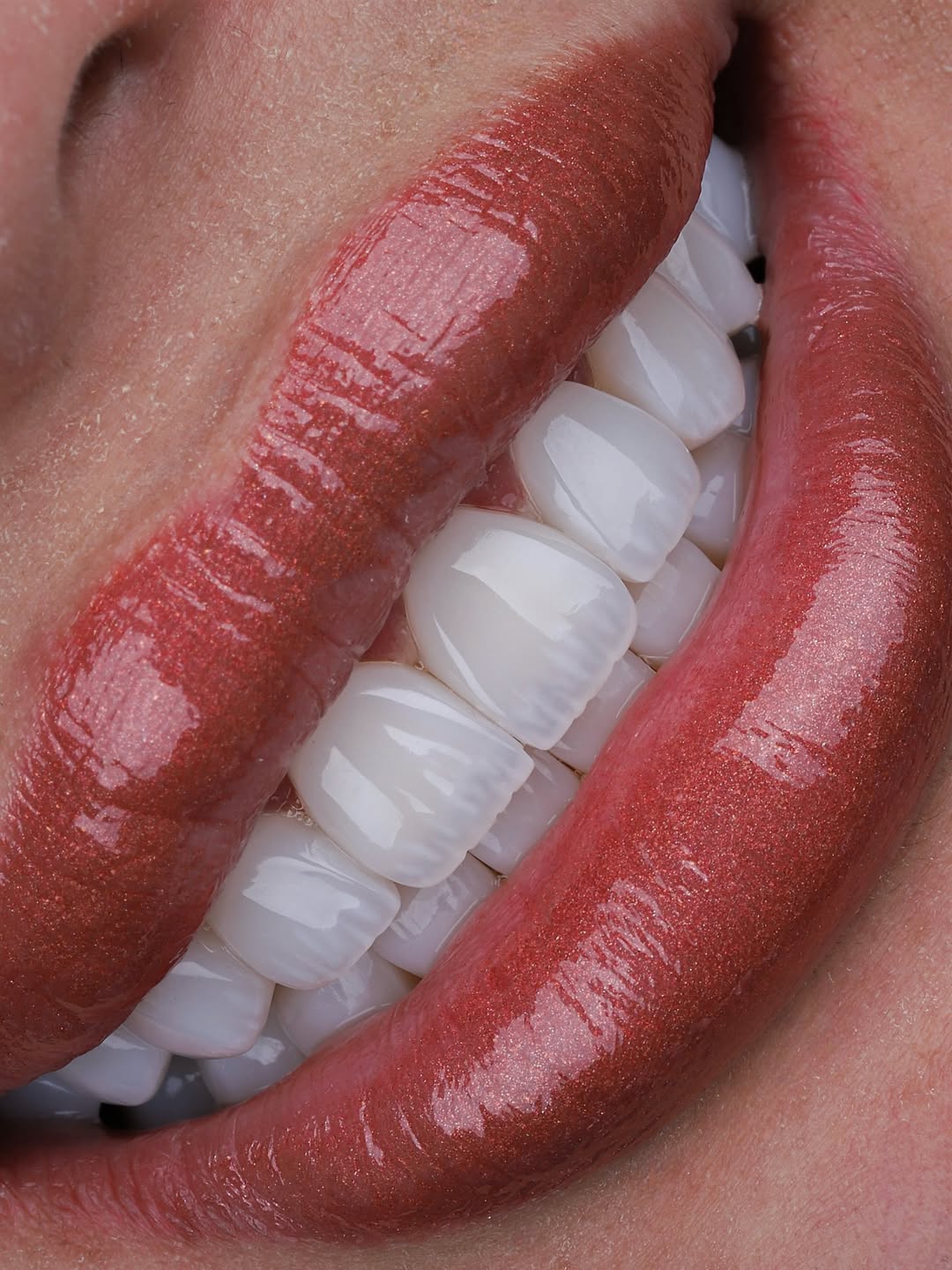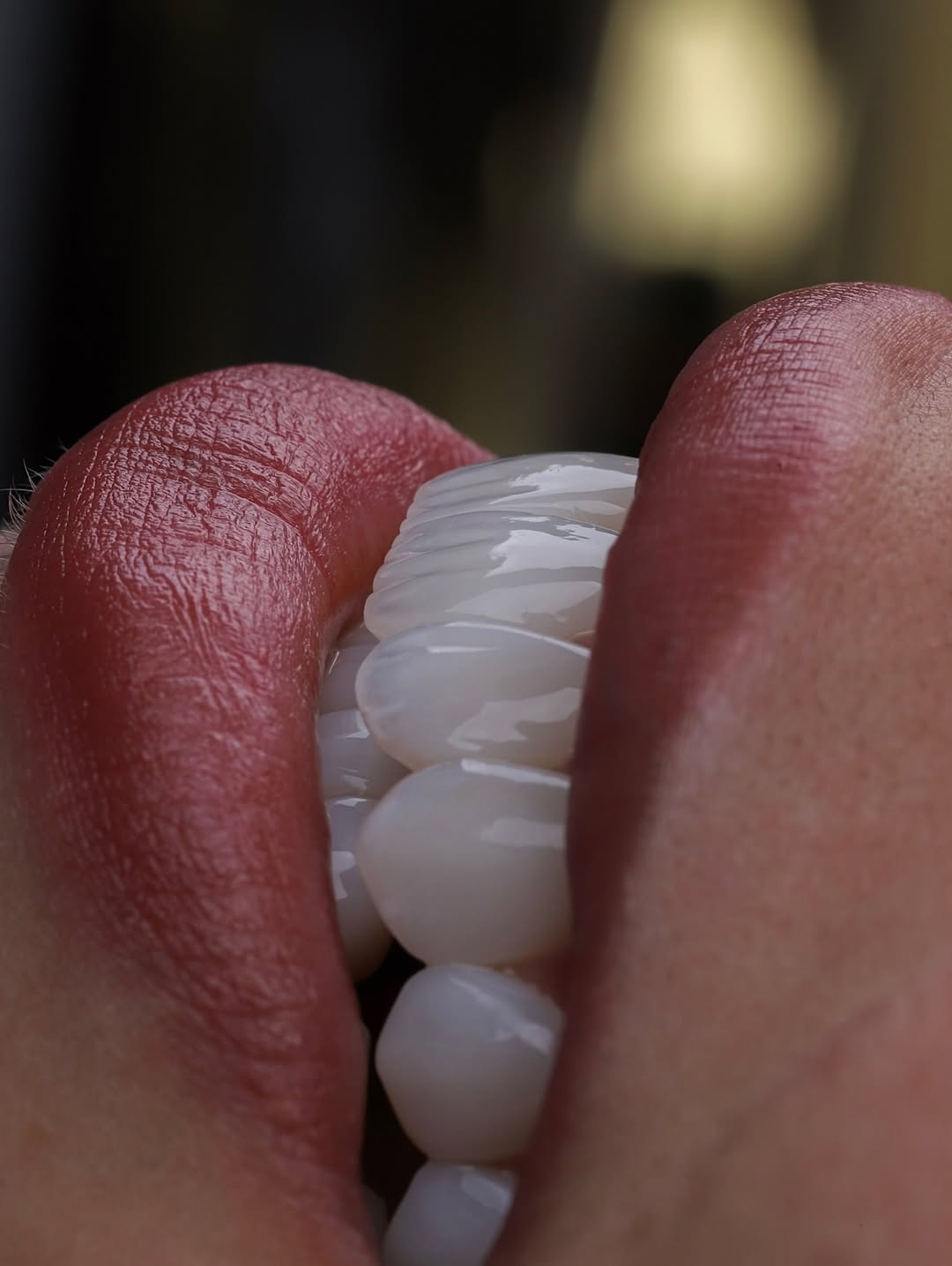
What Is Teeth Contouring? The Clinical Definition
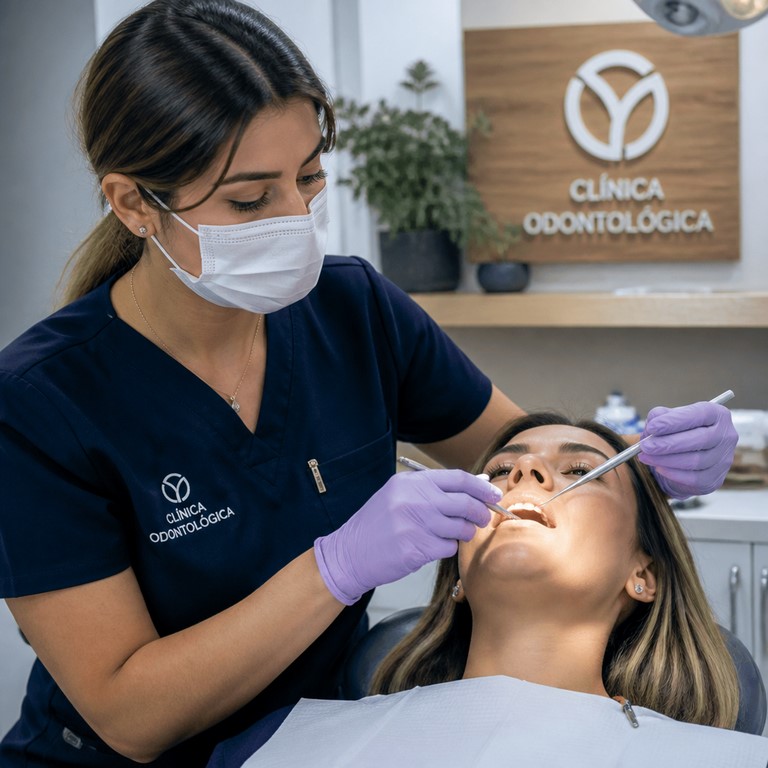
Teeth contouring — clinically referred to as odontoplasty or enameloplasty — is the controlled removal of small amounts of enamel to reshape the surface, length, or edge of a tooth. No bonding material is added, no laboratory is involved, and no anesthesia is required in most cases. The procedure is performed chairside with fine diamond burs and abrasive strips, completed in a single appointment.
The same veneers cost up to 70% less in Colombia.
See if you qualify Free video call in English · on WhatsAppIndividual patient experience. Results and pricing are confirmed after a clinical evaluation.
It is one of the most underused tools in cosmetic dentistry — partly because it generates less revenue than veneers, and partly because patients rarely know to ask for it. Yet for the right clinical situation, contouring delivers immediate, permanent aesthetic improvement with zero cost for lab fabrication and no alteration of tooth structure beyond what is removed.
What Teeth Contouring Can Fix
Contouring is effective for a specific set of minor irregularities where the problem is one of shape rather than color or volume:
- Slightly pointed canines: The natural tip of a canine can be gently rounded to soften an aggressive-looking smile line.
- Small chips on incisal edges: Minor chipping from normal wear or minor trauma can be smoothed and blended without the need for composite restoration.
- Minor length discrepancies: If one central incisor is fractionally longer than its neighbor, selective shortening creates symmetry.
- Rough or irregular incisal edges: Serrations, notches, or uneven wear patterns on the biting edges of front teeth can be leveled and polished.
- Slight overlapping at incisal edges: Where two adjacent teeth minimally overlap at the tip, careful contouring can reduce the visual overlap without orthodontics.
All of these corrections are achieved by taking away enamel strategically. The result is visible immediately at the end of the appointment, with no waiting period for a laboratory or healing period for a restoration.
What Teeth Contouring Cannot Fix
Understanding the limits of contouring is just as important as understanding its applications. Contouring is contraindicated or ineffective for:
- Tooth color or staining: Removing enamel does not change color. Discoloration, fluorosis, or intrinsic staining require whitening, veneers, or crowns.
- Large shape changes: If a tooth needs significant volume added — not just removed — bonding or veneers are required.
- Gaps (diastemas): Contouring removes material; it cannot close space. Bonding, veneers, or orthodontics are needed.
- Significant size differences: A peg lateral incisor or a tooth that is substantially smaller than its neighbors needs additive treatment.
- Severely worn or short teeth: If enamel is already thin due to bruxism, acid erosion, or natural anatomy, removing additional enamel is contraindicated — it would risk sensitivity or structural compromise.
A good cosmetic dentist will tell you clearly when contouring is not the right tool. At Doctor Yazmin’s clinic in Medellín, the consultation includes a full assessment of enamel thickness and tooth dimensions before any recommendation is made.
Get your veneers in Colombia for up to 70% less.
In the US, 20 porcelain veneers run $30,000–$50,000. With Dr. Yazmin in Medellin, it's $6,900, all-inclusive.
Individual patient experience. Prices, inclusions and results are confirmed after a clinical evaluation. A full evaluation is required before any treatment.
A personal driver will take you to and from every clinic appointment when you opt for a VIP package for dental veneers Medellín.
The Key Advantage of Contouring: Minimal Intervention with Immediate Results
Contouring’s core clinical advantage is that it is the most conservative cosmetic procedure available. Every other aesthetic option — composite bonding, veneers, crowns — involves either adding material (which requires surface preparation and bonding), fabricating a laboratory prosthesis (which takes time and cost), or permanently altering the natural tooth structure beyond what is removed.
Contouring removes only enamel. It is:
- Irreversible in the sense that removed enamel does not grow back — but no prosthetic material is added that could fail, debond, or discolor over time.
- Completed in one chairside appointment with no temporaries, no impressions, no lab wait time.
- No anesthesia required in most cases, since enamel has no nerve supply.
- No adhesive interface to maintain, replace, or repair.
For patients who are naturally skeptical of over-treatment, or who have good baseline tooth aesthetics and simply want refinement, contouring represents the principle of minimum intervention for maximum impact.
The Limit: You Can Only Remove, Not Add
The constraint of contouring is built into its mechanism. Because the procedure only removes enamel, it is structurally limited by how much enamel the tooth has. Standard enamel thickness on anterior teeth is approximately 1–2 mm at the incisal edge — and clinically safe contouring typically involves removing no more than 0.3–0.5 mm from any given surface.
This means:
- Teeth that are already short (from wear, attrition, or natural anatomy) should not be contoured further.
- Teeth with pre-existing enamel defects or very thin enamel (common in acid erosion or certain developmental conditions) are contraindicated.
- Any correction requiring the tooth to appear larger, taller, or wider cannot be achieved with contouring alone.
When patients arrive expecting contouring to be a solution for all their aesthetic concerns, the honest clinical answer is that contouring solves approximately half of the typical aesthetic complaint list — the half that involves removing unwanted shape, not the half that involves adding desired shape.
When Dentists Recommend Contouring Over Veneers
The clinical decision between contouring and veneers comes down to three questions:
- Is the patient’s baseline tooth color acceptable? (If yes, contouring may suffice. If no, veneers are almost certainly needed.)
- Is the correction additive or subtractive? (Subtractive corrections → contouring. Additive → bonding or veneers.)
- How significant is the correction needed? (Minor refinement → contouring. Significant reshape → veneers.)
Specific clinical scenarios where contouring is the right first recommendation:
- Minor irregularities in otherwise healthy, well-proportioned teeth: A patient with naturally white, well-aligned teeth and a single slightly-pointed canine is a classic contouring candidate. Placing veneers on this patient would be clinically unnecessary.
- Patients who want the most conservative option available: Some patients explicitly do not want any prosthetic material on their teeth. For them, contouring delivers real improvement while honoring that preference.
- Post-veneer refinement: After veneers are placed, minor length or edge adjustments are routinely made with contouring during the delivery appointment. This is standard practice, not an alternative to veneers, but it illustrates how contouring integrates into complex treatment plans.
- Younger patients with minimal enamel wear: When enamel reserves are good and the aesthetic concern is minor, contouring preserves options for the future rather than committing to a veneer cycle early.
The Additive-Subtractive Approach: Combining Contouring with Composite Bonding
One of the most cost-effective and clinically elegant options in cosmetic dentistry is the combination of contouring and direct composite bonding — sometimes called the “additive-subtractive” approach.
The concept: use contouring to remove what should be removed (irregular edges, minor asymmetries, pointed tips), and use tooth-colored composite resin to add where volume or length is needed. This hybrid approach can address both subtractive and additive corrections without the cost of laboratory fabrication.
In practice, this combination can achieve approximately 80% of the aesthetic result of full porcelain veneers at a fraction of the cost — particularly for patients whose main concerns are shape rather than severe discoloration.
The tradeoff: composite bonding is less durable than porcelain (typically 5–7 years before refinishing or replacement vs. 10–15 years for porcelain veneers) and may stain more over time in patients who consume heavy coffee, tea, or red wine. For patients who are cost-sensitive or younger and expect to revisit their smile plan in the future, this tradeoff is often acceptable.
Cost Comparison: Contouring vs. Bonding vs. Veneers in Colombia
Colombia — and Medellín specifically — has become a major destination for cosmetic dental treatment precisely because the cost differential versus North America and Europe is substantial, while the quality of materials and clinical training is equivalent to international standards.
| Treatment | Cost per Tooth (Colombia) | Notes |
|---|---|---|
| Teeth contouring | $50–$150 USD | Single appointment, no lab required |
| Composite bonding | $80–$150 USD | Chairside, same appointment possible |
| Porcelain veneers | $200–$400 USD | Lab fabrication, 2+ appointments |
A full smile case involving 6–8 front teeth illustrates the difference clearly: contouring alone on 6 teeth might cost $300–$600; full porcelain veneers on those same 6 teeth would cost $1,200–$2,400. For patients where contouring is clinically appropriate, the savings are significant without any compromise in outcome.
Even the combination approach — contouring plus composite bonding on 6 teeth — typically comes in at $600–$1,200, versus $1,200–$2,400 for porcelain veneers.
How to Have the Conversation with Your Dentist
Many patients walk into a cosmetic consultation having already decided they want veneers — because veneers are the most heavily marketed cosmetic dental procedure. A good cosmetic dentist should independently assess whether veneers are actually necessary, but patients can prompt this conversation directly.
The most useful question to ask: “What is the most conservative option that achieves my goal?”
This question does three things:
- It signals that you are open to less invasive options, not just the most comprehensive treatment.
- It invites the dentist to explain the clinical reasoning behind their recommendation — not just present a treatment plan with a price.
- It protects you from over-treatment by anchoring the discussion in minimum intervention.
A dentist who recommends veneers after you have asked this question should be able to explain specifically why contouring or bonding alone would not achieve your goal — what color issue, shape limitation, or structural reason makes veneers necessary in your case. If they cannot answer that clearly, a second opinion is worthwhile.
The Right Candidate Profile for Teeth Contouring
To summarize, the ideal candidate for teeth contouring presents with the following characteristics:
- Good baseline tooth color — white or near-white teeth that do not require a color correction (otherwise veneers or whitening would be the lead treatment).
- Minor shape or edge irregularities — nothing that requires significant volume addition, just refinement of what is already there.
- Sufficient enamel thickness — confirmed clinically, ensuring that the proposed amount of removal will not risk sensitivity or structural compromise.
- Realistic expectations — understands that contouring is refinement, not transformation. Patients expecting a dramatic result are better served by veneers.
- Preference for minimal intervention — either philosophically (does not want any prosthetic material on natural teeth) or practically (budget constraints, younger age, desire to preserve future options).
At Doctor Yazmin’s clinic in Medellín, every cosmetic consultation begins with an assessment of what the simplest appropriate treatment is — not the most comprehensive one. If contouring will get you where you want to go, that is what will be recommended. If veneers are genuinely necessary, you will understand exactly why before any commitment is made.