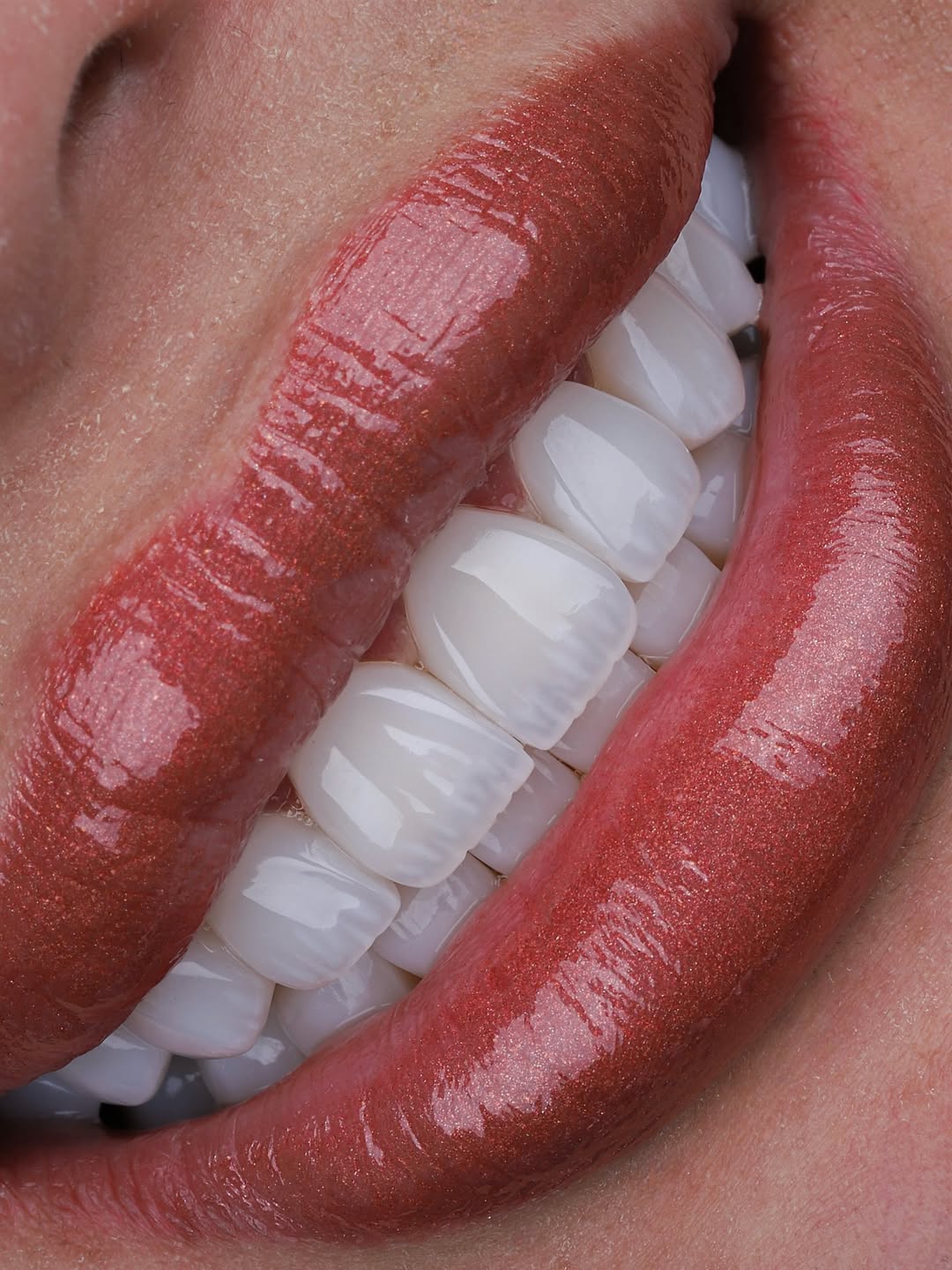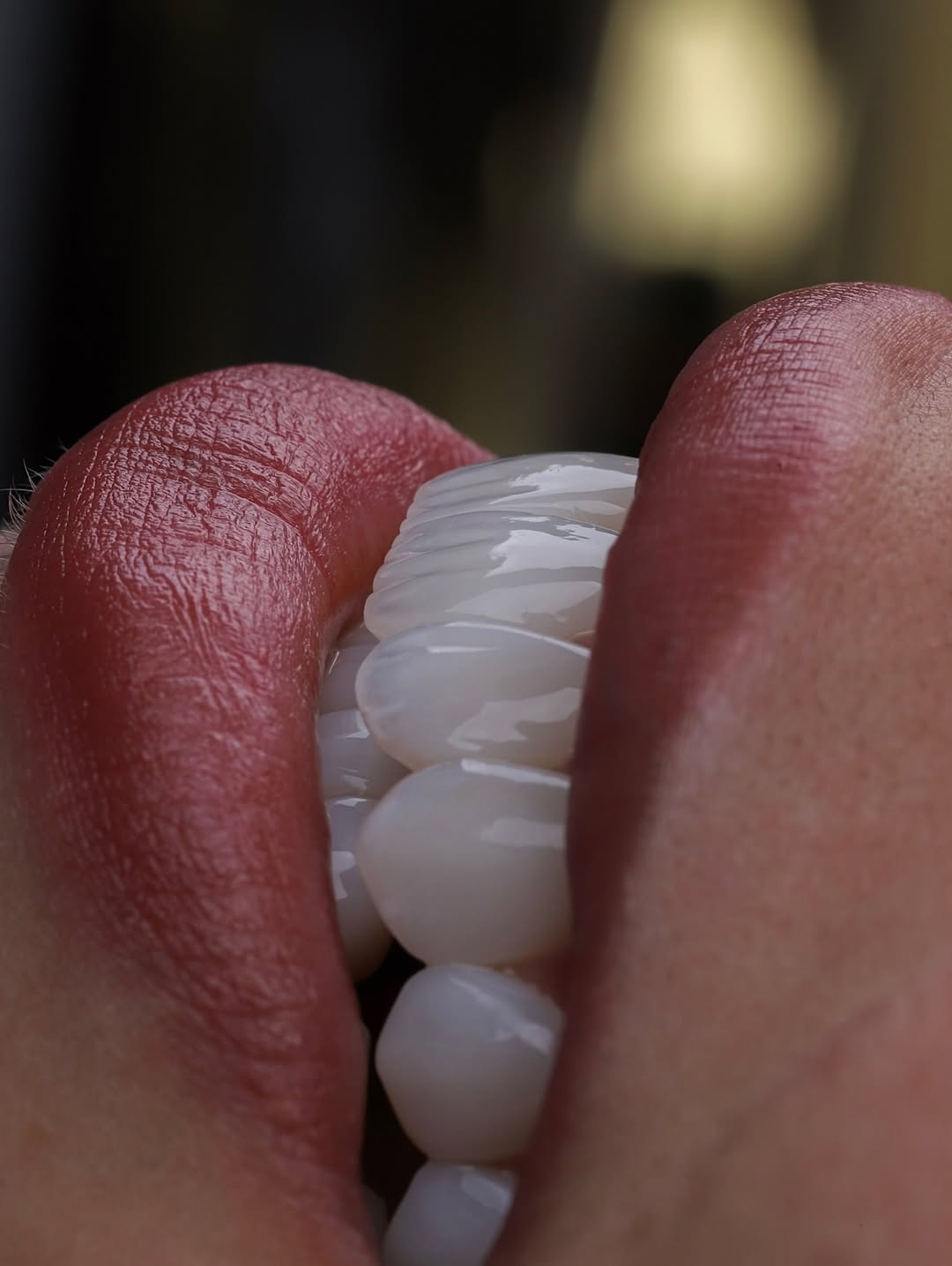
Two Different Systems, Two Different Lightest Shades
OM1 and BL1 are both described as “the whitest shade” — but they come from different shade systems, measure whiteness differently, and don’t translate directly to one another. Confusing them leads to communication errors between clinician and lab, and occasionally to a final restoration that looks nothing like what the patient approved at the shade consultation.
Understanding why requires a short excursion into how each system was built.
The same veneers cost up to 70% less in Colombia.
See if you qualify Free video call in English · on WhatsAppIndividual patient experience. Results and pricing are confirmed after a clinical evaluation.
Where OM1 Sits: The VITA 3D-Master System
VITA introduced the 3D-Master shade guide in 1998 to address a fundamental limitation of the original Classical guide: it organized shades primarily by hue group, without systematic coverage of all three dimensions of tooth color. The 3D-Master organizes shades across three independent axes:
- Value (lightness): designated by numbers 1–5, where 1 is the lightest
- Chroma (saturation): designated by numbers 1–3 within each value group
- Hue: designated by letters M (middle), L (left/yellow), R (right/red)
The standard 3D-Master guide covers values 1 through 5. OM1 belongs to a separate extension called the Bleach (BL) range, sometimes labeled with an “O” prefix to indicate “outside” the main scale. OM1 (also written 0M1) is the absolute lightest shade in the entire 3D-Master system. It sits beyond even 1M1 on the value axis: higher value (lighter), lower chroma, and neutral hue. A tooth shaded OM1 is lighter than any naturally occurring tooth color in unbleached dentition — it only appears in teeth that have undergone significant whitening or are fabricated prosthetically.
Combining a tropical getaway with your dental treatment makes getting porcelain veneers in Colombia an unforgettable experience. Vibrant cities like Medellin offer beautiful weather, incredible culture, and excellent recovery environments.
Where BL1 Sits: The VITA Classical Bleached Extension
The original VITA Classical guide — still the most widely recognized system globally — organizes shades into four hue groups: A (reddish-brown), B (reddish-yellow), C (grey), and D (reddish-grey). The original guide ran from A1 (lightest in the A group) to D4. To accommodate the clinical reality of bleached and prosthetic teeth, VITA later extended the guide with four bleached shades: BL1, BL2, BL3, and BL4, arranged from lightest to darkest.
Expert dentists take pride in their artistry, ensuring that your dental veneers in Colombia are custom-designed. They carefully match the shape and shade to your facial structure for a flawlessly natural look.
Get your veneers in Colombia for up to 70% less.
In the US, 20 porcelain veneers run $30,000–$50,000. With Dr. Yazmin in Medellin, it's $6,900, all-inclusive.
Individual patient experience. Prices, inclusions and results are confirmed after a clinical evaluation. A full evaluation is required before any treatment.
BL1 is the lightest shade in the Classical Bleached extension — lighter than A1, lighter than B1, and representing a value/chroma combination that sits outside normal unbleached tooth color. Like OM1, BL1 represents teeth that have been whitened to an extreme degree or are fabricated prosthetics designed to read as ultra-white.
Why These Two Shades Are Routinely Confused
The confusion between OM1 and BL1 has a straightforward source: both are described as “the lightest shade” in their respective systems, and both are used clinically as the target for ultra-white prosthetic work. When a patient asks for “the lightest possible shade” and leaves with a shade specification on their treatment record, the note is often not system-specific. A lab receiving a prescription reading “lightest bleached shade” may interpret this as either BL1 (Classical) or OM1 (3D-Master) depending on their default system, the ceramist’s training, and whether the prescribing clinician specified the guide.
Enjoy the best of modern dentistry without the astronomical bills by choosing high-end smile veneers in Colombia.
There’s also a visual similarity that contributes: at quick glance, OM1 and BL1 shade tabs look similar. Both are very high value, very low chroma, and appear near-white. Without placing them side by side under consistent lighting conditions and against a neutral background, the difference can be subtle — and many dental offices don’t conduct shade matching under standardized lighting.
The Key Clinical Difference: How Each System Measures Color
The 3D-Master and Classical systems measure tooth color by different logic, and this is the core clinical issue.
The Classical System
The Classical system groups shades primarily by hue. A1 and A2 are both in the “reddish-brown” group; they differ in value and chroma, but the hue is their shared classification criterion. This creates gaps and overlaps across the lightness axis — some shades in different hue groups occupy similar perceptual positions, while the guide doesn’t systematically sample all possible combinations of value, chroma, and hue.
The 3D-Master System
The 3D-Master was specifically designed to sample color space more systematically. By separating value, chroma, and hue into three independent axes, it provides more even coverage and makes it possible to specify a shade by changing one variable at a time. If you want slightly more saturation at the same lightness, you move from 1M1 to 1M2. In the Classical system, there is no equivalent single-variable manipulation.
For veneer fabrication, this distinction has practical consequences. When a ceramist is building up layered feldspathic porcelain to achieve a target shade, working with 3D-Master coordinates gives them independent control over each color dimension. BL1 from the Classical system specifies a visual endpoint but doesn’t give the ceramist the same dimensional roadmap to get there. The result is that labs with strong 3D-Master orientation will achieve more predictable results from an OM1 specification than from a BL1 specification — and vice versa for labs that primarily work in the Classical system.
Which System Do Most Dental Labs Actually Use for Veneers?
This varies by lab and by geography. European laboratories — particularly those with German or Swiss training lineage — tend to be 3D-Master oriented. Many North American labs historically trained on the Classical system and still default to it for shade communication, while increasingly adopting 3D-Master for precise specification of lighter shades. High-end cosmetic ceramic studios, particularly those producing ultra-thin feldspathic veneers, are more likely to use 3D-Master as their primary reference, since the lighter shades in that system are better defined.
In practice, most full-service labs are fluent in both and will ask for clarification if the prescription is ambiguous. The problem occurs with less-experienced labs or when shade specifications are communicated verbally or through abbreviated prescription forms.
The solution is always to specify the shade guide system explicitly: “BL1 VITA Classical” or “OM1 VITA 3D-Master” — never just “the lightest shade.”
When a Dentist Specifies OM1 vs BL1: Why It Matters for the Final Result
In practice, the choice between specifying OM1 versus BL1 often reflects which shade guide was used during the patient consultation more than a precise clinical distinction. If the patient’s shade was matched using a 3D-Master guide, OM1 is the correct specification. If a Classical guide was used, BL1 is correct. The error occurs when one system was used at the consultation and the prescription is written in the vocabulary of the other.
The clinical consequence in most cases is minor — both shades are very light, and the perceptual difference between OM1 and BL1 is within the range that many patients wouldn’t notice. However, for patients who have specifically approved a shade tab and are expecting a particular result, the difference can be clinically significant. If a patient approved BL1 and receives a result calibrated to OM1 (which can read as very slightly greyer-neutral), they may perceive the color as “off white” rather than the warm, very light result they expected from BL1’s slight yellow-white tint.
What to Ask at Your Consultation: A Practical Patient Guide
If you are planning ultra-white veneers and want to avoid shade specification errors, ask your clinician these questions directly:
Language is never a barrier for international patients. Top-rated clinics offering veneers in Medellín provide 100% bilingual translators to guide you through every step of your journey.
For most patients requesting the lightest possible veneer shade, either BL1 or OM1 will achieve a clinically similar result — the key is ensuring the specification is unambiguous and consistent from consultation to lab prescription to final delivery.
The Bottom Line
OM1 and BL1 are both very light, very low-chroma shades representing the extreme end of their respective guides. OM1 belongs to the VITA 3D-Master system, which measures color across three independent dimensions. BL1 belongs to the VITA Classical Bleached extension, which primarily organizes shades by hue group. The two don’t translate precisely because the systems measure different things. For reproducible, accurate ultra-white veneer results, always specify the shade guide system by name — and confirm that your dental laboratory uses that system as their primary reference for fabrication.