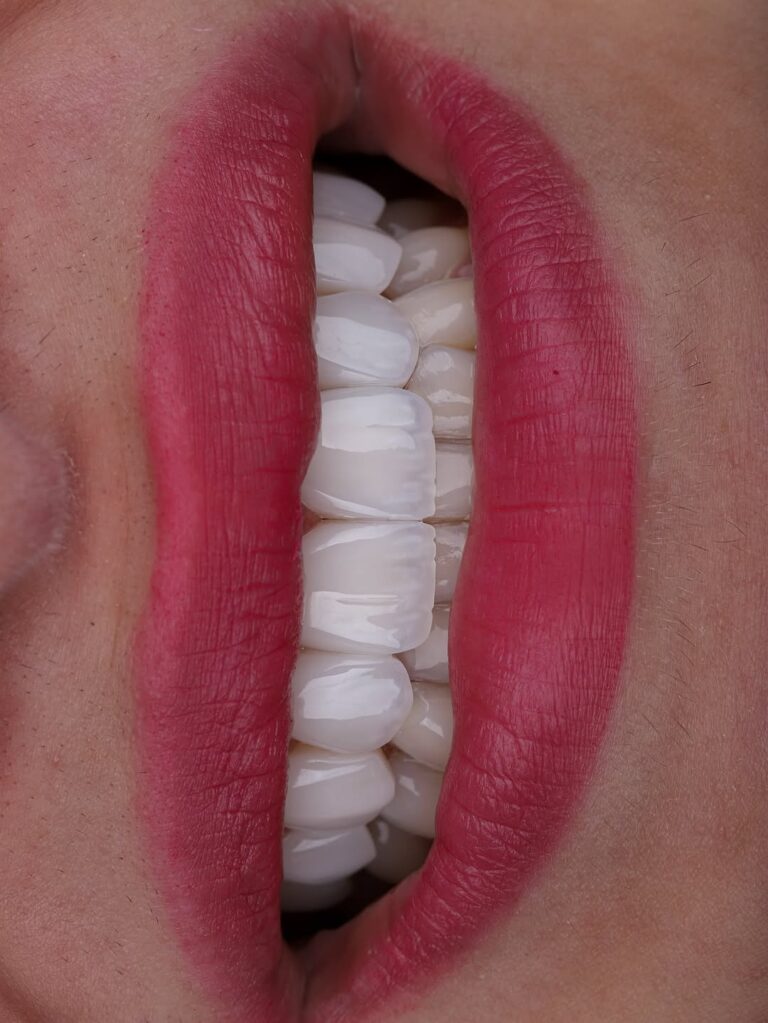
Should You Get Veneers or Braces? The Real Answer (It Depends)
One of the most common questions patients ask: “Can I just get veneers instead of braces?” or “Should I straighten my teeth with braces before getting veneers?”
The answer isn’t simple—because it depends on the nature of your misalignment, your bite function, and your long-term goals. This comprehensive clinical guide will help you (and your dentist) determine the right sequence for your specific situation.
The short answer: For mild cosmetic issues, veneers first may work. For anything beyond that—significant crowding, bite problems, or misalignment—orthodontics should come first. Here’s why.
Understanding the Core Problem: Over-Preparation Risk
This is the critical issue that most patient education materials gloss over.
When teeth are misaligned or crowded, your dentist must remove more tooth structure to place a veneer. Here’s what happens:
Normal veneer preparation: 0.3–0.5mm of enamel removed (minimal loss, healthy enamel preserved)
Veneer preparation on crowded teeth: 1.0–1.5mm of enamel removed (3x more enamel gone)
The consequence? When excessive enamel is removed, the remaining tooth structure is weakened. This leads to:
- Increased post-operative sensitivity that may last weeks or months
- Reduced bond strength between veneer and tooth (veneers bond strongest to enamel, weakly to dentin)
- Shortened veneer lifespan from a potential 10–15 years down to 5–7 years
- Higher fracture risk due to structural weakness
- Potential nerve damage requiring root canal treatment in severe cases
- Inability to use minimal-prep veneers (the most conservative option)
Here’s the problem: Enamel, once removed, never comes back. Your decisions today affect your dental health for life.
The solution? Orthodontics first straightens teeth, which means when veneers are placed afterward, far less enamel needs to be removed. You preserve more tooth structure, achieve better bonding, and get veneers that last significantly longer.
The Clinical Decision Matrix: Which Treatment Should Come First?
The right choice depends on several diagnostic factors. Let’s walk through each scenario:
Scenario 1: Mild Misalignment (Small Gaps, Minor Rotation)
What this looks like:
- Gaps between teeth <2mm (small spacing)
- Minor rotations (<5° from ideal position)
- Teeth otherwise well-aligned
- Normal bite function (no deep bite, overbite, or crossbite)
Best option: Veneers First
Why? Veneers can cosmetically camouflage minor misalignment while preserving reasonable enamel. The speed advantage is significant—you achieve your smile in 2–4 weeks rather than months of orthodontic treatment.
Timeline: 2–4 weeks (consultation → prep → permanent veneer placement)
Enamel preserved: 70–90% (acceptable for minor cases)
Expected longevity: 10–12 years with proper care and nightguard use
Scenario 2: Moderate Misalignment (Noticeable Crowding, Multiple Rotations)
What this looks like:
- Crowding affecting 2–3 teeth
- Rotations of 10–30° from ideal
- Visible misalignment but not severe
- Bite function relatively normal
Best option: Orthodontics First (Fast-Track Option Available)
Why? If you place veneers on moderately misaligned teeth, you’ll need significantly increased preparation—risking enamel damage and premature veneer failure.
Timeline options:
Option A (Recommended): Six Month Smiles + Veneers
- Clear braces for 6 months (focused on anterior teeth)
- Then veneers for esthetics (2–4 weeks)
- Total time: 6.5–7 months
- Enamel preserved: 90%+
- Longevity: 12–15 years
Option B (Standard): Traditional Orthodontics + Veneers
- Braces/aligners for 12–18 months
- Then veneers (2–4 weeks)
- Total time: 12–19 months
- Enamel preserved: 95%+
- Longevity: 12–15 years
Why the difference matters:
- With ortho first: Minimal prep needed (0.5mm enamel removed)
- Without ortho: Excessive prep needed (1.2–1.5mm enamel removed)
- Result: Ortho-first preserves 50–70% more enamel
Scenario 3: Severe Misalignment (Heavy Crowding, Multiple Rotations)
What this looks like:
- Crowding affecting 4+ teeth
- Significant rotations (>30°)
- Overlapping teeth, severe spacing issues
- Possible bite problems (overbite, underbite, crossbite)
Best option: ALWAYS Orthodontics First
Why? Placing veneers on severely misaligned teeth would require catastrophic enamel removal—essentially destroying healthy tooth structure. This approach would fail clinically.
Timeline: 18–24 months orthodontics + 2–4 weeks veneers = 18–25 months total
Why it’s worth the wait:
- Preserves 85–95% of natural tooth structure
- Achieves superior functional result (proper bite, jaw relationship)
- Allows use of minimal-prep veneers (the gold standard)
- Veneers last 12–15+ years (vs. 5–7 if done in reverse order)
- Better speech, chewing function, and TMJ health
Research evidence: “When long-term function or significant repositioning is required, orthodontics should generally precede porcelain veneers.
Scenario 4: Bite Problems (Deep Bite, Open Bite, Crossbite, Overbite)
What this looks like:
- Deep bite (upper teeth overlap lower teeth excessively, >3mm)
- Open bite (front teeth don’t touch when back teeth close)
- Crossbite (lower teeth outside upper teeth in some areas)
- Significant overbite (>2mm) or underbite
- Pain or discomfort during chewing
Best option: ALWAYS Orthodontics First
Why? Veneers do not correct bite problems. They only cover the front surface of teeth—they cannot change how teeth contact or how the jaws relate to each other.
If you place veneers on teeth with bite problems, you’ll create:
- Uneven force distribution during chewing
- Accelerated veneer failure (chipping, fracturing, debonding within 3–5 years)
- Potential TMJ problems (jaw joint dysfunction)
- Worsening of bite over time as tooth positions shift
Clinical reality: Bite problems are a contraindication for veneers-first treatment.
The right approach:
- Correct bite function with orthodontics (12–24 months)
- Stabilize the new bite relationship (3–6 months)
- Add veneers for final esthetic refinement (2–4 weeks)
Result: Proper function + beautiful esthetics + 12–15 year veneer lifespan
Scenario 5: Purely Esthetic Goals (Color, Shape, Size—Alignment Already OK)
What this looks like:
- Teeth already straight and well-aligned
- Bite function normal
- Concerns: Discoloration, worn edges, small asymmetries, size differences
- No crowding or spacing
Best option: Veneers
Why? There’s no structural reason to pursue orthodontics. Veneers address esthetic concerns quickly and predictably.
Timeline: 2–4 weeks
Enamel preserved: 80–90% (more aggressive prep acceptable here since teeth are already optimally positioned)
Expected longevity: 10–15 years with proper care
Scenario 6: Combined Goals (Function + Esthetics)
What this looks like:
- Patient wants straighter teeth AND better color/shape
- Current misalignment moderate to severe
- Esthetic concerns present (discoloration, chips, asymmetry)
- Functional problems possible (bite issues)
Best option: Orthodontics → Veneers (Sequential)
Why? The combined approach addresses both function and esthetics optimally.
Timeline:
- Orthodontics: 12–24 months
- Veneers: 2–4 weeks
- Total: 12–25 months
Result:
- Optimal function (proper bite, jaw relationships)
- Optimal esthetics (straight, white, symmetrical teeth)
- Longevity: 12–15+ years (superior outcome vs. either treatment alone)
Research evidence: “Combining orthodontics and veneers provides conservative, predictable, esthetic, and functional results.”
Why Minimal-Prep Veneers Matter (And Why You Need Orthodontics First to Use Them)
Minimal-prep and no-prep veneers are the gold standard of veneer dentistry—they preserve maximum tooth structure and provide superior longevity.
Requirements for minimal-prep veneers:
- Proper arch alignment (straight teeth)
- No severe crowding
- No severe rotations
- Adequate inter-dental space
- Healthy gingiva
The problem: If teeth are misaligned, you cannot use minimal-prep veneers. You must use traditional (full-prep) veneers, which removes more enamel.
The solution: Orthodontics first aligns teeth, which means you become a candidate for minimal-prep veneers afterward.
The difference:
- Traditional prep: 0.5–1.5mm enamel removed | Longevity: 10–12 years
- Minimal-prep: 0.3–0.5mm enamel removed | Longevity: 12–15+ years
By doing orthodontics first, you unlock access to the most conservative veneer technique available.
The TMJ (Jaw Joint) Factor
This is a critical consideration that’s often overlooked.
How Bite Problems Affect the TMJ
When teeth are misaligned or your bite is off:
- Asymmetrical muscle forces stress the jaw joint
- Uneven pressure distribution on joint surfaces
- Disc displacement (the cartilage pad in the joint shifts)
- Joint pain, clicking, popping, or restricted opening may develop
Why Veneers Alone Can’t Help TMJ
If your bite is problematic, veneers will not improve TMJ function. In fact, placing veneers on misaligned teeth may worsen TMJ problems by cementing the dysfunction in place.
How Orthodontics Helps TMJ
Orthodontic treatment, particularly with attention to dentofacial orthopedics (jaw positioning), can:
- Improve jaw relationships through proper tooth positioning
- Reduce TMJ stress by distributing forces evenly
- Alleviate TMJ symptoms (pain, clicking, limited opening)
- Stabilize the joint in a healthy position
Clinical example: A patient with TMJ symptoms and esthetic concerns received orthodontic treatment with orthopedic focus (4 months). Result: TMJ symptoms completely disappeared, facial appearance improved, and occlusion was corrected. Veneers were then added for final esthetic refinement.
Bottom line: If you have TMJ concerns, address them with orthodontics first. This stabilizes the joint and creates a solid foundation for veneers.
Timeline and Cost Comparison
Here’s a realistic breakdown of what each approach costs and how long it takes:
| Scenario | Timeline | Cost Range | Enamel Preserved | Longevity |
|---|---|---|---|---|
| Veneers only (mild alignment) | 2–4 weeks | $4,000–$15,000 | 70–90% | 10–12 years |
| Six Month Smiles + Veneers | 6.5–7 months | $9,000–$20,000 | 90%+ | 12–15 years |
| Braces + Veneers | 18–25 months | $12,000–$30,000 | 95%+ | 12–15 years |
| Aligners + Veneers | 12–18 months | $14,000–$28,000 | 94%+ | 12–15 years |
Important note: While the upfront cost of ortho + veneers is higher, the long-term cost is similar when you factor in:
- Reduced need for veneer replacement
- Better preservation of natural teeth
- Fewer complications requiring repair or replacement
Long-term value: Ortho-first approach often costs less over a lifetime due to superior veneer longevity and reduced replacement frequency.
Red Flags: Signs You Need Orthodontics First
If your dentist identifies ANY of these, orthodontics should precede veneers:
- Severe crowding making veneer prep unnecessarily invasive
- Large spaces (diastemas) requiring significant design accommodation
- Anterior open bite (front teeth don’t touch when back teeth close)
- Deep bite (upper teeth overlap lower teeth excessively)
- Crossbite (lateral misalignment)
- Asymmetrical gingival line (uneven gum levels)
- Multiple significant rotations
- Patient reports bite discomfort during eating or speaking
- TMJ symptoms (jaw pain, clicking, limited opening)
- Signs of bruxism (grinding) with wear patterns
If you see these, veneers-first is not the right approach.
The Debate: Can Veneers Masquerade as an Alternative to Orthodontics?
Some dentists market veneers as a quick alternative to braces for straightening teeth. While technically possible in mild cases, this approach has significant limitations:
What veneers CAN do:
- Cosmetically camouflage mild misalignment
- Change tooth color and shape
- Close small gaps
- Correct minor rotations (if carefully planned)
What veneers CANNOT do:
- Correct severe crowding
- Fix bite problems (overbite, underbite, crossbite, deep bite, open bite)
- Improve TMJ function
- Preserve enamel in heavily misaligned teeth
- Provide long-term stability if underlying functional problems exist
The marketing reality: “Smile in 2 weeks instead of 2 years with veneers!” sounds appealing, but it often comes at the cost of:
- Over-prepared teeth
- Reduced veneer longevity
- Potential sensitivity and complications
- Unaddressed functional problems
The clinical reality: “The right sequence depends on your smile goals, enamel health, the degree of crowding or spacing present, and your bite function. For many cases, a staged approach (orthodontics → veneers) yields both functional stability and the highest esthetic outcome.”
How to Know Which Path Is Right for You
Veneers First If:
- Your teeth are already well-aligned (no crowding, proper spacing)
- Your bite function is normal (no deep bite, overbite, or other problems)
- You have no TMJ symptoms
- Your primary concerns are color, shape, worn edges, or mild esthetic asymmetry
- You want rapid transformation (2–4 weeks)
Orthodontics First If:
- You have moderate to severe crowding or spacing
- You have visible rotations (>10°)
- You have bite problems (deep bite, open bite, crossbite, overbite, underbite)
- You have TMJ symptoms or joint dysfunction
- You want maximum enamel preservation and veneer longevity
- You’re willing to invest time (6–24 months) for optimal long-term results
- You want to qualify for minimal-prep veneers (most conservative option)
Get a Professional Assessment If:
- You’re unsure about the severity of your misalignment
- You have bite concerns you’re not sure about
- You want to preserve maximum tooth structure
- You want the longest-lasting veneer result
A comprehensive consultation with detailed bite analysis and imaging will reveal the right sequence for your specific situation.
The Fast-Track Option: Six Month Smiles + Veneers
For patients who don’t want to wait 18–24 months for full orthodontic treatment but have moderate misalignment:
Six Month Smiles offers a middle path:
- Clear braces focused on front 6 teeth
- Treatment duration: 6 months
- Followed by veneers: 2–4 weeks
- Total timeline: 6.5–7 months
- Enamel preservation: 90%+
- Longevity: 12–15 years
This hybrid approach accelerates results while still achieving proper alignment and enamel preservation—better than direct veneers on crowded teeth but faster than traditional orthodontics.
Patient Communication: If You Insist on Veneers First Despite Recommendations
If your dentist recommends orthodontics first but you insist on veneers (perhaps due to timeline or cost concerns), a responsible dentist will:
- Document the risks (over-preparation, reduced enamel, shortened veneer lifespan)
- Explain the benefits of ortho-first (better outcomes, longer-lasting veneers)
- Discuss fast-track alternatives (Six Month Smiles)
- Obtain informed consent before proceeding
- Set realistic expectations (5–7 year lifespan for veneers vs. 10–15 years with proper sequence)
This is where finding a dentist who prioritizes long-term oral health over quick sales matters. The right dentist will guide you toward the approach that gives you the best smile—not the fastest one.
The Bottom Line
For purely esthetic concerns with proper alignment: Veneers work beautifully and quickly (2–4 weeks).
For misalignment with esthetic goals: Orthodontics first, then veneers, yields superior outcomes—better function, preserved enamel, longer-lasting results (12–15+ years).
For bite problems: Orthodontics is essential first to correct function.
For TMJ concerns: Orthodontics should address the joint relationship before veneers.
The right sequence protects your teeth structurally while delivering the beautiful smile you want. A comprehensive consultation with diagnostic imaging and bite analysis reveals the optimal path for your unique situation.
References & Clinical Evidence
Whites Dental. Porcelain Veneers Vs. Orthodontics (2025)
Smile Montreal. Porcelain Veneers vs. Braces
Veneer Training. Comparing Veneers vs. Orthodontics: Clinical Guide (2025)
Aditek. Types of Occlusion and Treatment (2023)
Smile Dental Journal. Solving TMJ Problems with Orthodontics (2011)
Smile Dental Journal. Esthetic Rehabilitation with Lingual and Facial Veneers
PMC. Treating Temporomandibular Disorders Through Orthodontics (2025)
Veda Dentistry. The Problem With Over-Prepping Teeth for Veneers
Cosmetique Dental. No-Prep vs Minimal-Prep Veneers (2025)
The Dental Room. Is Teeth Straightening a Must Before Veneers (2025)
Andepol. Veneers Cost in 2025
Dr. Marus. Minimal Preparation Porcelain Veneers
Gentle Dental Doc. Can I Get Veneers if I Have Crooked Teeth (2025)
Cosmetic Dentistry. Porcelain Veneers: From Case Selection to Cementation
DISCLAIMER: This information is for educational purposes and should not replace professional dental evaluation. Always consult with your dentist regarding your specific situation, concerns, and treatment options.
Last Updated: January 2026