Male and Female Smile Aesthetics Are Not the Same
Cosmetic dentistry has historically been shaped by female-dominated patient populations, and many of the default parameters built into dental labs and smile design software reflect feminine aesthetics. When men receive veneers without a deliberate conversation about masculine smile design, the result is often subtle but noticeable — teeth that look slightly too rounded, too bright, or too delicate for the face they’re attached to.
The same veneers cost up to 70% less in Colombia.
See if you qualify Free video call in English · on WhatsAppIndividual patient experience. Results and pricing are confirmed after a clinical evaluation.
Understanding the specific anatomical and aesthetic differences between male and female smile design is not just academic — it directly affects what you need to communicate to your dentist before treatment starts.
Key Differences: Shape, Display, and Midline
Tooth Shape
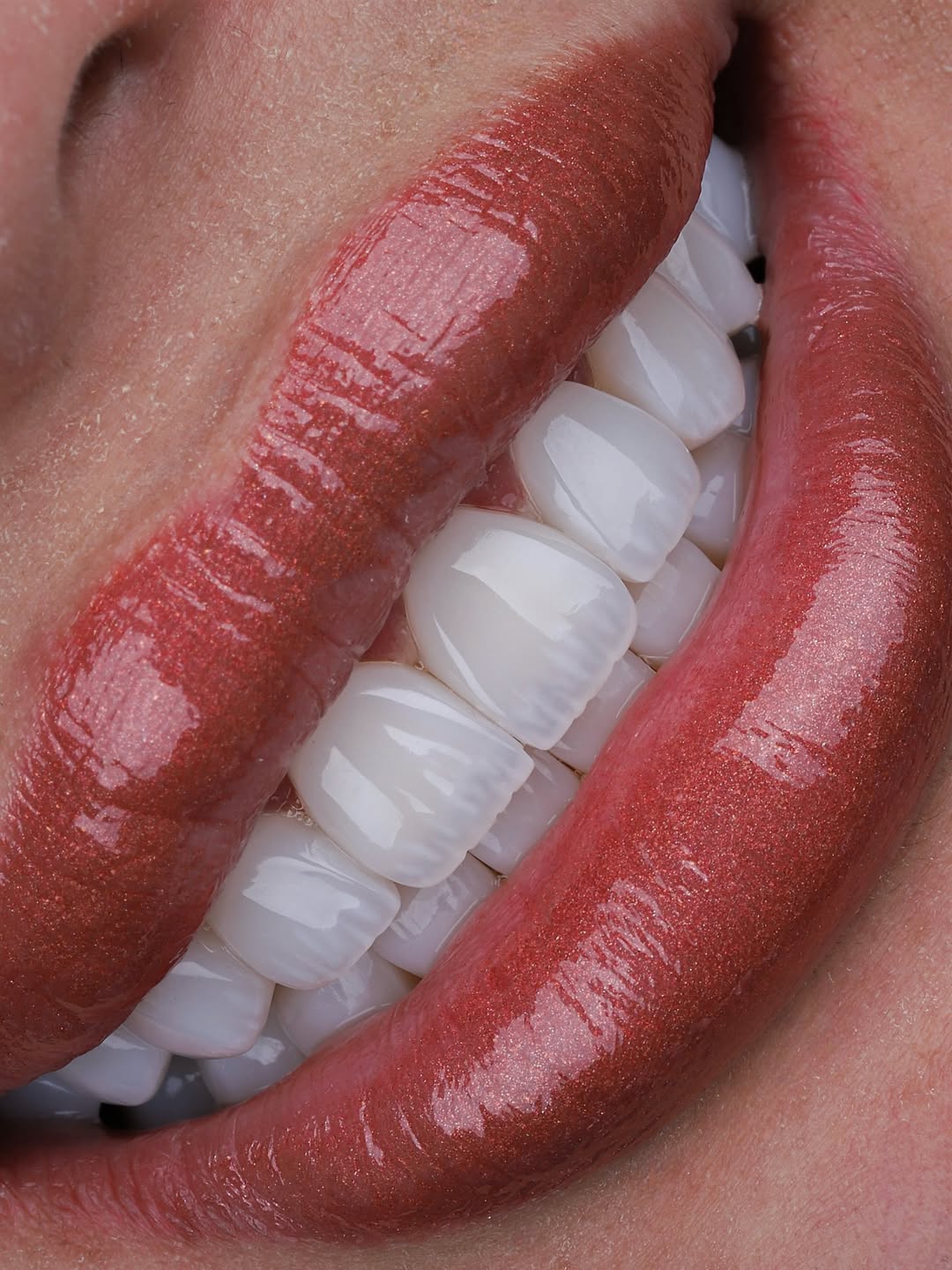
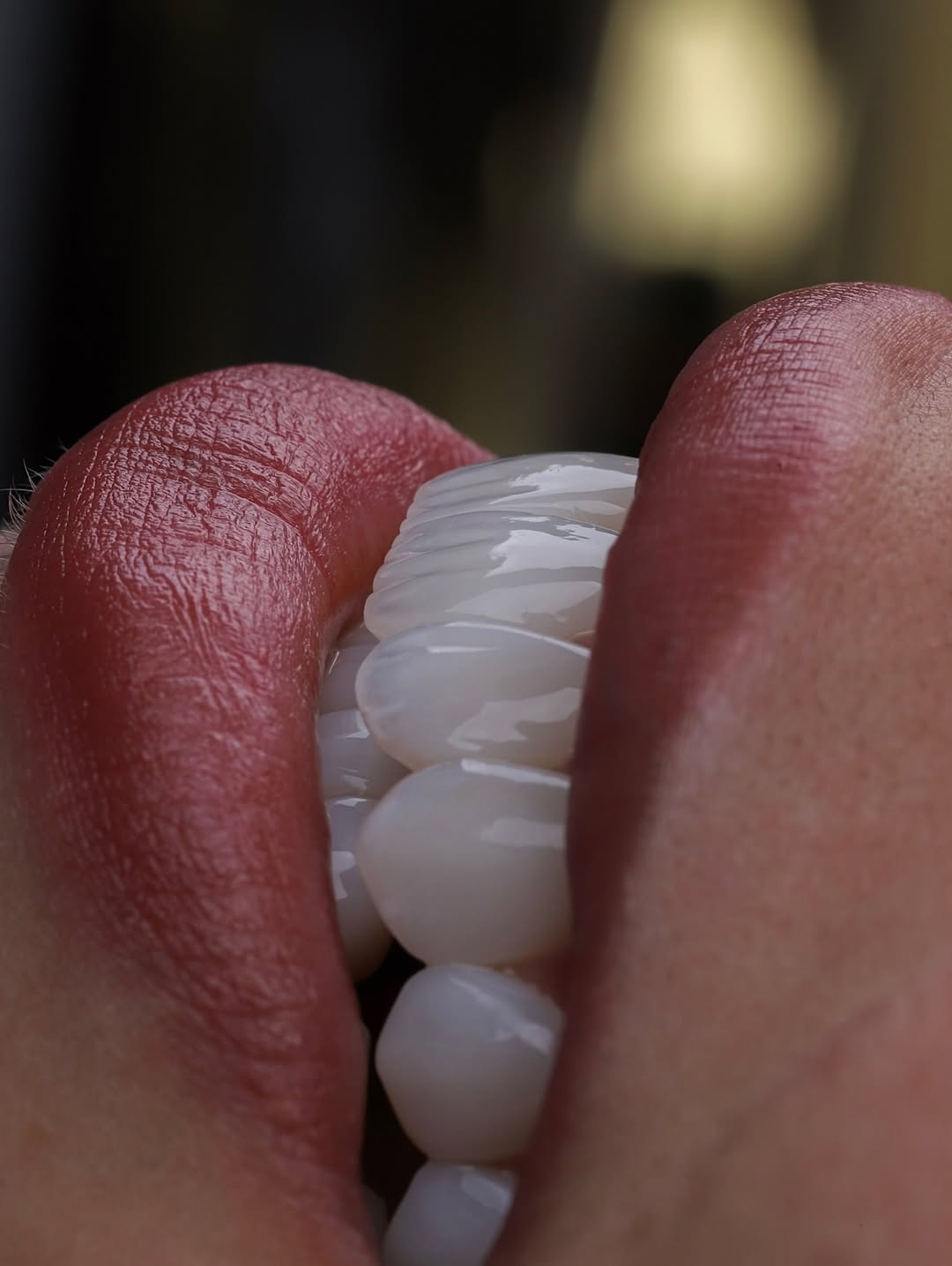
Male teeth tend to be squarer and more rectangular in proportion, with less pronounced curvature at the incisal edges. Feminine tooth shapes are characterized by rounder corners, more pronounced mesial-incisal and distal-incisal curves, and a softer overall outline. If your dentist is working from standard veneer shapes or a default how digital smile design works template without adjustment, the results will trend feminine by default.
The central incisors carry most of the aesthetic weight. A square, broad central incisor reads masculine. An ovoid or tapered central incisor reads feminine. This distinction matters most in men who are making significant shape changes, such as closing spaces or lengthening short teeth.
Gingival Display
Women tend to show more gingival tissue during a full smile — a gum-to-tooth ratio that is generally considered aesthetically positive in female patients but is associated with a less masculine appearance. Men typically have lower lip lines and less gingival display. This means the crown-to-root proportion of male veneers can be slightly more vertical, emphasizing length and strength over soft curvature.
If you have a naturally high gum line and are concerned about it, address this before discussing veneers. Crown lengthening or gingival recontouring is sometimes recommended before veneer placement and is a separate decision from the veneers themselves.
Get your veneers in Colombia for up to 70% less.
In the US, 20 porcelain veneers run $30,000–$50,000. With Dr. Yazmin in Medellin, it's $6,900, all-inclusive.
Individual patient experience. Prices, inclusions and results are confirmed after a clinical evaluation. A full evaluation is required before any treatment.
Midline Considerations
A perfectly centered, symmetrical midline is more associated with feminine aesthetics in some smile design literature. Slight asymmetries in the male midline are not only acceptable — they can look more natural and less “done.” This doesn’t mean a crooked smile is better, but hyper-perfect symmetry can produce a result that looks artificial. If your dentist insists on achieving millimeter-perfect midline symmetry at the cost of other proportions, this is worth discussing.
Incisal Edge Curvature
The curvature of the incisal plane — the imaginary line connecting the biting edges of your upper front teeth — should ideally parallel the curvature of the lower lip. In women, this is usually a gentle upward arc that follows a pronounced lip curve. In men, the lower lip curve is typically flatter, and the incisal plane should reflect this. A steeply curved incisal plane on a male patient can look feminine and unnatural.
The Feminization Risk
The most common complaint among men who are dissatisfied with their veneers is that the teeth look “too feminine” or “too Hollywood.” This usually comes down to one or more of the following: overly round incisal corners, excessive brightness (very high value white), exaggerated incisal translucency, or a smile line with too much arc. Each of these is a preventable design choice — but only if the conversation happens before the wax-up is finalized.
The solution is not to avoid veneers; it’s to specify masculine design parameters explicitly. Ask your dentist to design square central incisors, maintain a relatively flat incisal plane, and choose a color in the natural-white range rather than the bleached-white range.
What to Communicate to Your Dentist
Bring reference photographs — not of celebrities with visibly whitened teeth, but of real people whose smiles you find natural and masculine. These don’t have to be dental photographs; candid photos work. Tell your dentist specifically what you want and don’t want:
- “I want square, not rounded teeth.”
- “I don’t want them to look obviously fake or white.”
- “I want a natural result that doesn’t call attention to itself.”
- “I’d like to see the wax-up before any tooth preparation.”
Ask whether the lab they use has experience with masculine smile design. Some labs work primarily with cosmetic cases and default to aesthetic parameters that skew feminine. If your dentist can share case photos of male patients they’ve treated, review them critically — not just for whiteness, but for shape and overall natural appearance.
The Role of Facial Structure
Veneer design should always be informed by facial proportions, and this is especially true for men. A man with a strong jaw and broad face can carry wider, squarer teeth. A man with a narrower or more elongated face may look better with slightly narrower centrals and more pronounced lateral-to-canine graduation.
The proportion of tooth width to tooth height is a key metric. The ideal width-to-height ratio for central incisors is typically cited at 75–80%, though this is a guideline, not a rule. A slightly higher ratio (squarer proportions) generally reads more masculine; a lower ratio (taller, narrower proportions) can read more feminine or older-looking.
Your dentist should be analyzing these proportions in the context of your specific face — not applying a universal template. If you’re not hearing any discussion of your facial proportions during consultation, ask for it directly.
Color: Why Men Often Prefer Natural White
Extremely bright, high-value white (VITA shade B1 or bleach shades) tends to read as cosmetic work to observers, regardless of gender. For men who want a subtle improvement rather than an obvious transformation, shades in the A2–A1 range often work better. These are still whiter and more consistent than most natural adult teeth, but they don’t attract the “did you get veneers?” reaction.
Men in conservative professional environments — law, finance, politics — often specifically request a color that improves their teeth without being noticeable as cosmetic work. This is an entirely achievable goal with veneers; it just requires the right shade selection and communication upfront.
If you’re combining veneers with teeth whitening for the non-veneered teeth, note that the whitened natural teeth will shift in color slightly over time, while the porcelain will not. Plan accordingly — some men whiten first, stabilize, and then choose the veneer shade to match the whitened teeth.
Why Men Seek Veneers and How Motivation Affects Satisfaction
Men pursue veneers for varied reasons: career advancement (particularly in client-facing roles), dating confidence, or correcting specific issues like chips and discoloration that have bothered them for years. The motivation matters because it shapes realistic expectations.
Men motivated by a specific, concrete issue (e.g., “I have a chipped lateral incisor and discolored centrals”) tend to report higher satisfaction than men pursuing veneers as a general confidence boost or in response to external pressure. Veneers change teeth; they don’t resolve underlying confidence issues unrelated to teeth. Patients who go into treatment with this clarity tend to have better outcomes — and fewer post-treatment regrets.
When Veneers Make the Most Sense for Men vs Alternatives
Veneers are the right choice for men who need to address shape, color, and size simultaneously — particularly for teeth that are chipped, discolored, slightly misaligned, or disproportionately sized. They’re permanent (in the sense of being irreversible — enamel is removed) and should be chosen when the clinical need justifies the commitment.
For men whose primary concern is color alone, professional whitening should always be tried first. If the concern is a single chip or minor surface irregularity on an otherwise healthy tooth, composite bonding is faster, reversible, and significantly cheaper.
Orthodontic alignment issues — spacing, crowding, mild rotations — are generally better corrected with Invisalign or braces before considering veneers. Using veneers to mask alignment problems leads to oversized, unnatural-looking teeth and should be avoided unless there are compelling reasons not to pursue orthodontic treatment first.
Men who have clenching or grinding habits (bruxism) need to discuss this explicitly before committing to porcelain veneers. Bruxism significantly accelerates veneer fracture and wear. In confirmed bruxers, composite veneers (which are repairable) or a nightguard protocol alongside porcelain veneers is essential — not optional.