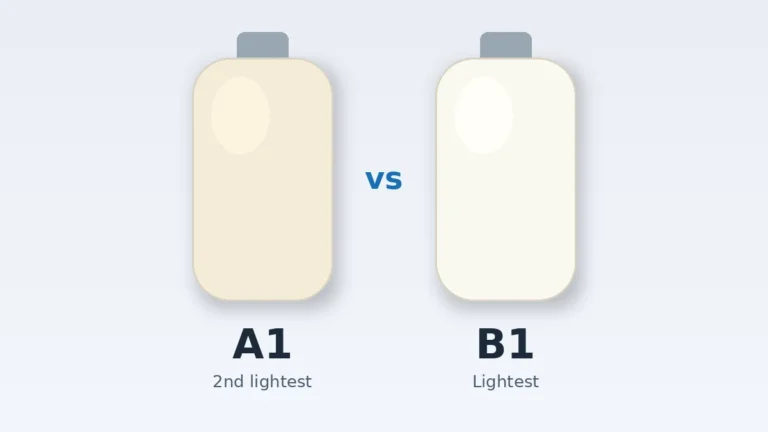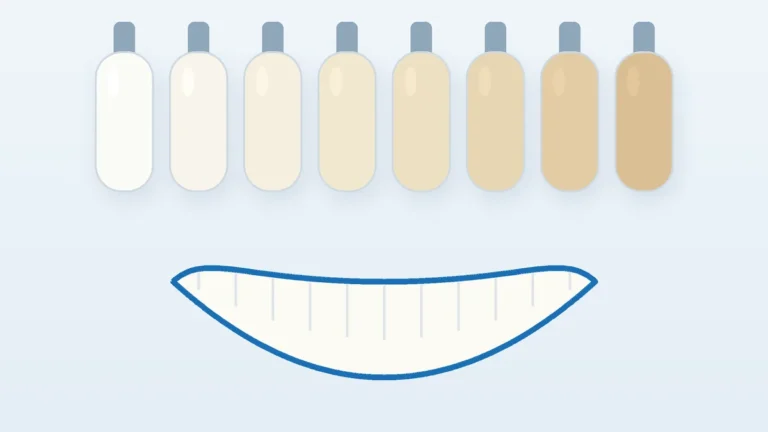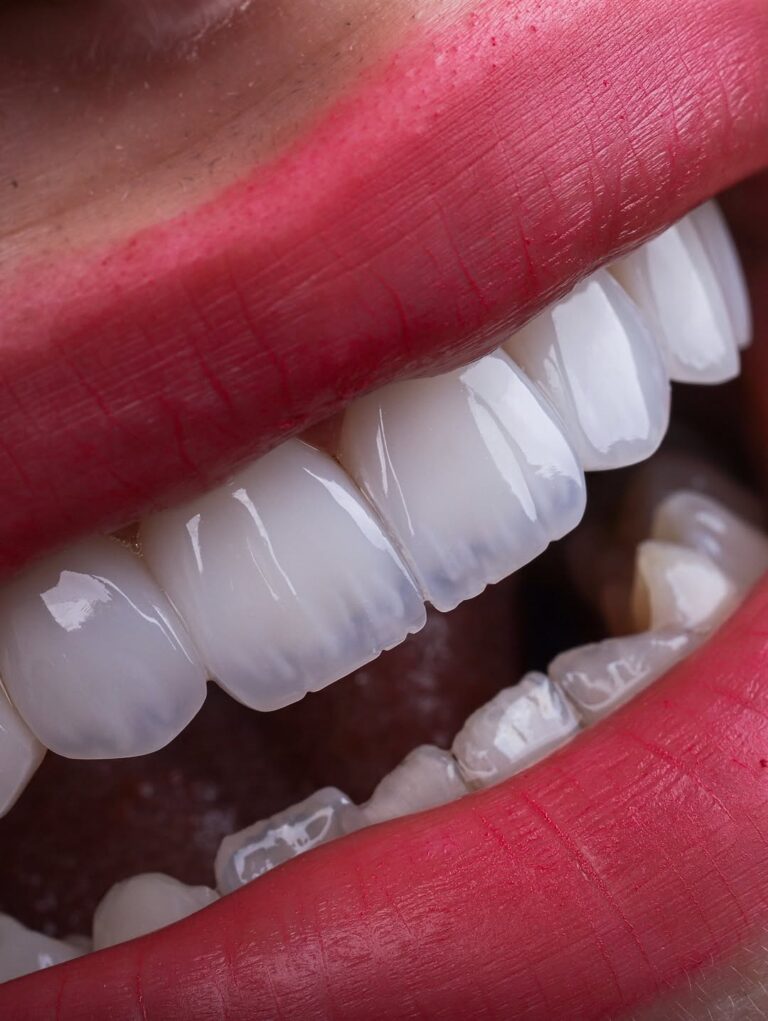
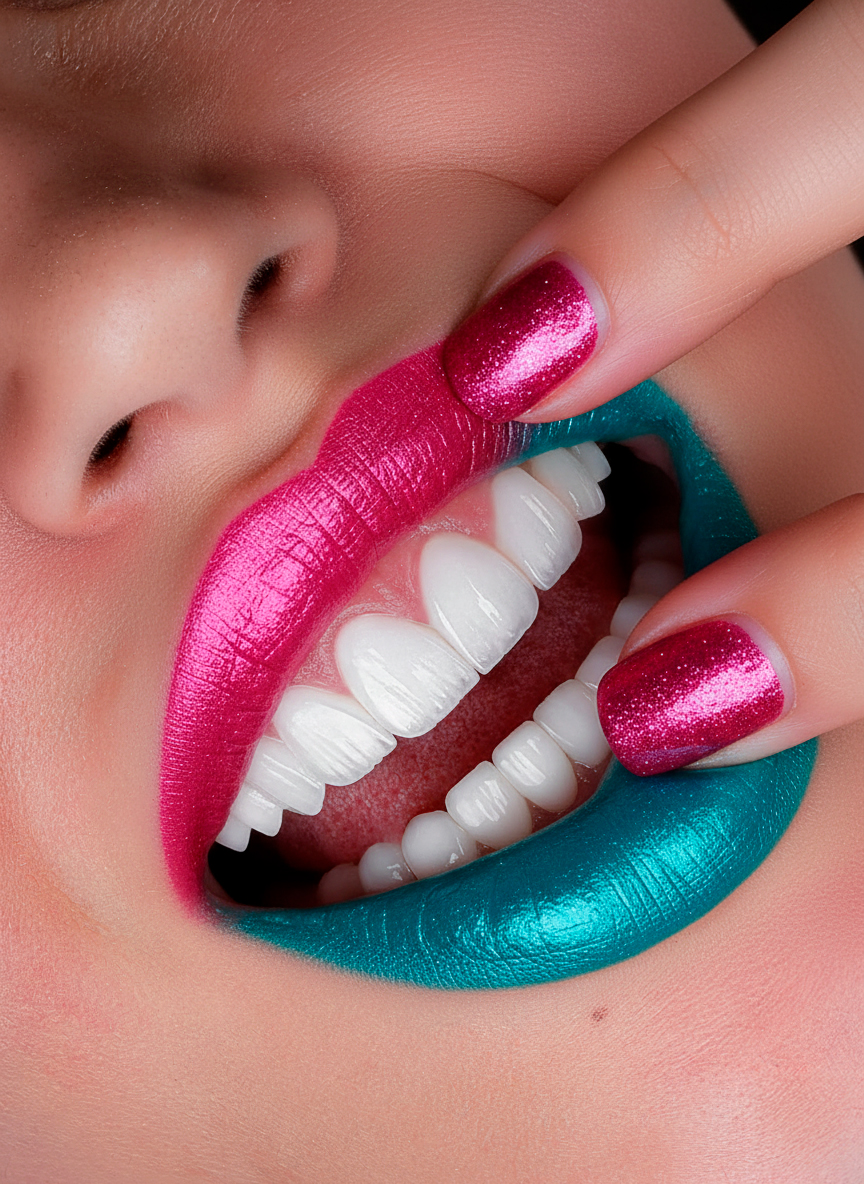
Porcelain veneers are usually the better choice if you want a long‑lasting, highly natural “Hollywood smile,” while composite veneers are ideal when you need a more affordable, conservative or short‑to‑medium‑term solution. The right option for you depends on how long you want your new smile to last, how perfect you want it to look, your bite and habits, and your budget timeline.southkenmd+4
The same veneers cost up to 70% less in Colombia.
See if you qualify Free video call in English · on WhatsAppIndividual patient experience. Results and pricing are confirmed after a clinical evaluation.
Introduction: Why This Choice Feels So Confusing
You see stunning veneer smiles on social media, but no one tells you clearly whether porcelain or composite veneers are right for your teeth, lifestyle, and budget.
Both options can dramatically improve your smile, yet they differ in longevity, stain resistance, tooth preparation, and cost, which makes the decision overwhelming for most patients. In this guide, you’ll get a clear, evidence‑based breakdown so you can speak confidently with your dentist or dental tourism clinic and avoid expensive regrets.gentledentistry+3
Simplified Technical Explanation: Veneers in Plain Language
Think of veneers as custom-made “contact lenses” or “false nails” for your teeth. They are thin shells that cover the front surface to change color, shape, and alignment. There are two main categories:metatechinsights+2
- Porcelain veneers (ceramic)
- Made in a dental lab from advanced ceramics like feldspathic porcelain or lithium disilicate (E‑max) and sometimes zirconia.pmc.ncbi.nlm.nih+1
- Bonded to slightly prepared enamel, giving a strong, glass‑like, stain‑resistant surface that can last 10–15+ years.goldcoastdental+3
- Composite veneers (resin)
- Sculpted directly on your teeth using tooth‑colored composite resin, similar to white fillings.ashleyharrisondds+2
- Usually require little or no enamel removal, can often be done in one visit, but typically last about 5–7 years and stain more easily.southkenmd+4
Professional societies and authors emphasize that veneers are a conservative alternative to crowns when used on healthy teeth, provided preparation remains mainly in enamel and cases are properly selected.cosmetic-dentistry+2
The Main Showdown: Porcelain vs Composite Veneers
Cosmetic dentists widely regard porcelain as the “gold standard” for full smile makeovers, while composite is the flexible, budget‑friendly alternative. Survival studies show porcelain veneers can maintain over 90% survival at 10 years and more than 85% at 15–20 years, whereas composite veneers more often need repair or replacement around 5–7 years.completesmilesbv+6
Get your veneers in Colombia for up to 70% less.
In the US, 20 porcelain veneers run $30,000–$50,000. With Dr. Yazmin in Medellin, it's $6,900, all-inclusive.
Individual patient experience. Prices, inclusions and results are confirmed after a clinical evaluation. A full evaluation is required before any treatment.
Head‑to‑Head Comparison Table
In this table, Option A = Porcelain veneers and Option B = Composite veneers.
| Feature | Option A (Porcelain Veneers) | Option B (Composite Veneers) | Brightness / Durability | Best For | Risk Level* |
|---|---|---|---|---|---|
| Longevity | Typically 10–15+ years; 91–96% survival at 10 years, >85% up to 15–20 years with proper case selection.completesmilesbv+3 | Usually 5–7 years before significant repair or replacement; sometimes up to ~8 years with meticulous care.southkenmd+3 | High brightness & high durability over time. | Patients wanting a long‑term smile makeover and willing to invest more upfront. | Moderate (irreversible enamel removal; failures usually require full remake). |
| Stain resistance | Glazed ceramic surface resists coffee, tea, wine and smoking stains very well.completesmilesbv+4 | Resin surface is more porous and picks up stains faster; needs regular polishing.gentledentistry+3 | Porcelain keeps its brightness far longer than composite. | People who drink coffee, tea, red wine or smoke but want a consistently white smile. | Low–moderate (if hygiene is good). |
| Aesthetic realism | Translucency and light reflection closely mimic natural enamel; excellent for “Hollywood” and natural‑looking smiles.southkenmd+3 | Can look very good, especially in expert hands, but usually slightly less glassy and less color‑stable over years.gentledentistry+2 | Porcelain offers the most stable, lifelike brightness. | High‑demand cosmetic cases, influencers, public‑facing professionals. | Low when done by an experienced cosmetic dentist. |
| Tooth preparation | Typically requires removing 0.3–0.7 mm of enamel; goal is to stay mostly in enamel for strong bonding.cosmetic-dentistry+2 | Often minimal or no preparation; more enamel can be preserved and treatment can be partly reversible.gentledentistry+2 | Composite wins on conservation of tooth structure, porcelain on strength. | Younger patients, small corrections, or those worried about cutting teeth. | Low if bite and case are suitable. |
| Procedure time | Usually 2–3 visits (planning, preparation, lab work, bonding).gentledentistry+2 | Often completed in a single visit because material is placed directly on the tooth.gentledentistry+2 | Porcelain: slower but more durable; composite: fast but shorter‑lived. | Patients traveling for dental tourism who can schedule 4–7 days for lab work. | Low–moderate (depends on travel/time pressure). |
| Cost per tooth (clinic‑side) | U.S./UK: about 925–2,500 USD per tooth; dental‑tourism countries like Colombia or Turkey often 150–600 USD per tooth.gentledentistry+3 | U.S./UK: roughly 400–1,500 USD per tooth; often lower in dental‑tourism hubs.gentledentistry+2 | Porcelain: higher upfront, lower cost per year; composite: lower upfront, higher maintenance. | Patients seeing veneers as a 10–15‑year investment, not a quick fix. | Moderate (financial commitment, possible redo costs). |
| Repair & maintenance | Difficult to “patch”; fractures often require remaking the veneer.completesmilesbv+2 | Chips and edges can frequently be repaired or re‑polished chairside.gentledentistry+2 | Porcelain is durable but less repairable; composite is forgiving but weaker. | People prone to minor chips who want quick in‑office repairs. | Low for composite (easy fixes); moderate for porcelain (bigger consequence if it fails). |
| Suitability with heavy grinding (bruxism) | Often contraindicated in severe bruxism or deep overbite without protective measures; risk of fracture.pmc.ncbi.nlm.nih+1 | Also at risk, but repairs are easier; sometimes used as a more sacrificial material or temporary aesthetic solution.gentledentistry+2 | Both need protection (e.g., nightguard); porcelain can chip under heavy force. | Patients who can commit to a nightguard and bite control. | Higher if bruxism not controlled. |
*Risk Level here refers to clinical/long‑term risk, not safety of the procedure itself. Both options are safe when planned correctly by a qualified dentist.renstrom+2
The Million‑Dollar Question: “Which Veneers Are Better for Me?”
Short Answer
For most patients seeking a long‑lasting, highly aesthetic smile makeover, porcelain veneers are usually the superior choice because they last longer and keep their color better. If you want a more affordable, faster, and conservative option, especially for smaller changes or as a “trial smile,” composite veneers can be an excellent solution.genesispub+6
Nuanced Answer: What the Decision Really Depends On
- Your time horizon and budget strategy
If you want a transformation that holds for 10–15+ years, porcelain’s higher upfront cost is often cheaper per year than replacing composites every 5–7 years. If you see this as a 3–7‑year solution or want to “test” a new smile, composite is more flexible.gentledentistry+4 - The condition of your teeth, bite and habits
Severe bruxism, deep vertical overlap without horizontal overlap, reduced space to close your bite, or very damaged teeth can make veneers (especially porcelain) a poor or high‑risk option, and some patients should instead consider crowns or orthodontics. Smokers and heavy coffee/red‑wine drinkers may prefer porcelain for its stain resistance, provided their gums are healthy.pmc.ncbi.nlm.nih+4 - Your aesthetic expectations and tolerance for maintenance
If you’re very picky about color stability and want a near‑perfect, natural‑looking result on photos and video, porcelain is more predictable over time. If you are okay with periodic polishing and minor touch‑ups in exchange for less enamel reduction and lower cost, composite can match your goals well.arlingtonheightsdentist+5
Customization Guide: Matching Veneers to Your Face, Age and Bite
Research shows that tooth shade and skin tone are correlated, and that matching veneers to the patient’s complexion helps create a more harmonious, natural‑looking smile. Studies also suggest that tooth color is just one part of overall facial attractiveness, which depends on multiple facial features and individual perception.discovermagazine+4
By Skin Tone and Facial Features
- Fair skin tones
- Best with: Slightly warmer, natural‑white shades, not blue‑white “paper” shades; porcelain makes it easier to control subtle translucency and warmth.futuredentalstudio+2
- Why: Too bright and opaque can look artificial and draw unnatural attention; harmonizing with lip and facial color usually looks more believable.pmc.ncbi.nlm.nih+1
- Avoid: Extremely opaque, super‑white composite if your lower teeth or gums do not match, as this contrast can be obvious in photos and in real life.
- Medium or olive skin tones
- Best with: Neutral to slightly bright shades that are one to three steps lighter than your natural color, often with porcelain for more stable shade control.pjms.org+2
- Why: Studies report that medium skin tones are common and show significant association with particular tooth shades; when matched well, they improve perceived smile harmony.pmc.ncbi.nlm.nih+2
- Avoid: Over‑bleached upper veneers with much darker untouched lower teeth; this mismatch is especially obvious in social media and close‑up selfies.
- Darker skin tones
- Best with: Slightly warmer, richer whites that contrast beautifully with the skin while avoiding an unrealistic “movie prop” look; porcelain or high‑end composite layering can both work.accio+2
- Why: Evidence indicates that tooth shade and skin tone interact in how people judge smile attractiveness, and that tooth color perception is influenced by surrounding facial color.pmc.ncbi.nlm.nih+3
- Avoid: Extremely opaque, chalky shades with no translucency; they may look fine on a shade tab but less natural once integrated into your full face.
By Age
Tooth color naturally changes with age: enamel thins, dentin shows through, and shades become warmer and slightly darker.[pmc.ncbi.nlm.nih]
- Younger patients (late teens–30s)
- Can usually carry brighter shades, but should still match lower teeth or consider treating both arches for consistency.futuredentalstudio+2
- Composite can be a good choice for conservative, reversible improvements if your teeth are still changing or orthodontics may still be needed.pmc.ncbi.nlm.nih+1
- Mature patients (40s+)
- Often look best with slightly warmer, natural whites instead of the brightest bleach shade, especially when lips and skin show age‑related changes.pmc.ncbi.nlm.nih+1
- Porcelain is particularly valuable here for stable color and surface texture over many years, which supports social confidence and smile attractiveness.mydentistfortcollins+3
By Bite, Tooth Position and Habits
Systematic reviews highlight that veneers are contraindicated or higher risk in cases of severe bruxism, deep vertical overlap without horizontal overlap, severely malpositioned teeth, or reduced space to close the bite.futuredentalstudio+1
- Normal, stable bite, no heavy grinding
- Porcelain veneers are usually safe and predictable if preparation stays mostly in enamel and occlusion is carefully planned.goldcoastdental+3
- Mild crowding, minor misalignment
- Porcelain or composite can both work; modern minimal‑prep porcelain and ultra‑thin zirconia allow conservative correction with good strength.pmc.ncbi.nlm.nih+2
- Composite may be chosen if you or your dentist want to test alignment and shape changes before committing to enamel removal.
- Bruxism or strong bite forces
- Some authors advise avoiding veneers or using them cautiously with nightguards, especially porcelain, because of fracture risk.goldcoastdental+1
- In certain cases, composite may serve as a more “sacrificial” material that is easier and cheaper to repair, but you must accept more frequent maintenance.ashleyharrisondds+2
Actionable Methods: 3 Simple Tests Before Your Consultation
You can do these at home to get clearer about which direction fits you before talking to your cosmetic dentist or dental tourism coordinator.
1. The “Cost‑Per‑Year” Reality Check
- Write down typical local fees or quotes: for example, in the U.S. porcelain may cost around 925–2,500 USD per tooth, composite around 400–1,500 USD.[gentledentistry]
- Divide those numbers by realistic lifespans: porcelain 10–15+ years, composite ~5–7 years.us-uk.bookimed+4
- Compare the cost per year instead of just the price per tooth; many patients realize porcelain is actually better value if they want a long‑term result.metatechinsights+2
2. The “Lifestyle and Stain” Audit
- For one week, track how often you consume coffee, tea, red wine, colored sodas or smoke/vape.
- If these are daily habits and you are not planning to change them, porcelain’s superior stain resistance is a strong advantage.completesmilesbv+3
- If you rarely consume staining foods and are happy to visit your dentist for polishing, composite may be acceptable despite its greater tendency to discolor.ashleyharrisondds+2
3. The “Selfie + Shade” Harmony Test
- Take well‑lit selfies (front and 45‑degree angles) and compare your current tooth shade to online shade guides or digital smile simulations.
- Studies show a significant relationship between skin complexion and tooth shade, and that perceived smile attractiveness depends on how tooth color harmonizes with your skin and facial features.pjms.org+2
- Use this to decide whether you want a subtle improvement (often okay with composite) or a full redesign in shade, shape and alignment (usually better with porcelain and comprehensive planning).renstrom+2
Current Trends: What Patients Are Choosing in 2025–2026
Market analyses and clinic reports show that porcelain veneers still dominate worldwide, holding roughly 60% of the veneer market, with composite around 40% and steadily growing. Demand is driven by social‑media‑driven aesthetics, minimally invasive ceramic options (no‑prep or ultra‑thin veneers), and the rapid growth of dental tourism in countries like Colombia, Turkey, Mexico and Thailand.drasararestrepos+7
What People Choose for Different Looks
| Desired Look | Most Popular Option (Global Trend) | Why People Choose It |
|---|---|---|
| “Hollywood” ultra‑white full smile makeover | Porcelain veneers (often E‑max or layered ceramics).mydentistfortcollins+3 | Best combination of brightness, translucency and long‑term color stability; ideal for complete arch treatments and social‑media‑driven smile designs.completesmilesbv+4 |
| Natural, subtle refresh (closing gaps, minor chips, small color change) | Composite veneers or minimal‑prep porcelain.gentledentistry+3 | Faster, more conservative and budget‑friendly; good for trying a new look or making small corrections without heavy tooth reduction.gentledentistry+3 |
| Budget‑conscious “trial smile” before major life events (wedding, job change) | Composite veneers.gentledentistry+2 | Lower cost and single‑visit placement; easier to modify or replace later if you decide to upgrade to porcelain or change the design.gentledentistry+3 |
| Dental tourism full‑arch makeover with big shade change at lower cost | Porcelain veneers in dental‑tourism hubs (e.g., Colombia, Turkey, Mexico, Thailand).drasararestrepos+3 | High‑quality ceramics with advanced technology at 60–80% lower prices than U.S./UK; strong focus on smile design packages for international patients.drasararestrepos+3 |
The Step Before the Decision: What to Demand from Your Dentist
Expert protocols from the American Academy of Cosmetic Dentistry (AACD) and leading veneer authors emphasize thorough planning and conservative preparation before any drill touches your teeth. Whether you stay local or travel abroad, you should insist on the following before committing:cosmetic-dentistry+2
- Comprehensive diagnosis and photo documentation
- Ask for a full set of clinical photos (AACD commonly uses 12 standardized views) and proper X‑rays to rule out decay, gum disease and bite problems.anthembluecross+1
- Make sure your dentist explains any contraindications, such as severe bruxism, deep overbite, or very damaged teeth that might require crowns instead of veneers.anthembluecross+1
- Wax‑up or digital smile design + mock‑up
- Request a diagnostic wax‑up or digital simulation, and ideally a temporary “mock‑up” placed over your teeth so you can see the approximate length, shape and volume before committing.[youtube]renstrom+1
- This step allows you to give feedback on length, width and style (square vs. rounded, feminine vs. masculine) before the lab fabricates the final porcelain or before composite is finalized.renstrom+1
- Clear discussion of materials and prep type
- Ask exactly which ceramic (e.g., feldspathic, lithium disilicate/E‑max, zirconia) or which composite system will be used and why.pmc.ncbi.nlm.nih+2
- Confirm whether your case will be no‑prep, minimal‑prep or traditional prep and how much enamel will be removed; guidelines suggest 0.3–0.7 mm facial reduction with most of the preparation kept in enamel when possible.cosmetic-dentistry+1
- Try‑in and shade verification
- For porcelain, insist on a try‑in appointment using try‑in paste before final cementation so you can verify color, shape and phonetics while you talk and smile.philadelphiacosmeticdentistry+1
- Check that shade matches your skin tone, lips and any untreated teeth, in natural and artificial light, drawing on evidence that skin complexion and tooth shade interact strongly in aesthetics.pjms.org+2
- Occlusal (bite) analysis and nightguard plan if needed
- Your dentist should assess your bite in all movements and explain how the new veneers will contact opposing teeth, especially if you clench or grind.pmc.ncbi.nlm.nih+2
- If there is any bruxism risk, request a custom nightguard as part of the treatment plan to protect your investment.goldcoastdental+1
Conclusion and Action Plan: Your Next Steps
Use this simple checklist to move from confusion to a clear, confident decision:
- Identify your main need
- “I want a 10–15‑year, stable Hollywood smile” → lean toward porcelain veneers.
- “I want a budget‑friendly, conservative or short‑to‑medium‑term upgrade” → consider composite veneers.
- Match to your profile
- Review your skin tone, age, bite and habits using the customization guide so your new smile harmonizes with your face and lifestyle.pmc.ncbi.nlm.nih+4
- Do the three pre‑consultation tests
- Cost‑per‑year calculation, lifestyle‑and‑stain audit, and selfie‑plus‑shade harmony test to clarify your expectations before you meet the dentist.southkenmd+5
- Choose the right clinic and ask the right questions
- Whether locally or via dental tourism (e.g., Colombia, Turkey, Mexico, Thailand), prioritize clinics that offer full diagnostics, wax‑ups/digital smile design, clear material selection, try‑ins and written maintenance plans.dentaltourismcolombia+4
- Book a consultation with your shortlist ready
- Arrive with photos, notes from your tests, and a clear preference (“ideally porcelain, but open to composite if my enamel is limited / budget is tight”).
- Use the visit to confirm that what you want esthetically is biologically safe and technically realistic for your teeth and bite.cosmetic-dentistry+3
Following these steps, you’ll move from “I’m confused about porcelain vs composite veneers” to a well‑informed, personalized decision that matches your smile goals, your face and your long‑term plan.