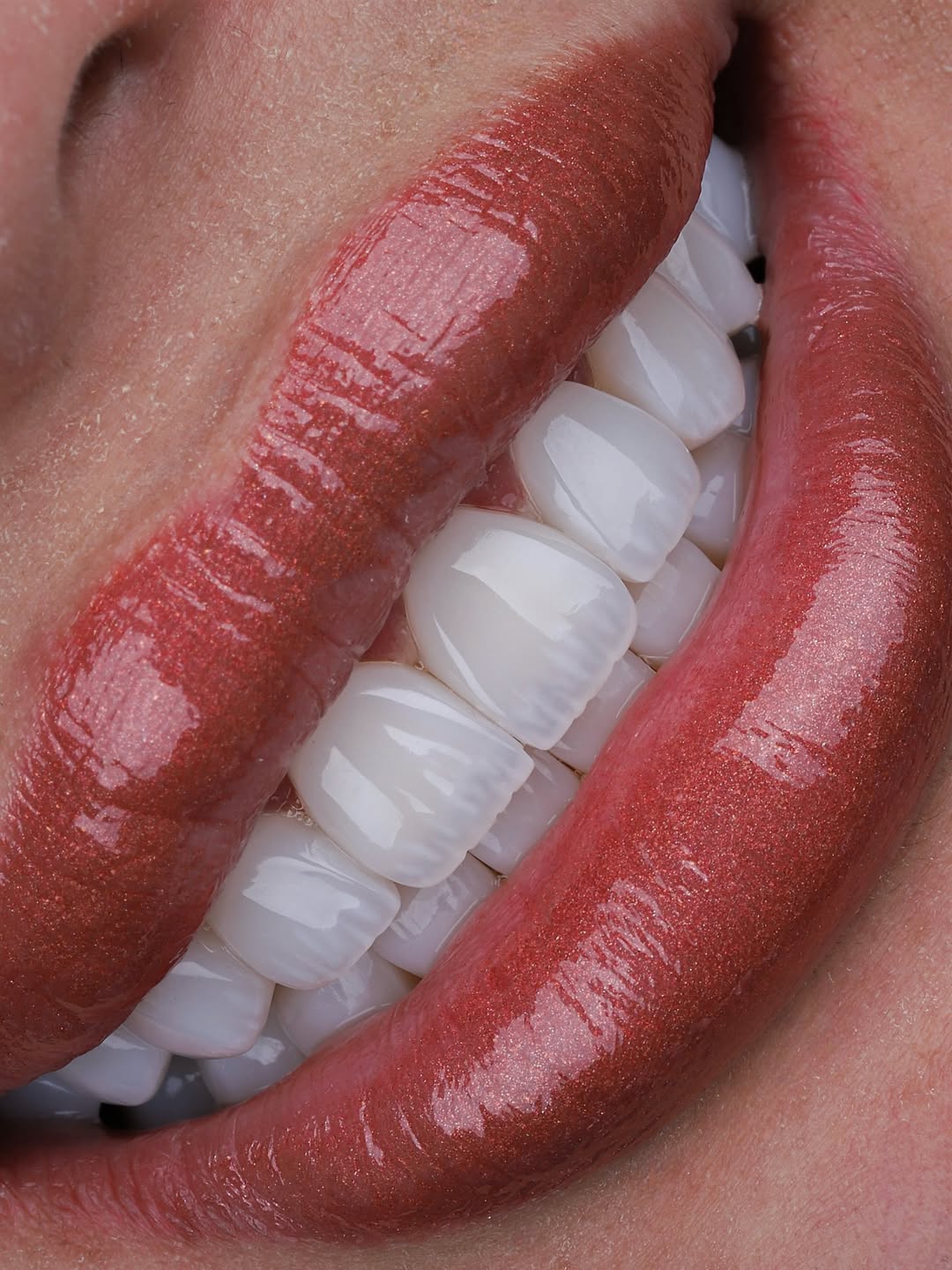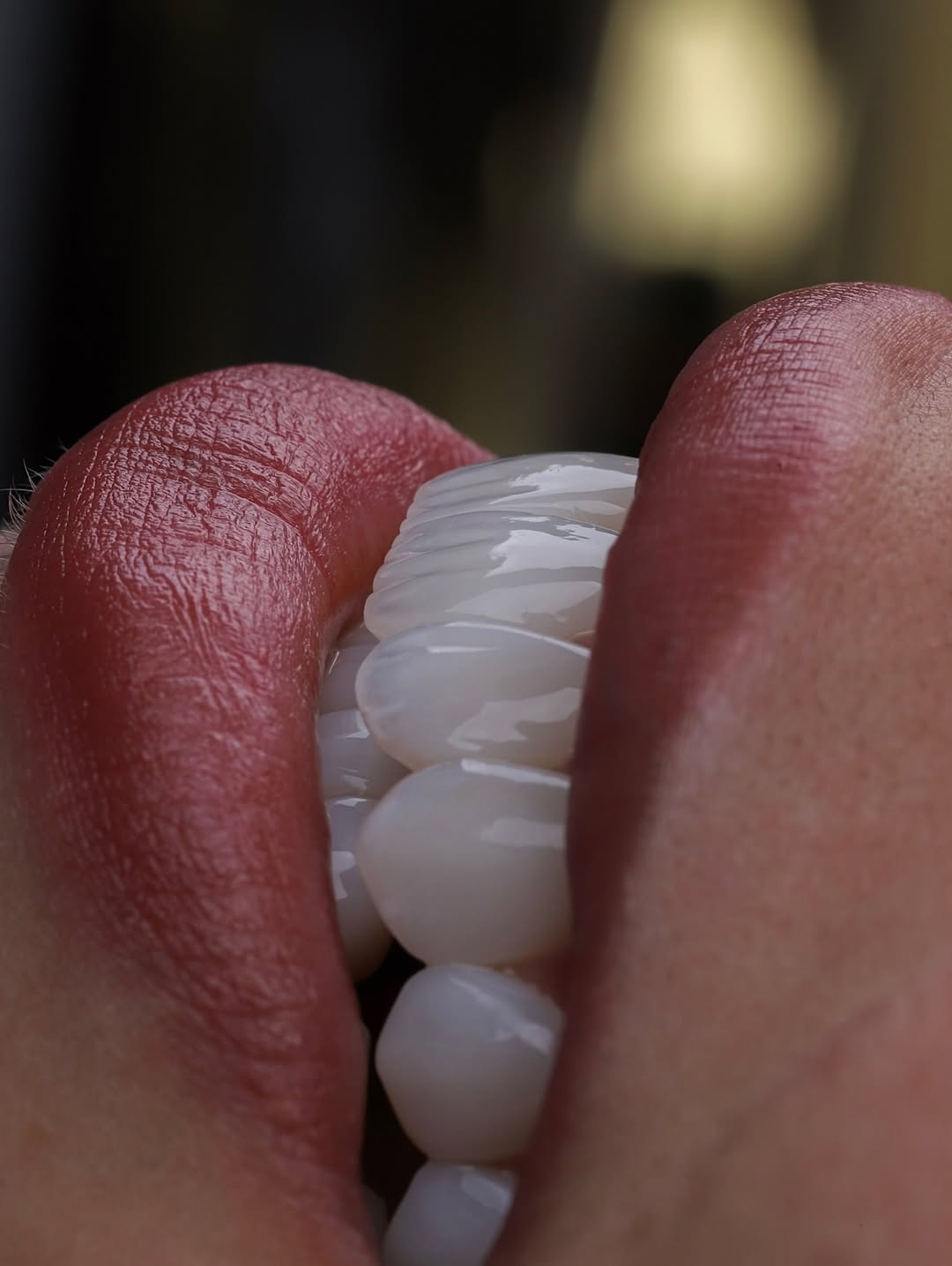
The term “Turkey teeth” has become shorthand across English-language dental forums for a very specific and very avoidable outcome: over-prepared natural teeth, bulky and opaque crowns, gum tissue that never fully recovered, and a smile that looks unmistakably artificial. The patients who reach out to our clinic in Medellín describing this problem are not exaggerating. They are often dealing with real biological damage that requires a structured, clinically conservative correction plan — not just a cosmetic patch.
The same veneers cost up to 70% less in Colombia.
See if you qualify Free video call in English · on WhatsAppIndividual patient experience. Results and pricing are confirmed after a clinical evaluation.
This article explains what actually goes wrong with a large share of budget veneer work performed in high-volume dental tourism markets, and the process Dr. Yazmín Escudero follows in Medellín to correct it safely.
What Actually Causes the “Turkey Teeth” Look
The aesthetic problem patients describe — teeth that are too white, too bulky, too uniform, or visibly ill-fitting at the gumline — is almost always the downstream result of a clinical shortcut. High-volume clinics operating on tight per-chair schedules frequently rely on:
- Full-crown preparation on healthy teeth instead of minimal-prep veneers, removing far more enamel than necessary.
- Zirconia crowns placed for speed rather than lithium disilicate (E-max) restorations, which are more conservative and more translucent.
- Rushed shade selection, often defaulting to bleached, opaque whites that ignore the patient’s natural translucency and skin tone.
- Poor marginal fit at the gumline, which irritates soft tissue and accelerates recession over 12–24 months.
None of these are inevitable consequences of getting dental work abroad. They are consequences of volume-based business models that prioritize turnaround time over restorative planning. The all-inclusive dental tourism packages that prioritize diagnostics and material quality are built specifically to avoid this outcome in the first place.
The Diagnostic Phase: Assessing the Damage Before Touching Anything
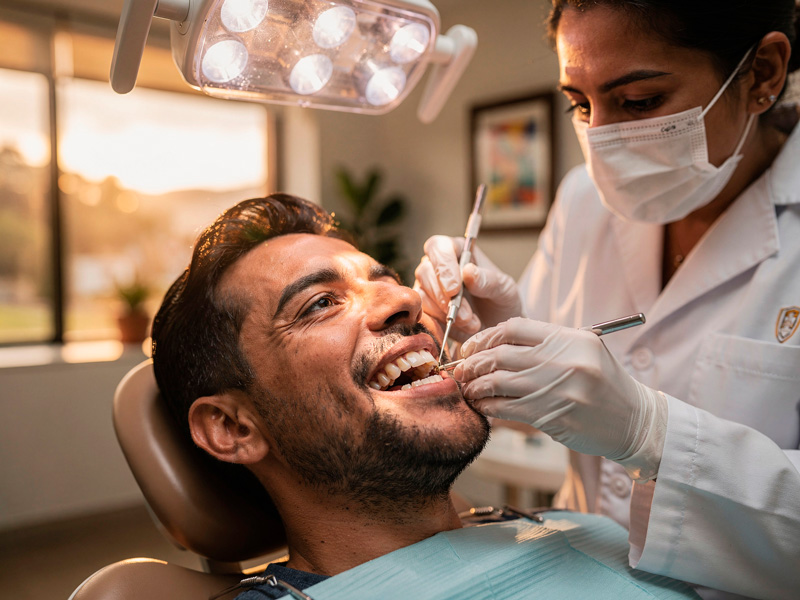
Correcting failed veneer or crown work is fundamentally different from placing veneers on virgin, healthy teeth. Before any restoration is removed, Dr. Escudero’s team conducts a full diagnostic workup that includes:
A flawless Hollywood smile is no longer just for celebrities, thanks to the accessible pricing of porcelain dental veneers in Colombia.
Get your veneers in Colombia for up to 70% less.
In the US, 20 porcelain veneers run $30,000–$50,000. With Dr. Yazmin in Medellin, it's $6,900, all-inclusive.
Individual patient experience. Prices, inclusions and results are confirmed after a clinical evaluation. A full evaluation is required before any treatment.
Periodontal Evaluation
Gum recession and inflammation around poorly fitted margins is one of the most common findings in revision cases. The clinical team measures pocket depth, checks for bleeding on probing, and evaluates whether the existing restorations have contributed to bone-level changes. In many cases, a period of periodontal therapy is required before any new restoration is placed, so the tissue can heal around a cleaner margin.
Remaining Tooth Structure Assessment
Because over-preparation is so common in these cases, one of the most important questions is simple: how much healthy natural tooth is left to work with? Digital radiographs and intraoral scanning determine whether the tooth can safely support another restoration, whether a post-and-core buildup is needed, or whether root canal therapy has to be addressed first.
Bite and Occlusion Analysis
Bulky, poorly contoured crowns frequently create an uneven bite, which can lead to jaw discomfort, uneven wear, and even restoration fracture over time. Occlusal analysis is performed to understand how the existing work is interfering with a natural bite pattern before planning replacements.
The Removal Process
Removing existing crowns or veneers has to be done with far more care than the original placement typically involved. The restorative material is carefully sectioned and removed under magnification to avoid further loss of the underlying tooth structure. Where old cement or bonding agents have penetrated microscopic cracks in the enamel, these are cleaned meticulously since retained residue is a leading cause of secondary decay under new restorations.
If gum tissue has receded or become inflamed around the old margins, this is addressed before final impressions are taken — either through non-surgical periodontal therapy or, in more advanced cases, minor soft-tissue recontouring to create a healthy, stable gumline for the new restoration to meet.
Replacing With Lithium Disilicate: Why Material Choice Matters
The restorative material selected for the replacement is one of the most important clinical decisions in the entire correction process. Dr. Escudero’s clinic uses HD E-max lithium disilicate porcelain for the overwhelming majority of correction cases, for several specific reasons:
- Higher translucency that mimics natural enamel far more closely than the monolithic zirconia frequently used in high-volume clinics, avoiding the flat, opaque look associated with “Turkey teeth.”
- Conservative thickness options, often as thin as 0.3–0.5mm, meaning less additional tooth reduction is required during the correction itself.
- Strong bond to tooth structure via adhesive cementation, which distributes bite forces more naturally than the bulkier cementation techniques used with some crown systems.
- Superior long-term color stability, resisting the yellowing or opacity shift that some composite-based restorations show within a few years.
Every replacement case begins with a digital design phase so the patient can see and approve the proposed shape, shade, and proportions before any porcelain is milled. This process is explained in detail in our article on Digital Smile Design in Colombia, which allows patients correcting previous work to preview a natural-looking result rather than guessing what they’ll end up with a second time.
Why Patients Choose Medellín for Revision Cases
Correction cases require a level of diagnostic patience that isn’t always compatible with single-visit, high-turnover dental tourism models. Patients who have already had one disappointing experience abroad are, understandably, more cautious the second time. Two factors tend to matter most in these cases:
Clear Communication About What Went Wrong
Understanding exactly why the previous work failed — whether it was material choice, preparation technique, or bite misalignment — requires a dental team that can explain the clinical reasoning in plain English, not through a translator relaying simplified summaries. This is one of the reasons we’ve written specifically about the value of an English-speaking dentists in Medellín, particularly for patients navigating a more complex, multi-visit correction case.
Realistic Timelines Without Sacrificing Safety
While our standard packages are built around a 72-hour smile transformation for patients with healthy existing teeth, correction cases are evaluated individually. Some can still be completed within a similar timeframe once diagnostics are complete; others require a staged approach with periodontal healing time built in. Patients traveling from the United States, Canada, the UK, or Australia are given a realistic itinerary during their virtual consultation, not an optimistic one designed to close a sale.
What to Expect From Your First Consultation
If you’re dealing with failed veneers, ill-fitting crowns, or gum irritation from previous dental work abroad, the first step is a virtual review of your case. Patients typically send:
- Recent photographs of their smile from multiple angles
- Any existing x-rays or treatment records from the original provider
- A description of specific concerns — sensitivity, gum bleeding, color, shape, or bite discomfort
From there, Dr. Escudero’s team can outline whether the case is a straightforward veneer replacement or requires periodontal treatment first, and provide a transparent cost estimate. For patients researching logistics, our guide on payment options for dental work in Colombia covers currency, card limits, and payment structuring for international patients.
Take the Next Step
If your previous veneers or crowns no longer look natural, feel uncomfortable, or are showing signs of gum recession, don’t wait for the problem to worsen. Reach out directly to discuss your case and receive a clinical assessment from Dr. Yazmín Escudero’s team.