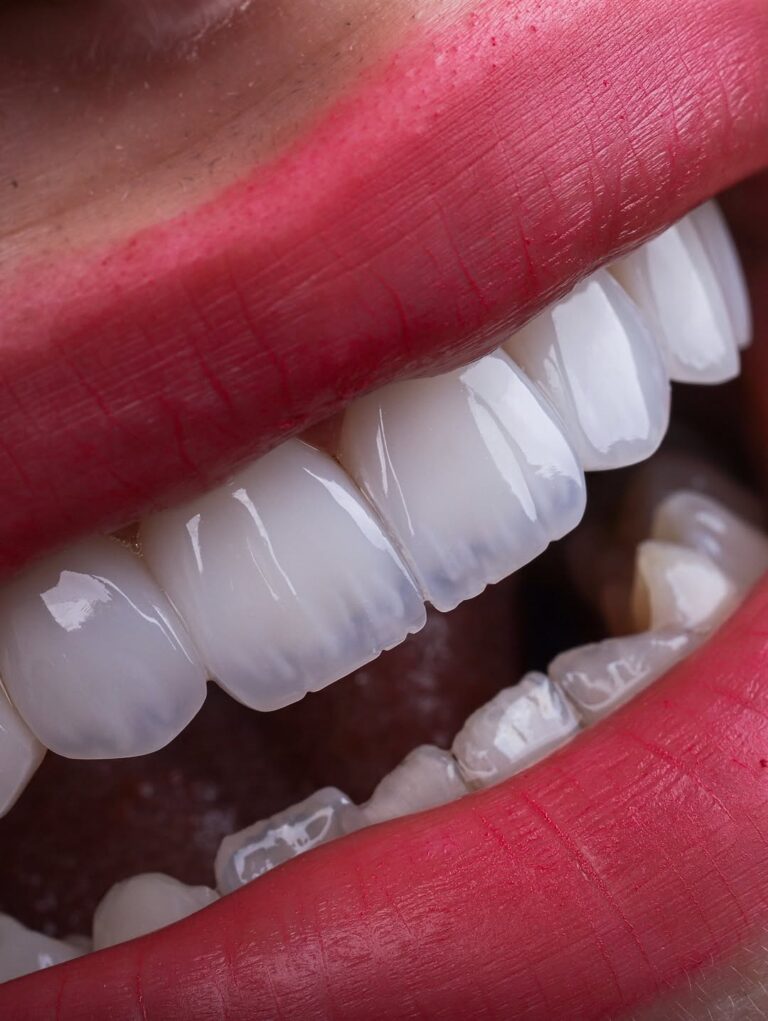
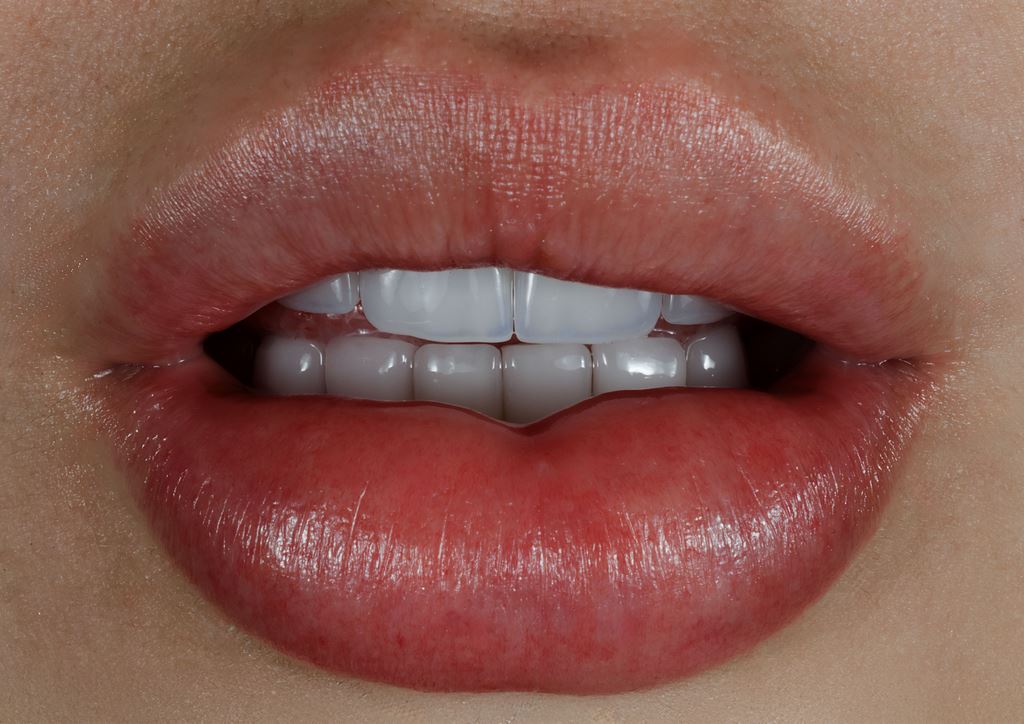
Your smile is one of the first things people notice about you — and the shape of your teeth plays a bigger role than you might think.
The same veneers cost up to 70% less in Colombia.
See if you qualify Free video call in English · on WhatsAppIndividual patient experience. Results and pricing are confirmed after a clinical evaluation.
The Short Answer: Oval and Tapered-Ovoid Win the Science
If you’ve ever wondered, “What teeth shape is most attractive?” — science has a clear frontrunner. Research published in peer-reviewed dental journals consistently points to the oval and tapered-ovoid tooth forms as the most aesthetically pleasing shapes overall. A landmark UK study found that the tapered-ovoid maxillary incisor shape was perceived as the most attractive smile by 50% of all respondents, outranking every other shape tested.
That said, the science also reveals an important nuance: there is no single “perfect” tooth shape that works for every person. Dental professionals agree that the ideal shape depends on your face shape, gender preferences, and overall facial harmony.
Why Tooth Shape Matters So Much
Tooth shape isn’t just a cosmetic detail — it’s the single most influential factor in how your smile is perceived. Before people register the whiteness of your teeth or whether they’re perfectly aligned, shape creates an immediate first impression. It projects personality: bold, soft, elegant, or powerful.
You can expect the exact same ultra-thin, durable porcelain materials when you choose to get dental veneers in Colombia as you would in top-tier US clinics.
A 2006 peer-reviewed study confirmed that among all dental features assessed, crown shape ranked highest in determining overall dental attractiveness — higher than tooth color, gum health, or proportions. This makes understanding tooth shape one of the most important considerations in both cosmetic dentistry and smile makeovers.
Get your veneers in Colombia for up to 70% less.
In the US, 20 porcelain veneers run $30,000–$50,000. With Dr. Yazmin in Medellin, it's $6,900, all-inclusive.
Individual patient experience. Prices, inclusions and results are confirmed after a clinical evaluation. A full evaluation is required before any treatment.
The 4 Main Teeth Shapes Explained
There are four primary tooth shape categories recognized in modern cosmetic dentistry:
1. Oval / Tapered
Most Universally Flattering
Oval teeth are slightly narrower at the gumline and wider toward the biting edge, creating an elegant, elongated silhouette. This shape is considered the most versatile and universally flattering across all face types. In the dental aesthetics literature, the ovoid form is consistently ranked second overall in attractiveness, and is actually the top choice among patients when making their own preference selections (56%).
Best for: Most face shapes, especially oval and heart-shaped faces; patients seeking a sophisticated, elegant smile.
2. Round / Circular
Youthful and Approachable
Round teeth have soft, curved corners and a gently rounded biting edge. This shape is described as the most popular globally for creating a warm, approachable, and youthful smile. Multiple studies show that restorative dentists prefer round incisors for female patients, and orthodontists rank round and square-round incisors highest for women as well.
Best for: Square or angular face shapes (it softens strong features); patients wanting a natural, feminine look.
3. Square / Rectangular
Bold and Defined
Square teeth have flat, straight edges with minimal rounding at the corners. They project strength, confidence, and a structured appearance — traditionally associated with a more masculine aesthetic. However, research shows that square-round incisors are preferred for men by all groups tested. Fully square (unrounded) incisors are consistently rated among the least attractive shapes when unmodified.
Best for: Round or oval face shapes that need added definition; men seeking a natural, strong-looking smile.
4. Triangular / Pointed
Distinctive and Fashion-Forward
Triangular teeth are wider at the biting edge and narrow toward the gumline, creating a distinctive, high-fashion look. While striking in editorial photography, this shape is the least common choice in everyday cosmetic dentistry.
Best for: Fashion-forward patients, performers, and models seeking a memorable, unique smile.
What the Research Really Says: Key Findings
Several high-quality studies have compared tooth shape preferences across different populations and professional groups. Here’s what the evidence shows:
| Tooth Shape | Overall Attractiveness Rank | Preferred By |
|---|---|---|
| Tapered-Ovoid | #1 (50%) | Dentists (70%), Technicians (50%) |
| Oval / Ovoid | #2 (36.7%) | Patients (56%) |
| Round / Square-Round | Top for restorations | Restorative dentists (female smiles) |
| Square-Round | Best for men | All groups for male smiles |
| Square (unmodified) | Least attractive (43.3%) | Ranked lowest by dentists (47%) |
One key takeaway from a 2011 PubMed study: laypeople generally do not discriminate between round, square-round, and oval incisor shapes in female smiles — they only clearly disliked fully square shapes. Dental professionals, meanwhile, are significantly more critical and specific in their preferences than patients.
A 2016 UCL study involving 30 dentists, 30 dental technicians, and 30 patients confirmed: while professionals lean toward tapered-ovoid, patients most commonly selected the ovoid (plain round) shape as most attractive — suggesting that patient preferences and clinician preferences don’t always align.
Tooth Shape and Face Shape: The Golden Rule of Smile Design
The most effective way to choose a flattering tooth shape is to match it to your face shape. Modern cosmetic dentistry follows a clear set of guidelines:
| Face Shape | Best Tooth Shape | Why It Works |
|---|---|---|
| Round | Square / Rectangular | Adds definition and structure, counterbalancing soft curves |
| Square / Angular | Round / Oval | Softens strong jawlines, creates an approachable appearance |
| Oval | Any shape works | The most versatile face — all tooth styles look natural |
| Heart-shaped | Oval / Tapered | Balances a wider forehead with a gentle, narrowing silhouette |
| Long / Narrow | Square / Wide | Adds perceived width to the smile, balancing proportions |
| Diamond | Round / Oval | Softens prominent cheekbones for a harmonious look |
For oval faces specifically, rounded edges on the front teeth help blend with the gentle facial outline — sharp, dramatic angles tend to clash with this face shape.
The Role of the Golden Ratio in Tooth Shape Perception
Beyond shape alone, proportions matter enormously. The golden ratio (approximately 1.618) has been applied in dentistry as a visual guide for balancing the widths of the front teeth. In smile design, a commonly cited relationship is:
- Central incisor visible width = 1.0 unit
- Lateral incisor visible width ≈ 0.618 units
- Canine visible width ≈ 0.382 units
Research shows that the golden ratio between central and lateral incisors exists in 50.3% of people with an attractive smile versus only 38.1% of those without. However, dentists treat these numbers as a starting reference — not a rigid rule — since facial structure, arch form, and individual anatomy all influence what looks “balanced” in practice.
The ideal width-to-length ratio for central incisors is considered esthetically pleasing in the 75–80% range, with the average vertical dimension of maxillary central incisors being 10.6mm in males and 9.8mm in females.
Gender and Tooth Shape: What Research Shows
A major study evaluating 460 patients found that pure tooth forms are actually rare in the general population: only 6.52% had pure oval, 3.48% pure square, 3.26% pure triangular, and 2.39% pure rectangular teeth. The most common forms found were hybrid shapes — particularly tapered-oval (TO: 20.87%), square-oval with scalloped laterals (SOS: 20.65%), and oval-rectangular (OR: 19.57%).
Importantly, the same study found no reliable correspondence between tooth shapes and patient gender in natural smiles. This challenges the traditional cosmetic dentistry assumption that square teeth are “masculine” and round teeth are “feminine” — and points toward choosing shapes based on patient preferences and facial harmony rather than gender stereotypes.
Hollywood Smiles: What Celebrities Choose
When patients walk into cosmetic dentistry clinics today, the most-requested celebrity smiles — including Margot Robbie, Scarlett Johansson, Gabrielle Union, and Jessica Alba — share common characteristics: wide, symmetrical, natural-looking, and “perfectly imperfect”. Cosmetic dentists note that the trend is moving away from oversized, chunky “Hollywood” teeth toward natural-looking veneers with soft oval or round shapes.
The Hollywood Smile is characterized by two symmetrical rows of straight, white teeth following the golden proportion rule — and for women, oval teeth are generally recommended as the most flattering choice. The incisal edges of the upper teeth following the curvature of the lower lip is considered a hallmark of the most attractive smiles.
How to Choose the Right Tooth Shape: A Practical Guide
Choosing the most attractive tooth shape for you involves more than picking a style from a chart. Here’s what modern dental aesthetics recommends:
- Start with your face shape: Use the face-shape guide above as your baseline.
- Consider your gender expression goals: Softer, rounded shapes create a more approachable look; defined, squarer edges project strength.
- Factor in your age: Rounder, fuller incisal edges look more youthful; worn-down flat edges age the smile.
- Check your proportions: Aim for a width-to-length ratio between 75–80% for central incisors.
- Use Digital Smile Design (DSD): Preview your new tooth shape with software before any dental work begins.
- Consult a cosmetic dentist: Facial analysis, lip movement, and gum symmetry all affect the final result.
Frequently Asked Questions
References & Sources
Scientific & Academic Studies
- The Influence of Varying Maxillary Incisor Shape on Perceived Smile Aesthetics
UCL / Journal of Dentistry - Tooth Shape Preferences in an Esthetic Smile
PubMed / American Journal of Orthodontics - Prevalence of Tooth Forms and Their Gender Correlation
Wiley Online Library - Assessment of the Golden Ratio in Pleasing Smiles
PubMed - Golden Mean and Proportion in Dental Esthetics
PMC - Peer Assessment of Dental Attractiveness
PubMed
Clinical & Editorial Sources
- Tapered-Ovoid Incisor Shape Is Most Attractive in Women
Dental Tribune UK - Tooth Shape Guide – Round, Square & Oval Teeth
Dental Crown Studio - Best Tooth Shape for Your Face Type
Nova Dental Irvine - Golden Ratio Smile Design: How It Works
Dental Clinic London - Cosmetic Dentists Say These Are the Most-Requested Celebrity Smiles
NewBeauty