The First Thing to Understand: Porcelain and Composite Veneers Stain Differently
One of the most persistent misconceptions in cosmetic dentistry is that “veneers stain.” The truth is more nuanced — and it matters a great deal, because the type of veneer you have determines exactly what is staining, why, and what can actually be done about it.
The same veneers cost up to 70% less in Colombia.
See if you qualify Free video call in English · on WhatsAppIndividual patient experience. Results and pricing are confirmed after a clinical evaluation.
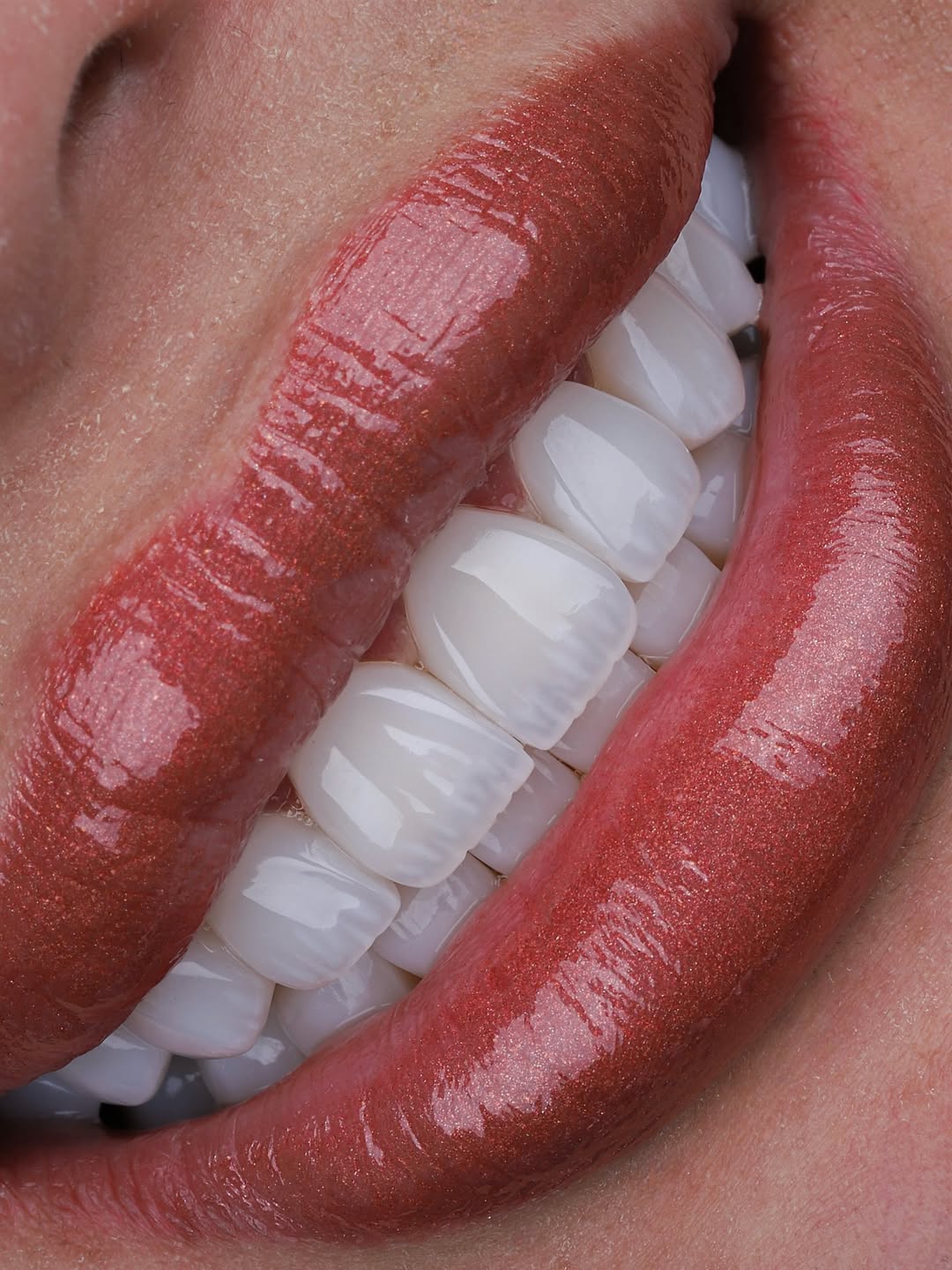
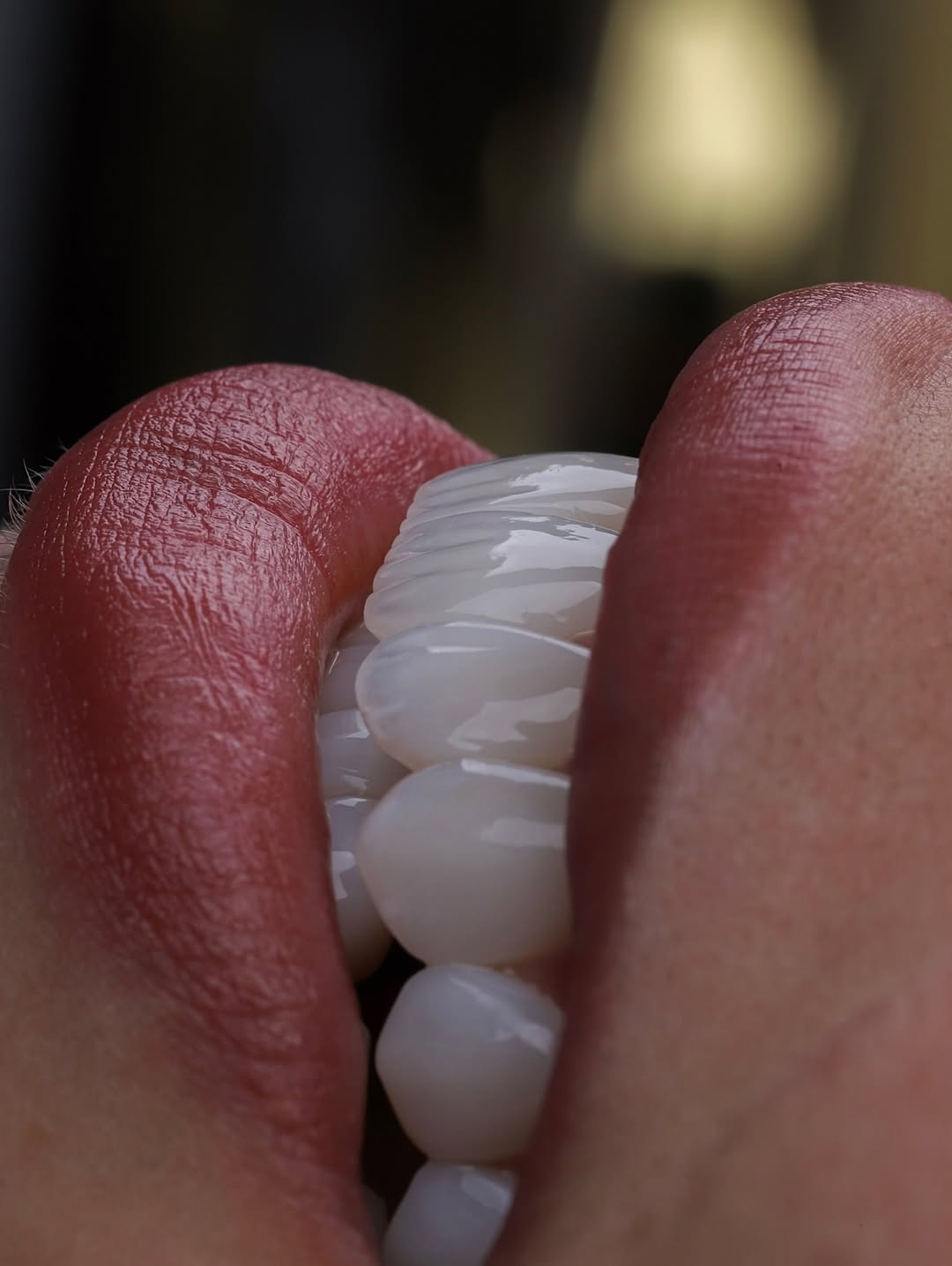
Porcelain veneers, when intact and properly polished, have a non-porous ceramic surface. The glaze applied during fabrication seals the material and prevents pigment from penetrating the body of the veneer itself. If you have well-maintained porcelain veneers, the porcelain is not staining — something else is.
Composite veneers are a different story. The resin material used in direct composite bonding is inherently porous at a microscopic level. Pigmented compounds from food, drink, and tobacco do penetrate the matrix over time. This is not a care failure — it is a material property. Expect some degree of color shift in composite veneers after 3 to 5 years regardless of how diligently you brush, floss, and avoid staining foods.
This distinction is not merely academic. It determines what your dentist can fix at a polishing appointment versus what requires veneer replacement. Understanding it upfront sets realistic expectations.
What Actually Stains on Porcelain Veneers
If porcelain doesn’t stain, why do some patients notice discoloration after years of having porcelain veneers? There are three main culprits.
The Composite Resin Cement at the Margins
Porcelain veneers are bonded to the tooth using composite resin cement. Where the veneer edge meets the tooth — typically at the gum line, the sides, and sometimes the biting edge — there is a thin layer of this cement exposed. That cement is porous. It stains for exactly the same reason direct composite does.
Get your veneers in Colombia for up to 70% less.
In the US, 20 porcelain veneers run $30,000–$50,000. With Dr. Yazmin in Medellin, it's $6,900, all-inclusive.
Individual patient experience. Prices, inclusions and results are confirmed after a clinical evaluation. A full evaluation is required before any treatment.
This is why many patients see a darkening or yellowing specifically at the margins of their veneers while the main surface of the porcelain looks fine. The veneer itself is clean. The cement line is absorbing pigment. This is one of the most common clinical presentations of staining in long-term porcelain veneer patients, and it is frequently misunderstood.
Do not let high prices at home stop you; explore the highly rated options for cosmetic veneers in Colombia today.
Surface Micro-Scratches
Porcelain that has been scratched by abrasive toothpastes or abrasive prophylactic pastes loses some of its surface glaze. Once the surface is roughened at a microscopic level, it becomes more retentive for pigmented molecules. This is a slow process, but it is cumulative and irreversible without professional polishing.
The surface scratch problem is one of the main reasons whitening toothpastes are contraindicated for veneer patients. Most whitening toothpastes rely on mechanical abrasion through silica particles to lift stains from enamel. On porcelain, these particles do not lift stains — they dull the surface and create microscopic channels that then hold stains more readily.
Exposed Composite Bonding
Some patients have a combination of veneers and direct composite work — restorations at the edges, small gap closures, or composite added to refine shape. Any direct composite in the smile zone will stain on a similar timeline to composite veneers.
The Biggest Staining Culprits
Not all staining agents are created equal. The following are the most clinically significant:
Coffee, Tea, and Red Wine
The trifecta of dental staining. Coffee and tea contain tannins — polyphenolic compounds that bind readily to protein and resin surfaces. Red wine combines tannins with deeply pigmented anthocyanins and high acidity, which both opens pores in composite and deposits color. These three beverages together account for the majority of margin staining seen in veneer patients.
Turmeric, Tomato Sauce, and Balsamic Vinegar
Turmeric is one of the most potent food stains in existence — its active compound, curcumin, is used industrially as a dye. Tomato sauce combines acidity with strong red-orange pigmentation. Balsamic vinegar is acidic, dark, and sticky. All three deposit color on composite surfaces very efficiently.
Blueberries and Other Dark Berries
Anthocyanins in dark berries are highly reactive pigments. Blueberries, blackberries, pomegranate, and acai are among the worst offenders for direct composite staining.
Tobacco: A Separate Category
Tobacco deserves its own discussion because it behaves differently from food stains. Nicotine and tar are not simply deposited on surfaces — they penetrate composite resin margins, seep into micro-cracks, and create a deep yellow-brown discoloration that is far more resistant to polishing than surface food stain. Tobacco staining at the margins of porcelain veneers can eventually become impossible to fully remove with polishing alone, requiring margin re-finishing or, in severe cases, veneer replacement. Smoking is the single most damaging habit for long-term veneer aesthetics.
How to Actually Remove Staining from Veneers
Here is where it is important to be specific about what works and what does not — because a great deal of misinformation circulates about veneer stain removal.
Professional Polishing: The Gold Standard
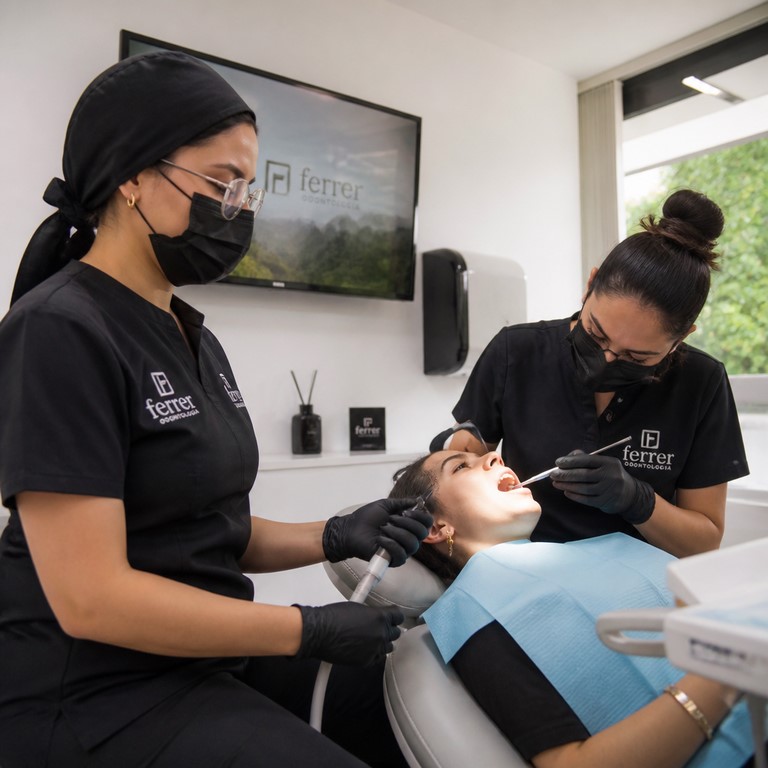
Surface staining on composite margins and minor scratched areas of porcelain can be significantly reduced through professional polishing. At a dental hygiene appointment, the hygienist uses a rubber cup and a non-abrasive prophylactic paste specifically formulated for porcelain and composite surfaces. This is not the same as the gritty paste used to polish natural teeth — that paste would scratch veneers. Patients should remind their hygienist at every appointment that they have veneers, and confirm that a non-abrasive, low-RDA paste is being used.
This is why regular dental check-ups every six months are not optional for veneer patients. The professional polishing performed at these visits is not cosmetic maintenance — it is a functional part of keeping the cement margins clean and the porcelain surface intact.
Non-Abrasive Toothpaste at Home
The most effective thing you can do daily to prevent accelerated staining is to use the right toothpaste. Choose a low-abrasivity paste — there is an index called the RDA (Relative Dentin Abrasivity) score. For veneer patients, look for pastes with an RDA below 50. Many “sensitivity” toothpastes fall in this range. Specifically avoid toothpastes marketed as “whitening,” “charcoal,” “baking soda,” or “extra clean” — these tend to have high RDA scores and will degrade the surface of both porcelain and composite veneers over time.
What Doesn’t Work — and Why
Whitening toothpaste will not make your veneers whiter. The bleaching agents in these products work by oxidizing organic stain molecules within tooth enamel — a process that does not apply to ceramic or cured resin. The only effect on veneers is surface abrasion. Similarly, hydrogen peroxide trays or strips cannot change the color of porcelain or composite. The ceramic matrix is unaffected by bleaching chemistry. Applying whitening products to existing veneers does not brighten them and may slightly damage the surface over time.
Abrasive home scrubs, baking soda, and lemon juice-based remedies are actively harmful to veneers and should never be used.
Margin Staining: The Dark Line at the Gum
A dark line at the gum margin is one of the most common aesthetic concerns that develops over years with porcelain veneers. It deserves specific attention because it is often misidentified and managed incorrectly.
Causes of Margin Darkening
There are two distinct causes, and they have different treatment implications:
The first is staining of the cement margin itself — the composite at the veneer edge has absorbed pigment and appears dark. In many cases, professional polishing can significantly reduce or eliminate this. The cement surface is refinished and re-polished, removing the stained outer layer. This is a straightforward in-office procedure.
The second is gum recession exposing the tooth structure beneath the veneer margin. When the gum recedes, the portion of the tooth that was prepared but not covered by the veneer becomes visible. This tooth structure may be dentin (which is naturally darker than enamel and has no protective ceramic over it) or it may be the exposed edge of the cement. Polishing cannot fix this — the geometry of the tooth has changed. Depending on the degree of recession and the original veneer preparation design, this may require refinishing, adding composite to the exposed area, or full veneer replacement.
If you notice a dark line developing at your gum margin, the distinction between these two causes matters enormously. A dentist experienced with veneers can assess which applies to your situation and recommend the appropriate intervention.
Prevention: The Realistic Approach
Complete avoidance of staining foods is neither realistic nor necessary. The following practical steps make a meaningful difference over years of veneer ownership:
- Rinse with water after staining foods and drinks. You do not need to brush immediately — in fact, brushing immediately after acidic foods can be harmful. A water rinse significantly reduces the contact time of pigments with cement surfaces.
- Use a straw for coffee and iced tea when practical. This is not a cure, but it reduces direct contact with the front teeth.
- Quit smoking. There is no cosmetic dentistry treatment that effectively counteracts long-term tobacco use. This is the single intervention with the greatest impact on veneer longevity and appearance.
- Attend professional cleaning and polishing appointments every six months without exception. Missing cleanings allows margin stain to build up and penetrate deeper, making eventual removal more difficult.
- Use only non-abrasive toothpaste. Once you establish this habit, stick with it permanently.
A Word on Composite Veneer Staining
If you have composite (direct bonding) veneers, a frank conversation with your dentist about expectations is important. Color shift over 3 to 5 years is a normal material property, not a care failure. Polishing appointments can slow and partially reverse surface staining, but the internal staining of aged composite is not reversible without replacement. This is one of the primary clinical reasons porcelain is preferred over composite for full veneer cases when longevity is a priority — not because composite is inherently inferior for the right applications, but because its staining trajectory is fundamentally different.
Patients who choose composite veneers for cost reasons should plan for refinishing or replacement at the 5 to 7 year mark as a budgeted expense, not a surprise.
Summary: The Practical Takeaways
Porcelain veneers themselves do not stain — but their cement margins do, and surface scratches create roughness that holds pigment. Composite veneers stain over time by material design. The treatments that work are professional polishing and non-abrasive home care. The treatments that do not work — whitening toothpastes, bleaching trays, abrasive scrubs — can actively harm the surface. Tobacco is in a separate category of damage and is the most important lifestyle factor to address. Regular professional appointments are not optional; they are a core part of veneer maintenance.
If staining or margin darkening is developing, see your dentist before it progresses. Most early staining cases are easily managed in a single polishing visit. Late-stage cases are not.