The Difference Between No-Prep, Minimal-Prep, and Traditional Veneers
The terms are often used interchangeably in marketing — but clinically, they represent very different treatments with different indications, outcomes, and limitations.
The same veneers cost up to 70% less in Colombia.
See if you qualify Free video call in English · on WhatsAppIndividual patient experience. Results and pricing are confirmed after a clinical evaluation.
No-Prep Veneers
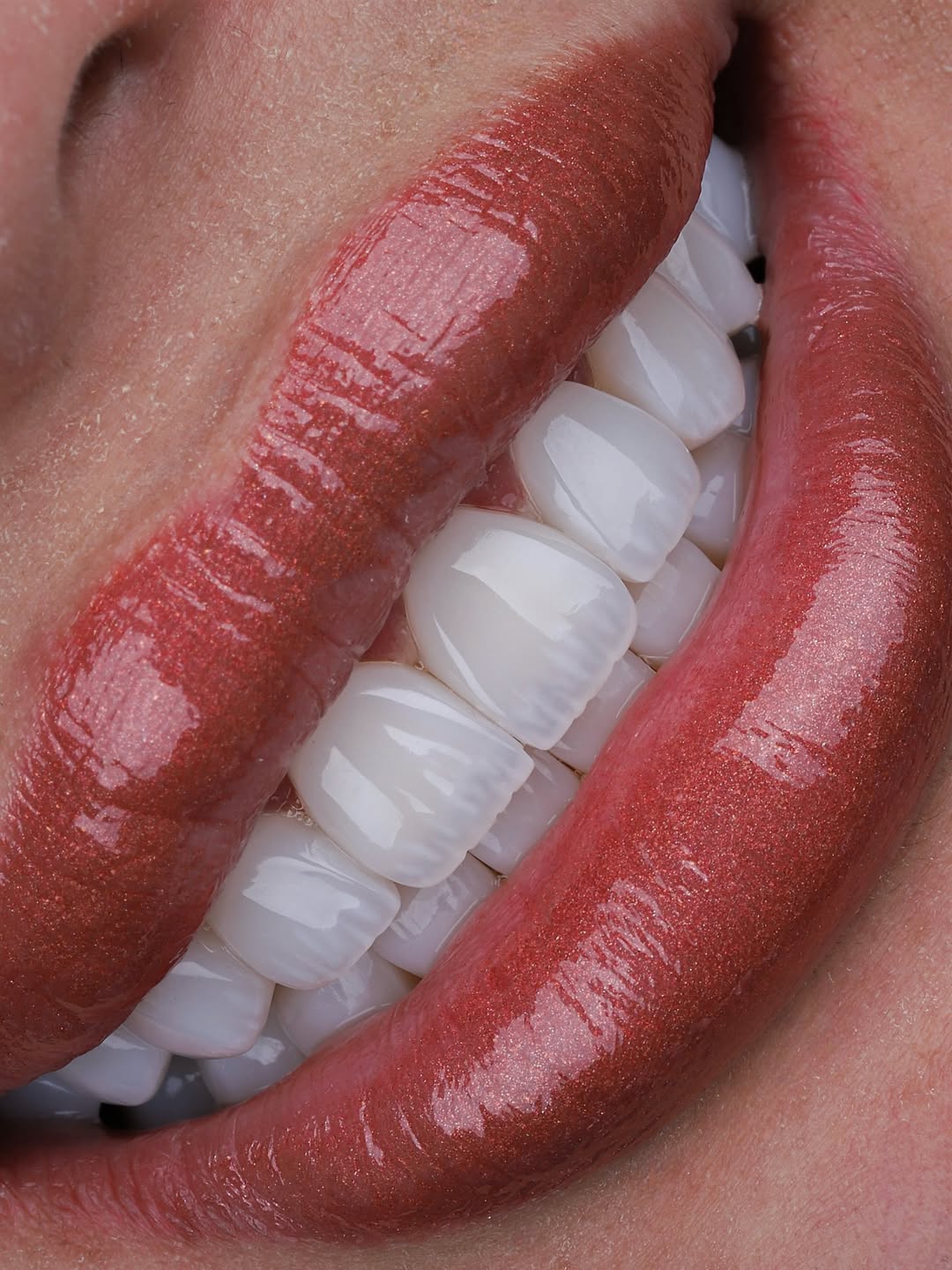
True no-prep veneers involve zero enamel removal. The ceramic shell is bonded directly over the existing tooth surface. Because no tooth structure is removed, the procedure is considered reversible — though in practice, removing bonded ceramic without any enamel loss is not always clean. Thickness ranges from 0.2mm to 0.3mm. The most recognized brand is Lumineers; other labs produce comparable ultra-thin ceramics under different names.
Minimal-Prep Veneers
Minimal-prep (sometimes called “micro-prep”) removes a very thin layer of enamel — typically 0.3mm to 0.5mm — compared to the 0.5mm–0.7mm removed for traditional veneers. This category is where most modern porcelain veneers land today. The reduction is enough to create space for ceramic thickness without adding bulk, while preserving most enamel integrity.
Traditional Veneers
Traditional preparation removes 0.5mm–0.7mm of enamel from the facial surface, and often wraps slightly interproximally. Once prepared, the tooth is permanently altered — veneers or crowns will always be required. In exchange, the dentist has far more freedom over final shape, translucency, color masking, and surface texture.
Lumineers: What They Actually Are
Lumineers is a brand name owned by Den-Mat Corporation. They are milled from Cerinate porcelain, a dense, high-strength ceramic that can be fabricated at approximately 0.2mm thickness — about the thickness of a contact lens. Because they are so thin, they can be placed without removing tooth structure.
By utilizing advanced CAD/CAM technology, clinics ensure that your porcelain veneers in Colombia fit perfectly on the first try.
Get your veneers in Colombia for up to 70% less.
In the US, 20 porcelain veneers run $30,000–$50,000. With Dr. Yazmin in Medellin, it's $6,900, all-inclusive.
Individual patient experience. Prices, inclusions and results are confirmed after a clinical evaluation. A full evaluation is required before any treatment.
Clinical Strengths of Lumineers
- No anesthesia required in most cases, since no drilling occurs
- No temporaries needed between appointments
- Reversible in theory — though bonding adhesive can microscopically etch enamel
- Well-suited to teeth that need slight lengthening or adding volume to small, worn, or short teeth
- Good for patients with thin enamel who cannot afford further reduction
Where Lumineers Fall Short
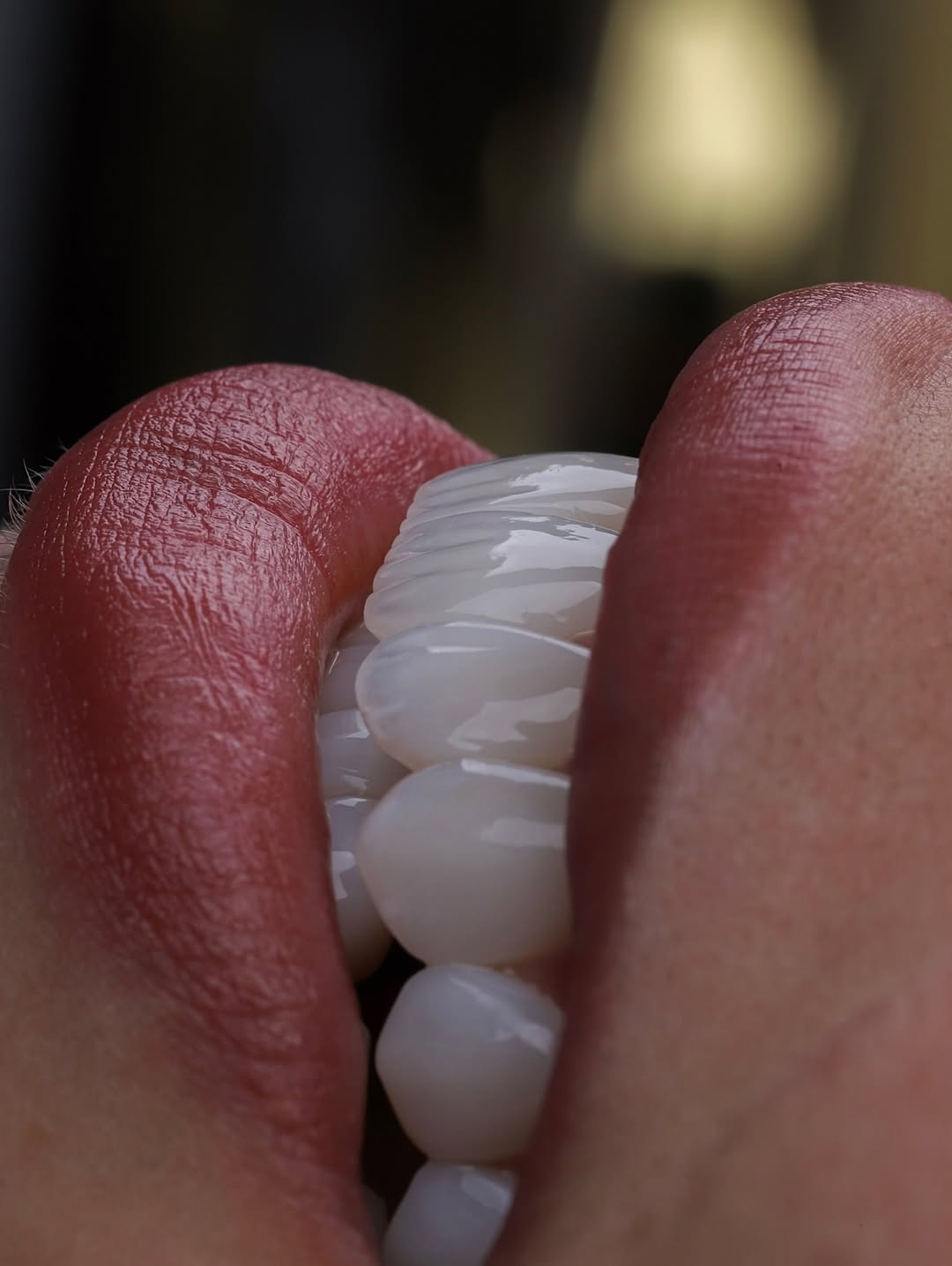
Because no enamel is removed, the veneer adds to the existing tooth profile. On teeth that are already normally sized or prominent, this creates a bulkier result — teeth can look larger, feel “thick,” and push against the lips. This is the most common patient complaint with Lumineers placed on full-sized teeth.
Color masking is also limited. At 0.2mm, the ceramic is translucent enough that dark underlying tooth color — from tetracycline staining, trauma, or heavy intrinsic discoloration — shows through. Achieving a bright, opaque result is not reliably possible with no-prep veneers on discolored teeth.
Edge definition is another limitation. Lumineers often have a visible margin at the gumline, which can look like a “ledge” if the ceramic edge is not feathered perfectly. Traditional prep veneers can have margins placed in the gingival sulcus, hiding the transition.
Other Ultra-Thin Ceramic Options
Lumineers are not the only no-prep option. Several dental labs produce ultra-thin veneers under different names — IPS e.max (lithium disilicate) can be fabricated at 0.3mm–0.4mm thickness, and some labs offer branded ultra-thin veneers (such as Vivaneers or MAC veneers) using comparable ceramics.
The key distinction is not the brand but the ceramic system and the lab technician’s skill. A high-quality e.max veneer at 0.3mm fabricated by an experienced ceramist may outperform a Lumineer in translucency, surface texture, and natural appearance — particularly for patients with lighter baseline teeth.
Why No-Prep Isn’t Right for Everyone
Already-Prominent Teeth
If a patient’s teeth are normal size with a naturally forward position, adding 0.2mm–0.3mm of ceramic without removing any enamel pushes the tooth surface further forward. The result can appear bulky, and patients often report that their lips feel pushed out. This is not a fabrication error — it is a geometric reality of no-prep placement.
Color Masking Limitations
No-prep veneers rely on thin, relatively translucent ceramic. For teeth that are slightly yellow or mildly discolored, this may be adequate. For tetracycline staining, gray or dark intrinsic discoloration, or trauma-darkened teeth, the dark shade reads through the ceramic and the final result looks grey, dull, or uneven. Traditional prep veneers can accommodate thicker ceramic with higher opacity to fully mask these shades.
Severe Crowding or Misalignment
No-prep veneers cannot correct significant rotation or displacement. Placing ceramic over a rotated tooth without any preparation simply makes the tooth appear larger, not straighter. Traditional prep — or orthodontics before veneers — is required to address alignment meaningfully.
Deep Bite or Heavy Occlusal Load
Patients with deep overbites, bruxism, or heavy occlusal contact on the upper anterior teeth place significant stress on anterior veneers. Ultra-thin no-prep veneers at 0.2mm are more fracture-prone under these conditions. Traditional veneers with adequate ceramic thickness are more durable in high-load situations.
When Traditional Prep Produces a Better Outcome
Traditional preparation is not simply an older, more invasive option. In specific cases, it produces aesthetically and functionally superior results:
- Significant discoloration requiring opaque ceramic that needs 0.6mm+ of space
- Peg laterals or undersized teeth that require significant reshaping — adding bulk with no-prep produces a blocky result, while prep allows proper contouring
- Teeth with existing composite restorations — bonding to composite is less reliable than bonding to enamel; prep removes the composite and creates a cleaner substrate
- Cases requiring significant incisal edge lengthening where structural thickness is needed
- Patients with prominent teeth where enamel removal is necessary to maintain natural profile
Comparison Table: No-Prep vs Minimal-Prep vs Traditional Veneers
| Feature | No-Prep (Lumineers) | Minimal-Prep | Traditional Prep |
|---|---|---|---|
| Enamel removed | 0mm | 0.3–0.5mm | 0.5–0.7mm |
| Reversible | Theoretically yes | Partially | No |
| Ceramic thickness | 0.2–0.3mm | 0.4–0.6mm | 0.6–0.8mm |
| Color masking | Limited | Moderate | Strong |
| Bulk/profile change | Adds to tooth | Neutral | Can reduce |
| Best candidate | Small/short teeth, mild discoloration | Most average cases | Dark stains, crowding, heavy bite |
| Temporaries required | Usually not | Yes | Yes |
| Anesthesia | Usually not | Sometimes | Yes |
How to Have This Conversation With Your Dentist
Many patients arrive at consultations having already decided they want “Lumineers” or “no-prep veneers,” based on marketing. A productive conversation focuses on the outcome you want, not the product — and asks the dentist to explain which option achieves that outcome given your specific tooth anatomy.
Key questions to ask:
- “If you place no-prep veneers on my teeth, will my tooth profile change? Will they look thicker?”
- “Can the ceramic fully cover my tooth color at this thickness?”
- “Are my teeth candidates for no-prep, or would minimal-prep give a more natural result?”
- “Can I see a digital mockup or wax-up before committing?”
A skilled dentist will perform a smile analysis — assessing tooth-to-lip relationship, gingival display, tooth length, shade, and profile — before recommending a preparation approach. If a dentist immediately pushes one product without evaluating your specific anatomy, that is a red flag.
Diagnostic wax-ups and digital smile design tools allow you to visualize the outcome of different preparation depths before any irreversible steps are taken. Request these before agreeing to treatment.
The Bottom Line on No-Prep Veneers
No-prep veneers are a legitimate, effective option — but only for the right anatomy. They work best for teeth that are small, worn, or have mild discoloration, and where adding slight volume is beneficial rather than problematic. For teeth that are already full-sized, significantly discolored, or part of a complex bite situation, minimal-prep or traditional prep veneers will produce a more natural, durable, and aesthetically accurate result. The question is never “which technique is better” in the abstract — it is which technique is better for your teeth.