Why This Question Is Harder to Answer Than It Looks
No celebrity publishes their dental chart. No cosmetic dentist releases patient shade specifications. What we observe from red carpet photographs, film close-ups, and high-resolution media appearances is a visual impression — and inferring a VITA shade code from a photograph is not a precise science. Lighting conditions, camera white balance, post-processing, and the color calibration of the screen you’re viewing the image on all affect how a shade reads. A smile that appears BL2 on one monitor may look A1 on another.
The same veneers cost up to 70% less in Colombia.
See if you qualify Free video call in English · on WhatsAppIndividual patient experience. Results and pricing are confirmed after a clinical evaluation.
With that qualification in place: careful analysis of high-resolution images, combined with knowledge of how different shade ranges behave under various lighting conditions, makes it possible to draw reasonable inferences. And those inferences are clinically interesting — because they reveal a consistent pattern in how high-profile celebrity smiles have evolved over the past two decades.
The 2000s vs Now: A Visible Shift in Hollywood Shade Culture
The early-to-mid 2000s were the peak of the ultra-white, ultra-uniform Hollywood smile. The aesthetic associated with that era — sometimes called the “Chiclet look” — featured BL1-range porcelain veneers with minimal translucency, high opacity, and near-perfect uniformity across all teeth. Viewed in the context of early 2000s entertainment media, where high-contrast, bright aesthetics were generally in vogue, this look was aspirational. The message was: conspicuously perfect teeth are a status marker.
By the 2010s, a different aesthetic was gaining ground. Several factors contributed to the shift. High-definition television and film exposed the flatness of opaque ultra-white porcelain in close-up shots — the “dead” quality of teeth without subsurface light scattering became visible to audiences in a way it hadn’t been in standard definition. Social media, with its high-resolution selfie culture and close-up engagement, similarly made the flatness of heavily opaque veneers more conspicuous. And taste simply changed: conspicuous dental work became associated with a dated aesthetic.
If you suffer from gaps or minor crowding, veneers Colombia provide an instant orthodontic-like correction.
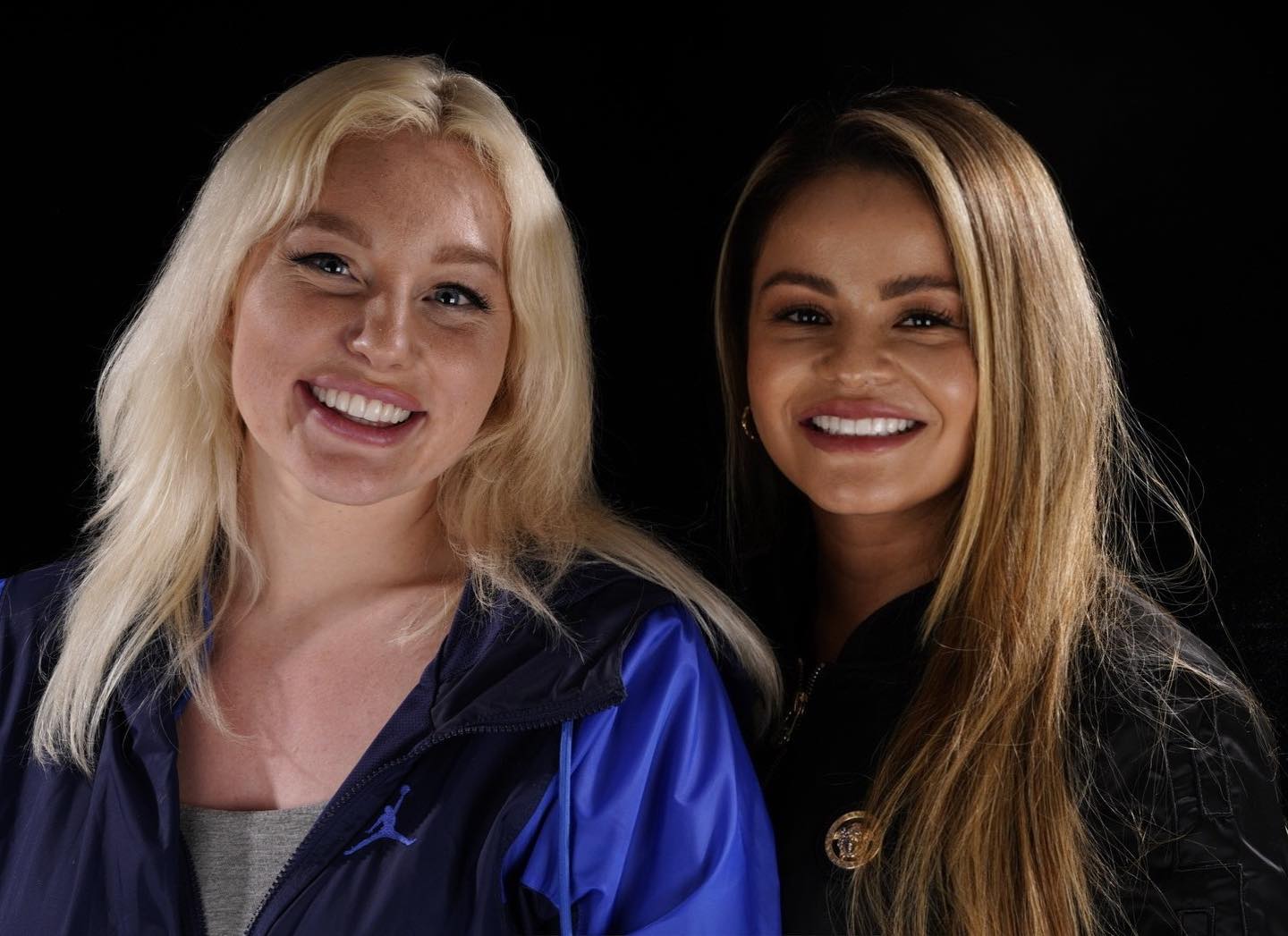
Current high-profile celebrity smiles — observed in red carpet close-ups, fashion shoots, and film appearances — are measurably different. The dominant pattern is: high value (light), but not extreme. Visible incisal translucency. Some inter-tooth variation. Surface texture that reads as enamel, not glazed porcelain. This is a different clinical specification from the 2000s standard.
Get your veneers in Colombia for up to 70% less.
In the US, 20 porcelain veneers run $30,000–$50,000. With Dr. Yazmin in Medellin, it's $6,900, all-inclusive.
Individual patient experience. Prices, inclusions and results are confirmed after a clinical evaluation. A full evaluation is required before any treatment.
What Current Celebrity Smiles Actually Look Like Up Close
Inferring shade from photographs requires looking for specific visual markers rather than trying to match the overall impression to a shade tab:
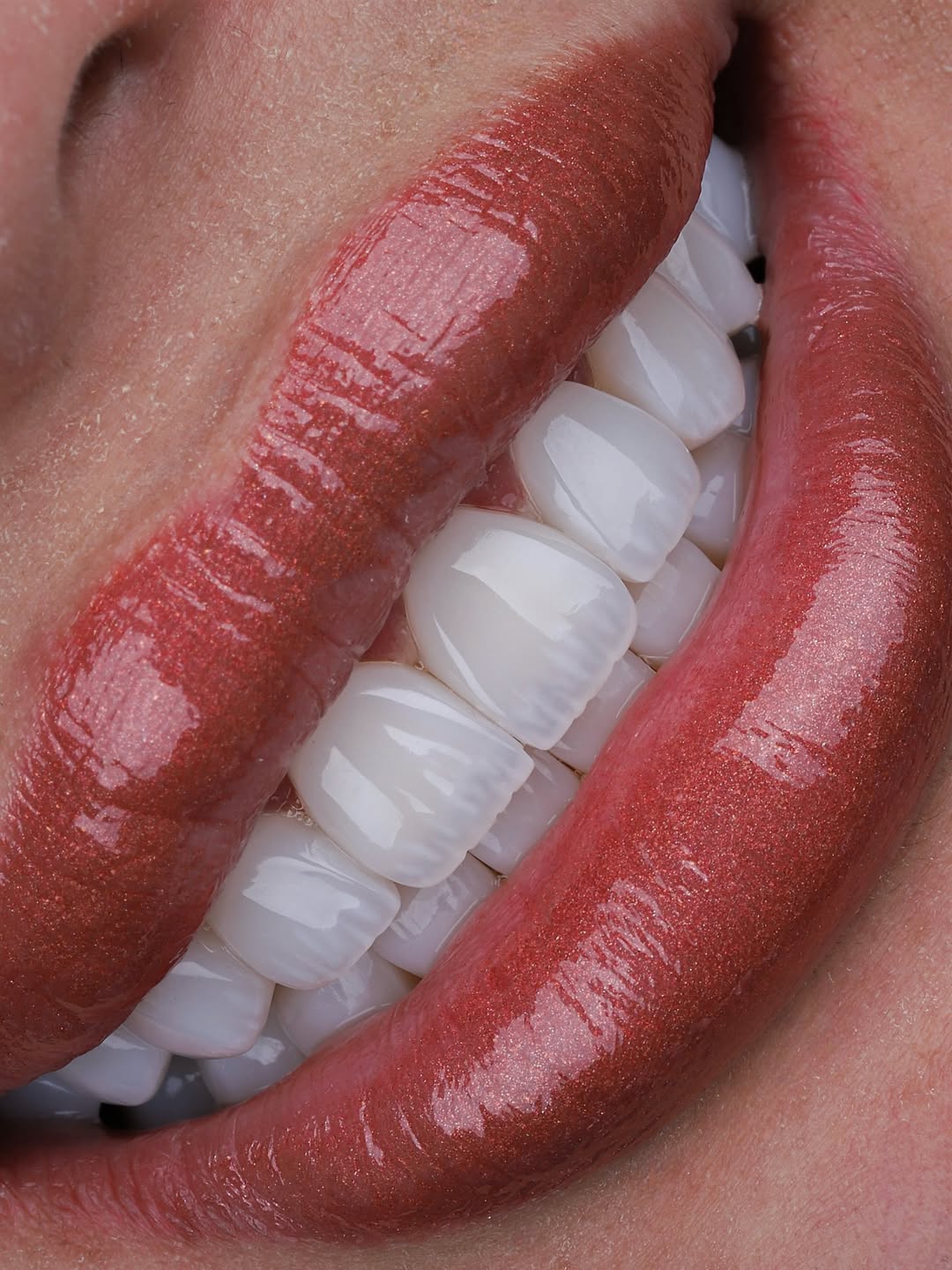
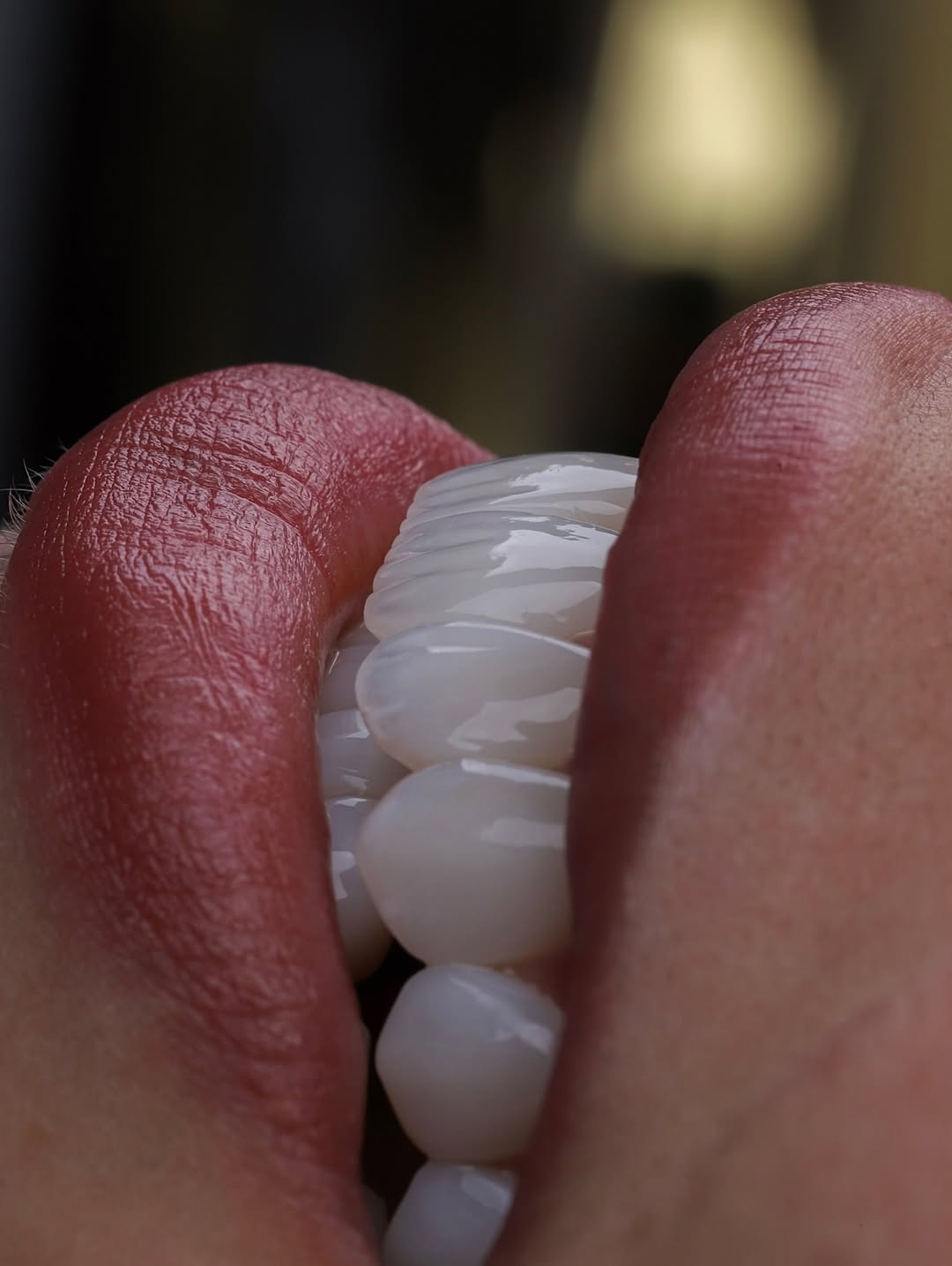
- Incisal translucency: In natural light close-ups, translucent incisal edges appear slightly grey-blue or have a visible halo effect. This is opalescent porcelain, not opaque. Its presence rules out standard Hollywood blanks.
- Chroma variation: If canines read as slightly more saturated (warmer, slightly more yellow) than centrals, the teeth have inter-tooth variation — either natural or ceramist-characterized. Uniform chroma across all visible teeth suggests standard blanks.
- Surface texture: High-resolution images sometimes reveal horizontal surface striations (perikimatae) or subtle surface undulations. These indicate highly characterized ceramics.
- Value estimation: Comparing overall tooth brightness to the white of the sclera (eye white) or shirt fabric gives a rough relative calibration. Most current celebrity smiles read as significantly lighter than natural, unbleached teeth, but not at the extreme top of the BL range.
Based on these markers across a range of currently prominent celebrity appearances: the majority of visible celebrity smiles appear to fall in the BL2–A1 range, not BL1 or BL4. BL2 is the second-lightest shade in the Classical Bleached extension — noticeably lighter than natural unbleached teeth, but not at the extreme of the spectrum. A1 is the lightest shade in the Classical standard range, representing naturally bright teeth with low chroma. The apparent shift from BL4-range ultra-white to BL2-A1 represents a meaningful clinical move toward lower value contrast and more naturalistic surface quality.
Why the “Chiclet” Look Fell Out of Fashion
The Chiclet look — rectangular, perfectly uniform, ultra-white, opaque — failed on several aesthetic grounds that weren’t fully visible in early-2000s media conditions but became progressively more apparent as image technology improved.
First, uniform opacity breaks the visual logic of natural teeth. In natural dentition, each tooth has a cervical third (near the gum) that is more opaque and saturated, a middle third with intermediate optical properties, and an incisal third that is more translucent. This gradient exists because enamel is thinner at the incisal edge, allowing more of the dentin color to show through — but also because thinner enamel transmits more light. Standard opaque veneers eliminate this gradient entirely. In high-definition close-up, this reads as flat and manufactured.
Second, the gingival tissue creates context that uniform veneers can’t override. Even perfect BL1 veneers look prosthetic when the gingival margin is irregular, the papillae are flat, or the tooth proportions don’t match the patient’s face. The Chiclet look often compounded this by using veneers that were too long or too wide for the patient’s specific anatomy, creating a blocky appearance that overshadowed the face.
Third, cultural associations shifted. Ultra-white, obviously prosthetic dental work became associated with tabloid celebrity culture and specific social contexts. The premium association moved toward “natural” — which in the context of cosmetic dentistry means naturalistic, not unmodified. A smile that reads as naturally excellent rather than obviously enhanced became the aspirational standard.
Digital Smile Design and Ceramist Skill: What Matters More Than Shade
A significant portion of what makes current high-quality celebrity smiles look impressive has nothing to do with shade selection. Shape, proportion, gingival framing, incisal edge position, and midline alignment all contribute more to the overall aesthetic impression than the specific shade number. A well-proportioned A1 set of veneers with ideal incisal edge detail will outperform a poorly proportioned BL2 set in every natural-light encounter.
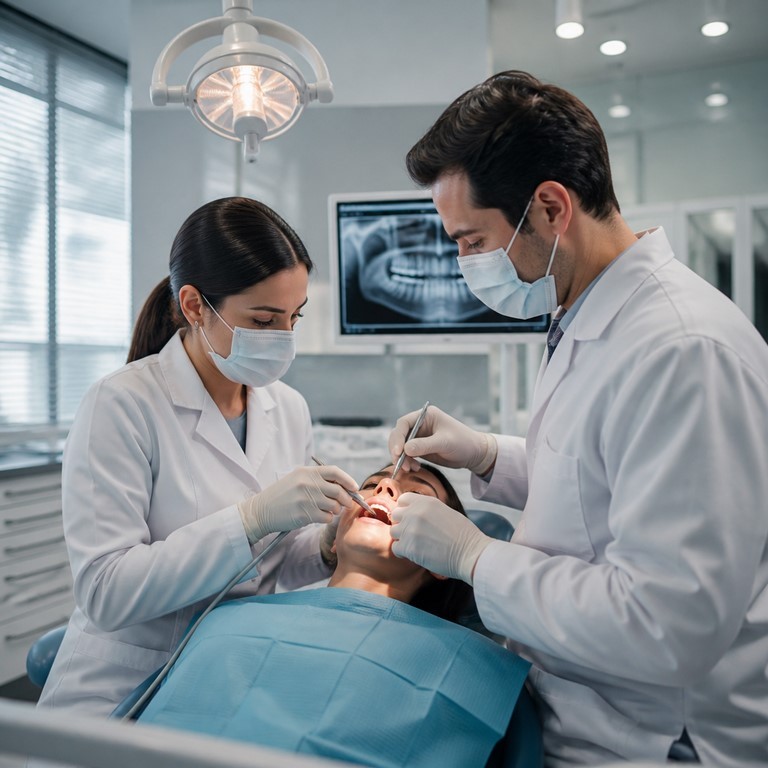
Digital Smile Design (DSD) has changed the pre-treatment planning process by making these proportional decisions explicit before any tooth preparation occurs. Facial analysis, lip dynamics, smile arc, and buccal corridor width are mapped digitally, allowing the clinician and patient to evaluate the planned result on the patient’s own face rather than guessing from generic templates. This means shade is chosen last — after shape, size, and proportion are established — rather than being the organizing decision of the consultation.
Ceramist skill similarly operates independently of shade. Two labs can receive identical prescriptions — same shade, same material, same tooth dimensions — and produce results that look strikingly different due to differences in surface characterization, layering technique, and glaze finish. The most visually impressive current celebrity smiles are typically the work of specific high-end ceramists whose approach to surface quality and optical properties produces results that photograph and appear distinctly better than standard production work. This is not replicable by shade choice alone.
Why Copying a Celebrity Smile Rarely Works Without Matching Their Proportions
Celebrity reference photos are among the most common inputs to veneer consultations — and among the most frequently misapplied. The issue is that a smile is not a transferable object. Every element of a smile’s appearance is conditioned by the specific facial context it occupies: lip length and fullness, facial width, skin tone and undertone, nose and chin projection, and the dynamic behavior of the lips during speech and smiling.
A veneer shape and shade that looks proportionally ideal on one face may look oversized, undersized, too light, or too dark on a different face. Skin tone is particularly significant for shade perception — very light skin makes any dental shade look darker by comparison; darker skin makes the same shade look lighter and more vivid. A patient with markedly different skin tone from their celebrity reference will experience the same nominal shade very differently.
Lip volume also changes shade perception. Full lips frame more tooth display; thinner lips frame less. The same central incisor length that creates ideal tooth display with full lips may show excessive gingival display with thinner lips, or be barely visible at all in a patient with very full lips and a hypomobile upper lip.
How to Use Celebrity References Productively in a Consultation
Celebrity reference photos remain valuable consultation tools when used correctly. Rather than treating the reference as a target to replicate, use it as a tool to extract the patient’s specific preferences:
- Ask what specifically they like about the reference: Is it the shade? The shape? The size relative to the face? The fact that it doesn’t look obviously dental? The answer tells you which variable to prioritize.
- Use multiple references at different shade levels: Show them the same celebrity at an ultra-white (BL1-range) appearance versus a more naturalistic appearance, or show different celebrities with different shade profiles. This isolates shade preference from shape preference.
- Superimpose the reference smile elements onto the patient’s photo: DSD tools make this possible. The patient can evaluate whether the reference shade and shape look appropriate on their face — which often quickly clarifies whether the celebrity reference was really about shade or something else entirely.
- Reference the overall aesthetic category, not the specific shade: “You like the way this smile reads as natural and healthy without looking obviously done” is more clinically actionable than “you want BL2” — and it guides both the shade prescription and the ceramist briefing.
The Practical Takeaway
Most current high-profile celebrity smiles appear to be in the BL2–A1 range with visible incisal translucency and some degree of ceramist characterization. They are not the ultra-white, opaque, uniform veneers that defined the 2000s aesthetic. This shift reflects changes in media technology, cultural taste, and ceramic technique — not simply a different shade number. Patients referencing current celebrity smiles are usually describing an aesthetic that is naturalistic, high-quality, and clearly professional — but not obviously prosthetic. That’s an achievable clinical target. The path to it runs through shape, proportion, and ceramist quality as much as shade selection.