
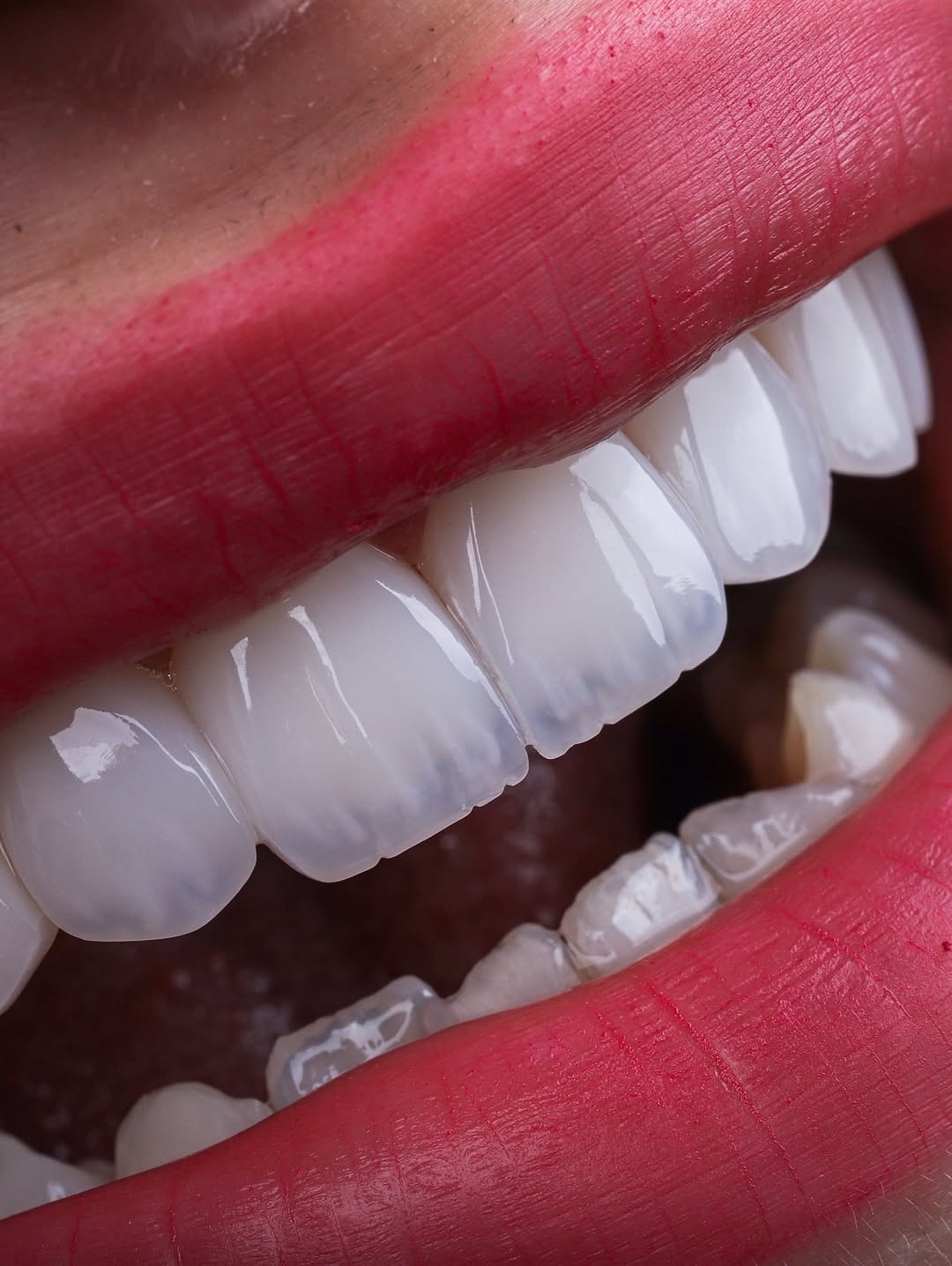
Thinking about transforming your smile but worried about the cost and commitment of traditional veneers? Composite veneers offer an affordable, reversible alternative that can dramatically improve your appearance in just one dental visit. This comprehensive guide covers everything you need to know about composite veneers, from costs and longevity to maintenance and comparisons with porcelain alternatives.
What Are Composite Veneers?
Composite veneers are thin layers of tooth-colored resin material applied directly to your teeth to improve their appearance. Unlike porcelain veneers that require multiple visits and laboratory work, composite veneers are sculpted and bonded to your teeth chairside in a single appointment.
The Composite Resin Material
The material used is the same high-quality composite resin found in tooth-colored fillings. Your dentist color-matches the resin to your natural teeth and carefully sculpts it to create a natural, improved appearance. Modern composite materials have improved significantly in strength, durability, and stain resistance compared to older formulations.
The Direct Application Process
Composite veneers are created using a “direct” technique, meaning your dentist builds them directly on your teeth rather than creating them in a lab. This approach offers several advantages:
- Same-day results – Walk in with concerns, walk out with a new smile
- Minimal tooth preparation – Usually requires little to no enamel removal
- Immediate adjustments – Your dentist can refine the shape and color on the spot
- Lower cost – No lab fees or multiple appointments
Who Should Consider Composite Veneers?
Ideal candidates include patients with:
- Minor chips or cracks in front teeth
- Small gaps between teeth
- Mild discoloration resistant to whitening
- Slightly misshapen or uneven teeth
- Limited budget for cosmetic dentistry
- Desire for reversible treatment
Not recommended for:
- Severely damaged or decayed teeth (require restorative work first)
- Heavy teeth grinders (bruxism) without a nightguard
- Large structural problems requiring crowns
- Those seeking maximum longevity (consider porcelain instead)
How the Composite Veneer Procedure Works
Understanding the step-by-step process helps set realistic expectations and reduces anxiety about your appointment.
Step 1: Consultation and Color Matching (15-30 minutes)
Your dentist examines your teeth, discusses your goals, and selects the appropriate shade of composite resin. This is the time to communicate exactly what you want to achieve. Bring reference photos if helpful.
Step 2: Tooth Preparation (10-20 minutes per tooth)
Unlike porcelain veneers that often require removing 0.5-1mm of enamel, composite veneers typically need minimal to no tooth reduction. Your dentist may lightly roughen the tooth surface to help the bonding material adhere properly. Local anesthesia is usually unnecessary unless you have sensitivity.
Step 3: Bonding and Sculpting (30-60 minutes per tooth)
The dentist applies a bonding agent, then carefully layers the composite resin onto your tooth. Each layer is sculpted to the desired shape and hardened with a special curing light. This process requires artistic skill and attention to detail.
Step 4: Finishing and Polishing (15-20 minutes)
Once the composite is fully built up, your dentist refines the shape, checks your bite, and polishes the veneers to a natural-looking shine. You’ll leave with your new smile fully complete.
Total appointment time: 1-3 hours depending on the number of teeth treated.
How Much Do Composite Veneers Cost?
Cost is often the primary factor in choosing between composite and porcelain veneers. Here’s a detailed breakdown of what you can expect to pay in 2026.
National Average Pricing (USA)
Per tooth: $250 – $1,500
- Low end: General dentists in rural/suburban areas
- High end: Cosmetic specialists in major metropolitan areas
Common treatment packages:
- Single tooth repair: $250 – $650
- Smile makeover (6-8 front teeth): $1,500 – $8,000
- Full mouth (16-20 teeth): $5,000 – $20,000
What Influences the Price?
Geographic location: Manhattan dentists charge significantly more than providers in smaller cities. The cost of living and overhead directly impacts pricing.
Dentist expertise: Board-certified cosmetic dentists or those with advanced training typically charge 30-50% more than general dentists. However, their results often justify the premium.
Number of teeth: Most dentists offer package discounts when treating multiple teeth. Treating 6 teeth typically costs less per tooth than treating just 2.
Case complexity: Simple color correction costs less than completely reshaping teeth or closing large gaps.
Materials used: Premium composite materials with better stain resistance and durability cost more but last longer.
Hidden Costs to Consider
- Consultation fees: $50-200 (sometimes waived if you proceed with treatment)
- X-rays or imaging: $25-250 depending on what’s needed
- Tooth cleaning: $75-200 (required before veneer placement)
- Future maintenance: $100-300 per tooth for polishing or minor repairs every 2-3 years
- Eventual replacement: Factor in replacement costs after 5-7 years
Financing Options
Most dental offices offer payment plans through:
- In-house financing (often 0% interest for 6-12 months)
- Third-party healthcare credit (CareCredit, LendingClub)
- FSA/HSA funds (if you have a medical justification)
Cost comparison by city (per tooth average):
- New York City: $800-1,500
- Los Angeles: $700-1,300
- Chicago: $500-1,000
- Houston: $450-900
- Rural areas: $250-600
Are Composite Veneers Worth It?
The value proposition depends on your priorities, budget, and expectations. Let’s analyze the investment objectively.
Cost Per Year Analysis
At an average cost of $500 per tooth lasting 6 years, composite veneers cost approximately $83 per tooth per year. Compare this to:
- Porcelain veneers: $1,500 per tooth lasting 12 years = $125/year
- Professional whitening: $500 lasting 1-2 years = $250-500/year
- Dental bonding: $300 per tooth lasting 3-5 years = $60-100/year
When Composite Veneers Make Sense
You’re a good candidate if:
- You want to “test drive” the look before committing to porcelain
- Your budget is $2,000-5,000 for a smile makeover
- You need results for an upcoming event (wedding, interview)
- You’re young and want a reversible option
- You have good oral hygiene habits
- Your teeth are generally healthy with minor aesthetic issues
When to Reconsider
Look at alternatives if:
- You grind your teeth heavily at night
- You’re seeking a 15+ year solution
- You consume lots of staining foods/drinks and won’t modify habits
- You have major structural tooth problems
- You want the absolute most natural-looking result
- Budget allows for porcelain ($2,000+ per tooth)
Patient Satisfaction Data
Studies show 80-85% of patients report satisfaction with composite veneers, with the main complaints being:
- Staining over time (most common)
- Chipping or wear after 4-5 years
- Need for periodic polishing
- Not quite as natural-looking as porcelain
How Long Do Composite Veneers Last?
Longevity is crucial for calculating true value. Here’s what the research and clinical experience show.
Average Lifespan: 5-7 Years
Most composite veneers last 5-7 years with proper care. Some patients report 8-10 years, while others need replacement after 3-4 years. The variation depends on multiple factors.
Factors That Extend Lifespan
Excellent oral hygiene:
- Brushing twice daily with non-abrasive toothpaste
- Daily flossing
- Regular professional cleanings every 6 months
- Using a water flosser
Protective habits:
- Wearing a nightguard if you grind teeth
- Avoiding biting hard objects (ice, pens, fingernails)
- Not using teeth as tools
- Being careful with hard foods (nuts, hard candy)
Quality materials and application:
- Experienced cosmetic dentist
- Premium composite resin materials
- Proper bonding technique
- Adequate composite thickness
Dietary choices:
- Limiting staining beverages (coffee, red wine, tea)
- Using a straw for acidic drinks
- Rinsing mouth after consuming staining foods
- Avoiding tobacco products
Factors That Shorten Lifespan
Poor oral hygiene allows plaque buildup at veneer margins, causing staining and decay underneath.
Bruxism (teeth grinding) is the #1 cause of premature composite veneer failure. The grinding force chips and wears down the material rapidly.
High-staining diet without preventive measures causes yellowing and discoloration that can’t be reversed.
Thin application to preserve maximum tooth structure may sacrifice durability.
Signs It’s Time for Replacement
Watch for these indicators:
- Visible staining that doesn’t improve with professional polishing
- Chipping at the edges
- Rough texture when you run your tongue over them
- Separation or gaps forming between veneer and tooth
- Uneven wear creating an irregular smile line
- Underlying tooth decay at margins
What to Expect After 5 Years
Most composite veneers show some wear by year 5:
- Slight dulling of shine (easily corrected with polishing)
- Minor edge wear on biting surfaces
- Some color change, especially if you consume staining foods
- Possible need for touch-up repairs on 1-2 teeth
With good care, many patients make it to 7-8 years before needing complete replacement.
Daily Care & Maintenance Guide
Proper maintenance significantly extends the life of your composite veneers. Follow these evidence-based practices.
Daily Oral Hygiene
Brushing technique:
- Use a soft-bristled toothbrush (medium or hard bristles scratch composite)
- Choose non-abrasive toothpaste (avoid whitening toothpastes with harsh abrasives)
- Brush gently for 2 minutes, twice daily
- Use circular motions, not aggressive scrubbing
- Don’t forget to brush the back sides of veneered teeth
Recommended toothpaste brands:
- Sensodyne Pronamel
- Tom’s of Maine
- Any ADA-approved non-whitening paste
Flossing:
- Floss once daily, preferably before bed
- Be gentle at the gumline to avoid dislodging veneers
- Consider using a water flosser for easier cleaning
Foods and Drinks to Limit
High-staining culprits:
- Coffee and tea (use a straw when possible)
- Red wine
- Dark berries (blueberries, blackberries)
- Tomato-based sauces
- Soy sauce and balsamic vinegar
- Cola and dark sodas
Foods that can damage veneers:
- Ice (never chew it)
- Hard candy
- Popcorn kernels
- Nuts in shells
- Sticky taffy or caramel
- Corn on the cob (cut kernels off first)
Professional Maintenance Schedule
Every 6 months:
- Professional cleaning and polishing
- Examination of veneer margins
- Check for chips or wear
- Professional polishing to restore shine
As needed:
- Touch-up repairs for minor chips ($50-150)
- Re-polishing if surface becomes dull ($75-200)
Protection Strategies
If you grind your teeth:
- Wear a custom nightguard religiously ($300-600)
- This is NON-NEGOTIABLE for veneer longevity
- Over-the-counter guards don’t fit well enough
During sports:
- Wear a mouthguard for contact sports
- Protect your investment
Avoid bad habits:
- Don’t bite nails, pens, or pencils
- Don’t use teeth to open packages
- Don’t hold objects (pins, hairpins) between teeth
Do Composite Veneers Stain?
Yes, composite veneers can and do stain over time. Understanding why this happens and how to prevent it helps manage expectations.
Why Composite Stains
Composite resin is porous at a microscopic level. Over time, pigmented molecules from foods, drinks, and tobacco penetrate these tiny pores, causing discoloration. The material becomes more porous as the surface wears down and loses its initial polish.
Most Common Staining Culprits
Daily beverages (biggest offenders):
- Coffee – causes yellowing and brown stains
- Tea (especially black tea) – tannins create persistent stains
- Red wine – combines acidity with dark pigments
- Dark sodas – both stain and weaken composite surface
Foods:
- Berries (blueberries, blackberries, cherries)
- Tomato sauce
- Curry and turmeric
- Soy sauce and dark vinegars
Tobacco products:
- Cigarettes cause severe yellow-brown staining
- Vaping still causes some discoloration
- Chewing tobacco is extremely damaging
Stain Resistance: Composite vs Porcelain
Porcelain veneers resist staining much better because:
- Non-porous glazed surface
- More resistant to chemical breakdown
- Harder material that maintains polish longer
Reality check: Porcelain isn’t completely stain-proof but requires 5-10 years to show what composite shows in 2-3 years.
Prevention Strategies That Actually Work
Immediate actions:
- Rinse mouth with water after consuming staining foods/drinks
- Use a straw for coffee, tea, wine (minimizes contact with front teeth)
- Brush within 30 minutes after meals when possible
Long-term habits:
- Quit tobacco (single most important factor)
- Limit staining beverages to 1-2 cups daily
- Drink water throughout the day to rinse
- Professional polishing every 6 months
Professional Polishing Solutions
Dentists can professionally polish composite veneers to remove surface stains and restore shine. This process:
- Takes 15-20 minutes
- Costs $75-200
- Removes surface-level stains only (not deep penetration)
- Can be done 1-2 times per year
- Temporarily restores original appearance
Important: Deep staining that has penetrated the composite cannot be removed and requires veneer replacement.
Can You Whiten Composite Veneers?
No, traditional teeth whitening treatments do not work on composite veneers. This is a critical consideration before getting veneers.
Why Whitening Doesn’t Work
Whitening products (hydrogen peroxide, carbamide peroxide) work by breaking apart stain molecules in natural tooth enamel. Composite resin has a completely different chemical structure that doesn’t respond to these bleaching agents.
What happens if you try:
- Your natural teeth will whiten
- The composite veneers will NOT change color
- You’ll create a color mismatch
- Result: veneers look darker/yellower by comparison
Options for Brightening Composite Veneers
Professional polishing (mentioned above) – Removes surface stains and restores shine but doesn’t actually “whiten” the material.
Replacement – The only way to truly change the color is to replace the veneers entirely. This is why choosing the right shade initially is crucial.
Repair and re-veneer – Dentist removes old composite and applies new material in a lighter shade ($250-600 per tooth).
Planning Ahead: Whitening Strategy
If you want whiter teeth AND veneers:
- Whiten your natural teeth FIRST – Achieve your desired tooth shade before getting veneers
- Wait 2 weeks – Allow tooth color to stabilize
- Match veneers to your new shade – Dentist color-matches composite to your whitened teeth
- Maintain with touch-up whitening – Keep natural teeth matching the veneer shade
Common mistake: Getting veneers first, then wanting whiter teeth later. This creates an expensive problem with no good solution except veneer replacement.
Color Matching Considerations
Your dentist should:
- Use a shade guide in natural lighting
- Show you samples of different shades
- Consider your skin tone and desired brightness
- Photograph teeth from multiple angles
- Allow you to “try on” the shade before final bonding
Pro tip: Go slightly brighter than you think you want. Teeth naturally darken slightly as we age, and starting brighter gives you more longevity before replacement.
Maintaining Original Color
Once you have composite veneers:
- Focus on stain prevention (see section above)
- Get professional polishing every 6 months
- Accept that some gradual darkening is inevitable
- Plan for replacement in 5-7 years when color change becomes noticeable
Composite vs Porcelain Veneers: The Complete Comparison
Choosing between composite and porcelain veneers is one of the most important decisions in cosmetic dentistry. This detailed comparison helps you make an informed choice.
Side-by-Side Comparison Table
| Factor | Composite Veneers | Porcelain Veneers |
|---|---|---|
| Cost per tooth | $250-$1,500 | $925-$2,500 |
| Lifespan | 5-7 years | 10-15+ years |
| Appointments needed | 1 visit (same day) | 2-3 visits (2-3 weeks) |
| Tooth preparation | Minimal (0-0.5mm) | More aggressive (0.5-1mm+) |
| Stain resistance | Moderate (requires care) | Excellent (highly resistant) |
| Repairability | Easy (can be fixed chairside) | Difficult (usually requires replacement) |
| Reversibility | Yes (minimal tooth alteration) | No (permanent tooth reduction) |
| Natural appearance | Good (depends on dentist skill) | Excellent (translucent like real teeth) |
| Strength | Moderate (can chip more easily) | Strong (fracture resistant) |
| Laboratory involvement | None (direct application) | Required (custom fabrication) |
Material Composition Differences
Composite resin:
- Plastic-based material with glass or ceramic filler particles
- Softer, more flexible
- Can be sculpted and adjusted chairside
- Bonds directly to tooth structure
- Susceptible to wear and staining
Porcelain (ceramic):
- Pure dental ceramic or lithium disilicate
- Harder, more rigid
- Fabricated in a dental laboratory
- Requires cementation to tooth
- Highly resistant to staining and wear
Durability and Longevity Analysis
Composite: The 5-7 year average lifespan reflects real-world wear patterns. Factors causing failure include:
- Gradual staining (most common reason for replacement)
- Chipping at edges from normal wear
- Surface roughening and loss of polish
- Margin degradation
Porcelain: The 10-15+ year lifespan is well-documented, with many patients keeping veneers 20+ years. Porcelain typically fails from:
- Fracture due to trauma
- Underlying tooth decay (if margins aren’t maintained)
- Debonding (rare with modern cements)
- Aesthetic dissatisfaction (wanting a new look)
Cost per year calculation:
- Composite at $600/tooth for 6 years = $100/year
- Porcelain at $1,500/tooth for 12 years = $125/year
The difference is smaller than it appears initially.
Aesthetic Results and Natural Appearance
Porcelain advantages:
- Translucency mimics natural enamel beautifully
- Light reflects through layers like real teeth
- Color stability over decades
- Can replicate subtle variations and characteristics
- Professional photographs look natural
Composite advantages:
- Can be adjusted at the appointment
- Easier to match to adjacent natural teeth
- Good for single tooth corrections
- In skilled hands, results can be excellent
Honest assessment: Experienced cosmetic dentists can achieve beautiful results with composite, but porcelain inherently looks more natural due to its optical properties. For a full smile makeover where you want the absolute best aesthetics, porcelain has the edge.
Reversibility Factor
This is composite’s biggest advantage. Since minimal tooth structure is removed, you can return to your natural teeth if you choose. Porcelain requires permanent enamel removal—you’ll always need veneers afterward.
Why reversibility matters:
- You’re young and may want different options later
- You’re uncertain about committing to veneers long-term
- You want to “try” the look before going permanent
- Your tooth structure is pristine and you want to preserve it
When to Choose Composite
Composite is the better choice when:
- Budget is limited ($2,000-5,000 for smile makeover)
- You need immediate results (event in 1-2 weeks)
- Only 1-3 teeth need correction
- You want reversible treatment
- Minor cosmetic issues (small chips, slight discoloration)
- You’re young (under 25) and want flexibility
- You want to test the look before committing to porcelain
When to Choose Porcelain
Porcelain is the better choice when:
- Budget allows ($6,000-20,000 for smile makeover)
- You want maximum longevity (10-15+ years)
- Full smile transformation (6-10+ teeth)
- You consume lots of coffee/wine and want stain resistance
- You want the most natural aesthetic result
- Major reshaping or lengthening needed
- Long-term solution that justifies higher upfront cost
The Hybrid Approach
Some dentists recommend:
- Start with composite on visible front teeth to test the look
- If happy after 1-2 years, replace with porcelain for longevity
- Keep composite on less visible teeth where aesthetics matter less
This staged approach lets you:
- Commit smaller amounts of money initially
- Ensure you like the new smile before permanent changes
- Spread costs over time
Can Composite Veneers Be Removed?
Yes, composite veneers are reversible. This is one of their most appealing features, especially for younger patients or those uncertain about permanent changes.
The Removal Process
Removing composite veneers is relatively straightforward:
- Dentist uses a drill with fine burs to carefully remove the composite material
- No anesthesia typically needed (unless removing a thick veneer close to the nerve)
- Takes 15-30 minutes per tooth
- Original tooth structure remains mostly intact (assuming minimal prep was done)
- Tooth is polished to smooth any remaining bonding agent
Why Reversibility Matters
For young adults (18-25):
- Your aesthetic preferences may change
- Future career or lifestyle may shift priorities
- You may have budget for porcelain later
- Preserving tooth structure keeps all options open
For anyone hesitant:
- Try the look without permanent commitment
- Easy to change your mind
- No irreversible damage to teeth
- Can return to natural smile if desired
For trial runs:
- Test drive the look before investing in porcelain
- See how you feel living with veneers
- Gauge maintenance requirements
- Determine if you want to continue
Tooth Structure Preservation
The key to true reversibility is minimal tooth preparation. When dentists:
- Remove little to no enamel during prep
- Use bonding techniques that don’t require aggressive etching
- Apply thin veneers that don’t require tooth reduction
Then your teeth remain essentially unchanged underneath. Removing the veneers leaves you with teeth very similar to what you started with.
Comparison to Permanent Alternatives
Porcelain veneers:
- Require 0.5-1mm+ enamel removal
- Procedure is NOT reversible
- Teeth are permanently altered
- You’ll always need veneers or crowns afterward
- Exposed dentin can be sensitive without veneers
Composite veneers:
- Usually 0-0.5mm preparation
- Can be fully removed
- Teeth return to near-original state
- May have slight surface roughness requiring polishing
- Generally no long-term issues
Important Caveat
Reversibility assumes proper technique was used initially. Some dentists over-prepare teeth even for composite veneers. Before treatment, confirm:
- How much tooth structure will be removed
- Whether the procedure is truly reversible
- See before/after photos of preparations
- Get a second opinion if significant reduction is planned
Do Composite Veneers Ruin Your Teeth?
This is one of the most common concerns, and the answer is: No, when done properly, composite veneers do not ruin your teeth. However, understanding the nuances helps you protect your dental health.
Myth vs Reality
MYTH: “Veneers ruin your teeth because they require grinding them down.”
REALITY: Porcelain veneers require significant tooth reduction, but composite veneers typically need minimal to zero tooth preparation. Many composite veneers are applied directly over your natural tooth with only light surface etching for bonding.
MYTH: “Your teeth will rot underneath veneers.”
REALITY: Decay only occurs if oral hygiene is poor or veneer margins aren’t properly sealed. The composite itself doesn’t cause decay—bacteria and plaque do. Properly bonded composite veneers with good home care don’t cause cavities.
MYTH: “Once you get veneers, your teeth will be damaged forever.”
REALITY: Minimal-prep composite veneers preserve tooth structure and can be removed, leaving teeth essentially unchanged.
Minimal Tooth Preparation Explained
For composite veneers, most dentists:
- Lightly roughen the surface with etching gel (acid that creates microscopic pores for bonding)
- Remove 0-0.3mm of enamel (about the thickness of a contact lens)
- Shape sharp edges if necessary for aesthetics
- NO drilling into the tooth in most cases
This is dramatically different from porcelain veneers requiring 0.5-1mm+ removal, which exposes dentin and permanently changes tooth structure.
What Happens to Teeth Underneath?
With proper care, nothing harmful happens:
- Tooth structure remains intact
- Composite bonds to enamel, creating a seal
- No bacteria can penetrate if margins are sealed
- Natural tooth is protected under the veneer
Potential issues arise from:
- Poor oral hygiene allowing plaque at margins
- Veneer margins not properly sealed
- Decay developing at edges where veneer meets tooth
- Choosing an inexperienced dentist
Proper Application Prevents Damage
A skilled cosmetic dentist:
- Uses high-quality bonding agents
- Ensures complete sealing at all margins
- Applies adequate composite thickness
- Checks bite to prevent premature wear
- Polishes margins smooth to discourage plaque accumulation
Importance of Choosing an Experienced Dentist
This is the single most important factor in preventing problems:
Red flags (avoid these dentists):
- Recommends aggressive tooth preparation for composite
- Doesn’t show you a portfolio of before/after cases
- Offers suspiciously low prices ($100-150 per tooth)
- Rushes consultation without discussing alternatives
- Can’t explain technique in detail
Green flags (seek these dentists):
- Board-certified or AACD-accredited in cosmetic dentistry
- Extensive before/after gallery of composite cases
- Discusses minimal-prep approach
- Offers digital smile design preview
- Takes time to answer all questions
- Transparent about limitations of composite
Long-Term Dental Health Considerations
With proper care, composite veneers:
- Do not cause gum disease
- Do not cause tooth decay
- Do not weaken teeth structurally
- Do not lead to tooth loss
- Can be maintained for years
Keys to long-term health:
- Excellent daily oral hygiene
- Regular dental check-ups every 6 months
- Professional cleanings to maintain margins
- Replacing veneers when worn (every 5-7 years)
- Addressing any chips or margin issues immediately
The Bottom Line
Composite veneers done correctly preserve and protect your natural teeth while improving appearance. The risk lies not in the treatment itself but in poor execution, inadequate home care, or choosing an unqualified provider.
Special Situations & Common Questions
Can You Get Composite Veneers with Missing Teeth?
Short answer: It depends on the location and your goals, but generally, no—missing teeth should be replaced first.
The issues:
- Gaps create functional problems that veneers don’t solve
- Bite alignment may be compromised
- Adjacent teeth may have shifted
- Cosmetic improvement without addressing function is incomplete
Options for gaps:
If the gap is from a recent extraction:
- Dental implant first – Replace missing tooth, then veneer adjacent teeth for uniformity
- Bridge first – Use fixed bridge to replace missing tooth, can veneer bridge and adjacent teeth
- Partial denture – Temporary solution while planning implants
If you’ve had a gap for years:
- Neighboring teeth likely shifted
- Orthodontics may be needed first to properly align teeth
- Then implant or bridge
- Finally, veneers for cosmetic finishing
Small gaps between existing teeth: Composite veneers work excellently for closing minor gaps (1-3mm) between teeth. This is actually one of the best uses for composite veneers.
Can You Put Composite Veneers Over Crowns?
Technical answer: Possible but not typically recommended.
Why it’s problematic:
- Crowns are already porcelain or ceramic
- Bonding composite to porcelain is less reliable than bonding to natural enamel
- The underlying crown should simply be replaced in a better color/shape
- Adding veneer over crown creates bulk and compromises aesthetics
When it might work:
- Crown is structurally sound but slightly wrong shade
- Only minor cosmetic touch-up needed
- Patient can’t afford crown replacement
- Temporary solution until crown replacement is possible
Better alternative: Replace the crown with a new one in the correct shade/shape that matches adjacent veneered teeth. This provides:
- Longer-lasting solution
- Better aesthetics
- Stronger bond
- More predictable results
Can Composite Veneers Be Whitened? (Quick Recap)
No, see the detailed section above. Whiten natural teeth before getting veneers, then match veneers to your desired shade.
What Happens During Replacement?
When it’s time to replace composite veneers (typically 5-7 years):
- Dentist removes old composite with a drill
- Evaluates underlying tooth for any decay or damage
- Treats any issues (fillings if needed)
- Applies new composite veneers using the same process as original
- Total time: 1-2 hours depending on number of teeth
Cost: Similar to original treatment ($250-1,500 per tooth)
Some dentists offer discounts for returning patients.
Are Composite Veneers Safe?
Yes, composite veneers are safe. The materials used are:
- FDA-approved for dental use
- Used in dentistry for decades
- Non-toxic
- Biocompatible
- No risk of allergic reactions (extremely rare)
Do Composite Veneers Damage Enamel?
Minimal-prep composite veneers remove little to no enamel. The light etching process creates microscopic surface roughness for bonding but doesn’t significantly reduce enamel thickness.
Key point: The preparation is far less aggressive than for porcelain veneers, leaving your natural tooth structure mostly intact.
What Bad Composite Veneers Look Like (And How to Avoid Them)
Not all composite veneers are created equal. Poor technique creates disappointing results that look artificial and can even damage your confidence. Here’s how to identify and avoid bad veneer work.
Common Signs of Poor Quality Work
1. Overly bulky appearance (“horse teeth”)
- Veneers look too thick and protrude from face
- Lips don’t close naturally
- Profile looks unnatural with too much projection
- Caused by: Inexperienced dentist applying too much material without proper contouring
2. “Chiclet teeth” look
- All teeth look identical in size and shape
- No natural variation or character
- Perfectly rectangular blocks
- Caused by: Using templates instead of custom sculpting each tooth
3. Severe color mismatch
- Veneers are much whiter than gums, looking fake
- Too yellow or gray compared to natural teeth
- All one flat color with no depth or translucency
- Caused by: Poor shade selection or low-quality composite materials
4. Uneven sizing
- Teeth are different lengths with no proper smile line
- Asymmetric appearance
- Some teeth look larger or smaller than they should
- Caused by: Lack of smile design planning before application
5. Poor gum integration
- Visible ledge or bump where veneer meets gum
- Red, inflamed gums from overhanging material
- Dark line visible at gumline
- Caused by: Improper finishing and polishing, excess material at margins
6. Surface texture issues
- Rough, bumpy surface you can feel with your tongue
- Dull, chalky appearance instead of glossy
- Visible ridges or inconsistencies
- Caused by: Inadequate polishing or low-quality composite
Warning Signs During Consultation
Red flags before treatment:
- Dentist doesn’t show you a portfolio of previous composite veneer cases
- No discussion of smile design or your goals
- Pressure to proceed immediately without time to consider
- Unwilling to provide written treatment plan with costs
- No mention of limitations or risks
- Offers price significantly below market average
- Can’t explain their technique or experience level
- Doesn’t use digital planning or wax-ups to preview results
How to Avoid Bad Results
Step 1: Research and choose carefully
- Look for dentists with cosmetic dentistry specialization
- Check for AACD (American Academy of Cosmetic Dentistry) membership
- Review extensive before/after galleries specifically of composite veneers
- Read patient reviews focusing on composite veneer experiences
- Get recommendations from people whose smiles you admire
Step 2: Have detailed consultation
- Bring photos of smiles you like
- Discuss exactly what you want to change and achieve
- Ask to see digital smile design preview if possible
- Request wax-up or mock-up to visualize results
- Confirm shade selection in natural lighting
- Discuss maintenance and longevity expectations
Step 3: Ask specific questions
- “How many composite veneer cases do you complete per year?”
- “What composite material brands do you use?” (Look for: 3M, Ivoclar, Dentsply)
- “Can I see before/after photos of cases similar to mine?”
- “What happens if I’m not satisfied with the result?”
- “Do you offer adjustments after the initial placement?”
- “What is your refund or revision policy?”
Step 4: Consider a test tooth
- Ask dentist to do one tooth first as a trial
- Live with it for a week to ensure you like the look and feel
- Provides opportunity to adjust shade or shape before doing all teeth
- Small additional cost but worth it for peace of mind
Questions to Ask Your Dentist
About experience:
- How long have you been placing composite veneers?
- What percentage of your practice is cosmetic dentistry?
- Do you have advanced training in cosmetics?
- Can you provide patient references?
About the procedure:
- How much tooth structure will you remove?
- What composite material will you use and why?
- How long will the appointment take?
- Will I have a say in the final shape and color?
- Can adjustments be made after placement?
About aftercare:
- What maintenance will be required?
- How often should I return for polishing?
- What foods should I avoid?
- What happens if a veneer chips?
- What is the warranty or guarantee?
Real Results: What to Expect
Setting realistic expectations ensures satisfaction with your composite veneers. Here’s what actual patients experience.
Immediate Results After Placement
The first 24 hours:
- Your smile looks dramatically different immediately
- Teeth may feel slightly thicker or different when you close your mouth
- You might talk with a slight lisp for a few hours (rare, usually resolves quickly)
- Sensitivity to temperature is uncommon but possible for 24-48 hours
- You can eat normally but should avoid very hard foods for the first day
What your smile looks like:
- Significantly improved appearance right away
- Brighter, more uniform color
- Closed gaps or corrected chips
- More even smile line
- Natural appearance in skilled hands
Timeline for Getting Used to Them
Week 1:
- Tongue constantly explores the new surfaces (completely normal)
- Slight awareness of thickness when lips are closed
- May feel self-conscious initially, especially if change is dramatic
- Speaking and eating feel normal within 2-3 days
Weeks 2-4:
- You stop noticing them consciously
- Feel completely natural in your mouth
- Speaking is completely normal
- Eating all foods comfortably
- New smile becomes your normal smile
Months 2-6:
- Veneers fully integrated into your life
- No awareness of them being different from natural teeth
- Compliments from friends and family
- Increased confidence in photos and social situations
Speaking and Eating Adjustments
Speaking: Most patients experience no speech changes. Rarely, if veneers add significant thickness to front teeth, you might notice:
- Very slight lisp with “s” sounds (resolves in hours to days)
- Slight difference in tongue placement (brain adapts quickly)
If speech issues persist beyond 48 hours, contact your dentist for adjustment.
Eating:
- No dietary restrictions after the first 24 hours
- Bite feels normal immediately in most cases
- Should chew comfortably without awareness of veneers
- Continue to avoid using front teeth for tearing hard foods (same as you would with natural teeth)
If eating feels wrong:
- Your bite may need adjustment (high spot)
- Contact dentist within 24-48 hours
- Simple adjustment takes 5-10 minutes
Sensitivity Issues (Rare)
Most patients experience zero sensitivity. If sensitivity occurs:
- Usually mild and temporary (24-72 hours)
- Typically from the etching/bonding process
- Responds well to sensitivity toothpaste
- Should resolve completely within a week
When to call your dentist:
- Sensitivity lasting more than 1 week
- Sharp pain when biting
- Pain that wakes you at night
- Increasing rather than decreasing sensitivity
Composite Veneers After 5 Years: Reality Check
What most patients experience at year 5:
Appearance:
- Some dulling of surface shine (professional polishing restores)
- Slight color change, especially if high-staining diet
- Minor wear on biting edges
- Still look good but not quite as perfect as day 1
- Most patients still satisfied with appearance
Functionality:
- Work perfectly fine
- No problems eating or speaking
- No pain or sensitivity
- May have had 1-2 minor chips requiring touch-up
Decision point: Many patients at year 5-7 decide:
- Continue with composite and replace when needed
- Upgrade to porcelain for longer-lasting solution
- Touch up only the teeth showing most wear
- Do nothing and wait until more significant change occurs
Honest assessment: If you maintain them well, year 5 composite veneers still look significantly better than your original teeth did, even if they’re not quite as pristine as when new.
Patient Satisfaction Realities
Most satisfied patients:
- Had realistic expectations from the start
- Chose composite knowing the limitations
- Appreciate the lower cost and reversibility
- Maintain excellent oral hygiene
- Get regular professional care
- View them as a 5-7 year solution, not permanent
Common complaints:
- “They stained faster than I expected” (usually from not following care instructions)
- “I wish I’d spent more and gotten porcelain” (unrealistic expectations for longevity)
- “One chipped after 3 years” (usually from trauma or teeth grinding)
- “They don’t look as good as my friend’s porcelain veneers” (correct—different materials have different aesthetics)
Finding the Right Provider: “Composite Veneers Near Me”
Choosing the right dentist makes the difference between beautiful, long-lasting results and disappointing outcomes. Here’s your step-by-step guide.
How to Search Effectively
Start with:
- Google search: “composite veneers [your city]” or “cosmetic dentist composite veneers near me”
- American Academy of Cosmetic Dentistry (AACD) member directory
- Recommendations from friends with great smiles
- Your general dentist’s referral to a cosmetic specialist
Initial screening criteria:
- Website shows extensive before/after gallery specifically of composite veneers
- Clear information about dentist’s training and experience
- Patient reviews mention composite veneers specifically
- Professional, modern office appearance
- Transparent pricing information or willingness to discuss costs
What to Look for in a Cosmetic Dentist
Essential qualifications:
- DDS or DMD degree (baseline requirement)
- Additional cosmetic dentistry training – courses, residencies, or fellowships
- Years of experience – minimum 5+ years placing composite veneers regularly
- High volume – places at least 50-100 composite veneers annually
- Continuing education – stays current with latest materials and techniques
Bonus credentials:
- AACD Accreditation (rigorous examination process)
- Membership in cosmetic dentistry organizations
- Published articles or teaching experience
- Awards or recognition in cosmetic dentistry
Questions to Ask During Consultation
About their experience:
- “How many years have you been placing composite veneers?”
- “Approximately how many composite veneer cases do you complete per year?”
- “What percentage of your practice is devoted to cosmetic dentistry?”
- “Can you show me before/after photos of cases similar to mine?”
- “Do you have patient references I can speak with?”
About your specific case:
- “Based on my goals, do you recommend composite or porcelain veneers? Why?”
- “How many teeth would need veneers to achieve the result I want?”
- “How much tooth structure will need to be removed?”
- “What are the limitations of composite for my situation?”
- “What would the timeline and cost be?”
About the procedure:
- “What brand of composite material do you use?” (Quality brands: 3M Filtek, Ivoclar Tetric, Dentsply Esthet-X)
- “Will you create a mock-up or digital preview before starting?”
- “How long will the appointment take?”
- “What if I’m not satisfied with the color or shape?”
- “Do you offer any guarantees or warranties?”
About aftercare:
- “What maintenance is required?”
- “How often should I return for professional polishing?”
- “What happens if a veneer chips or stains?”
- “What does repair or replacement cost?”
- “Are touch-ups included or extra?”
Red Flags to Avoid
Run away if the dentist:
- Pressures you to decide immediately or offers “today only” pricing
- Can’t show you extensive before/after photos of their own composite work
- Quotes a price significantly below market rate ($150-200 per tooth)
- Doesn’t discuss risks, limitations, or alternatives
- Seems rushed or dismissive of your questions
- Doesn’t examine your teeth thoroughly before recommending treatment
- Promises results that sound too good to be true
- Has primarily negative reviews or complaints about cosmetic work
- Office seems outdated or poorly maintained
- Staff is unprofessional or unknowledgeable
Reading Reviews Properly
What to look for in reviews:
- Multiple reviews specifically mentioning composite veneers
- Consistent praise for aesthetic results and natural appearance
- Comments about dentist’s patience and attention to detail
- Mentions of thorough consultations and explanations
- Patients happy years after treatment (longevity indicator)
- Professional handling of any issues or adjustments needed
Red flag reviews:
- Multiple complaints about poor aesthetics (“too bulky,” “fake looking”)
- Issues with color matching or staining
- Veneers falling off or chipping prematurely
- Difficulty getting the dentist to make adjustments
- Unexpected costs or billing problems
- Rushed appointments or feeling pressured
How to evaluate:
- Focus on recent reviews (last 1-2 years)
- Look for patterns in multiple reviews, not isolated incidents
- Consider the ratio of positive to negative (aim for 4.5+ stars with 50+ reviews)
- Read dentist’s responses to negative reviews (professional handling is a good sign)
Virtual Consultation Options
Many dentists now offer virtual consultations:
Benefits:
- No need to visit office initially
- Can consult with dentists outside your immediate area
- Free or low-cost (typically $0-50)
- Convenient for busy schedules
- Good for initial screening before in-person visits
What you need:
- Clear photos of your teeth from multiple angles
- Video call capability
- List of your concerns and goals
- Questions prepared in advance
Limitations:
- Dentist can’t examine teeth in person
- Can’t provide definitive diagnosis or detailed treatment plan
- May still need in-person consultation before proceeding
- Some issues aren’t visible in photos
Checking Credentials and Portfolios
Verify credentials:
- State dental board license (search your state’s dental board website)
- AACD membership (check aacd.com directory)
- Education and training (should be listed on website)
- Malpractice history (search state board records)
- Better Business Bureau rating
Evaluate before/after portfolio:
- Look for cases similar to your concerns
- Photos should be high quality, well-lit, same angle
- Results look natural, not fake or overly perfect
- See multiple examples, not just 1-2 cherry-picked cases
- Photos show long-term results (1+ years after) not just immediate
- Diversity of cases (different ages, concerns, complexities)
Geographic Considerations
Major metropolitan areas:
- More choices and competition
- Higher prices ($800-1,500 per tooth typical)
- Access to top specialists and latest technology
- Examples: NYC, LA, Chicago, San Francisco
Mid-size cities:
- Good balance of expertise and pricing
- Prices ($400-800 per tooth typical)
- Often find excellent cosmetic dentists with lower overhead
- May need to research more carefully
Rural areas:
- Limited options (may need to travel)
- Lower prices ($250-500 per tooth typical)
- Quality varies significantly
- May be worth traveling to nearest city for cosmetic work
Consider: Is it worth traveling 1-2 hours to see a highly-rated specialist versus using a local general dentist with limited cosmetic experience? For a smile makeover, the answer is usually yes.
Conclusion: Making Your Decision
Composite veneers offer an excellent option for smile enhancement when you understand what they can and cannot do. Let’s summarize the key points to help you decide if they’re right for you.
Quick Recap of Key Points
What composite veneers are:
- Tooth-colored resin material bonded directly to teeth
- Completed in one appointment (1-3 hours)
- Minimal tooth preparation required
- Reversible treatment
- Cost: $250-1,500 per tooth
How long they last:
- Average lifespan: 5-7 years
- Can be extended with excellent care
- Will stain gradually over time
- Require professional polishing every 6 months
Maintenance requirements:
- Daily brushing with non-abrasive toothpaste
- Regular flossing
- Limit staining foods and drinks
- Professional care every 6 months
- Nightguard if you grind teeth
Key advantages:
- Affordable compared to porcelain
- Same-day results
- Minimal tooth alteration
- Reversible
- Easy to repair if damaged
Key limitations:
- Shorter lifespan than porcelain (5-7 vs 10-15+ years)
- More susceptible to staining
- Less durable (can chip more easily)
- Aesthetic result may not match porcelain’s translucency
- Cannot be whitened
Decision-Making Framework
Choose composite veneers if:
- ✓ Your budget is $2,000-8,000 for a smile makeover
- ✓ You want results within 1-2 weeks
- ✓ You have minor cosmetic concerns (chips, small gaps, discoloration)
- ✓ You want to preserve maximum tooth structure
- ✓ You prefer a reversible option
- ✓ You’re willing to replace them in 5-7 years
- ✓ You’re committed to excellent oral hygiene and maintenance
Consider porcelain veneers instead if:
- ✓ Budget allows for $6,000-20,000+ investment
- ✓ You want maximum longevity (10-15+ years)
- ✓ You consume lots of coffee, tea, or red wine regularly
- ✓ You want the most natural-looking result possible
- ✓ You’re seeking a long-term solution
- ✓ You’re doing a full smile makeover (8+ teeth)
- ✓ You don’t mind permanent tooth alteration
Reconsider any veneers if:
- ✗ You have active tooth decay or gum disease (treat first)
- ✗ You grind your teeth heavily and won’t wear a nightguard
- ✗ You have unrealistic expectations about results
- ✗ Your teeth are severely damaged (may need crowns instead)
- ✗ You can’t commit to proper maintenance
Final Recommendations
Step 1: Consult with 2-3 cosmetic dentists Getting multiple opinions helps you:
- Compare treatment recommendations
- Understand pricing variations
- Assess dentist skill and personality
- Feel confident in your choice
Step 2: Be honest about your budget and goals Don’t let dentists upsell you into treatment you can’t afford, but also don’t choose composite if porcelain truly makes more sense for your situation.
Step 3: Review portfolios carefully Before committing, see extensive examples of the dentist’s composite veneer work. If their results look consistently natural and beautiful, proceed. If results look mediocre, keep looking.
Step 4: Start with a small test if unsure Consider having 1-2 front teeth done first to test the look, feel, and your satisfaction before committing to a full smile makeover.
Step 5: Commit to the maintenance If you proceed with composite veneers, understand that proper care directly affects longevity and appearance. Plan for:
- Professional cleanings and polishing every 6 months
- Limiting staining foods/drinks
- Excellent daily oral hygiene
- Replacement in 5-7 years
Take Action Today
Ready to move forward? Here’s what to do next:
- Search for qualified dentists in your area using the guidance in the “Finding a Provider” section above
- Schedule consultations with your top 2-3 choices
- Prepare your questions using the lists provided in this guide
- Bring reference photos of smiles you admire
- Get detailed treatment plans with costs, timelines, and warranties
- Make your decision based on expertise, comfort level, and value
Remember: Your smile is one of your most important features and a significant investment. Take your time, do your research, and choose a dentist you trust completely.
Composite veneers, when done well by a skilled dentist and maintained properly, can transform your smile and boost your confidence for years to come. Whether you choose composite now or decide porcelain is better for your situation, the most important thing is making an informed decision that aligns with your goals, budget, and lifestyle.
Frequently Asked Questions
What are composite veneers?
Composite veneers are thin layers of tooth-colored resin material bonded directly to your teeth to improve their appearance. They’re sculpted and applied in a single dental visit, typically requiring minimal tooth preparation. The material is the same composite resin used in tooth-colored fillings.
How much do composite veneers cost?
Composite veneers cost between $250-$1,500 per tooth in the United States, with the average around $600-800 per tooth. A typical smile makeover of 6-8 front teeth costs $1,500-$8,000. Prices vary based on geographic location, dentist expertise, and case complexity.
How long do composite veneers last?
Composite veneers last an average of 5-7 years with proper care. Some patients get 8-10 years, while others need replacement after 3-4 years. Lifespan depends on oral hygiene, diet, teeth grinding habits, and quality of application.
Can composite veneers be whitened?
No, composite veneers cannot be whitened with traditional bleaching treatments. The whitening agents don’t work on composite resin material. If you want whiter teeth, you must whiten your natural teeth before getting veneers, then match the veneers to your desired shade.
Do composite veneers stain?
Yes, composite veneers can stain over time. Common culprits include coffee, tea, red wine, berries, and tobacco. While they’re moderately stain-resistant, they’re more prone to discoloration than porcelain veneers. Professional polishing every 6 months helps maintain color.
Are composite veneers reversible?
Yes, composite veneers are reversible. Since they require minimal tooth preparation (usually 0-0.5mm or none), they can be removed, leaving your natural teeth mostly intact. This is a major advantage over porcelain veneers, which permanently alter tooth structure.
Which is better: composite or porcelain veneers?
Neither is universally “better”—it depends on your priorities. Composite veneers cost less ($250-1,500 vs $925-2,500 per tooth), are reversible, and completed in one visit. Porcelain veneers last longer (10-15 vs 5-7 years), resist stains better, and look more natural. Choose composite for affordability and reversibility; choose porcelain for longevity and aesthetics.
Do composite veneers ruin your teeth?
No, composite veneers don’t ruin your teeth when done properly. They require minimal tooth preparation, preserving most of your natural tooth structure. The key is choosing an experienced cosmetic dentist who uses proper technique. Problems only arise from poor application or inadequate oral hygiene.
Can you eat normally with composite veneers?
Yes, you can eat normally with composite veneers after the first 24 hours. Avoid very hard foods like ice, hard candy, and nuts in shells. Don’t use your front teeth to tear into hard foods. Otherwise, eat your regular diet without restrictions.
How do I maintain composite veneers?
Maintain composite veneers by brushing twice daily with non-abrasive toothpaste, flossing daily, limiting staining foods/drinks, getting professional cleanings every 6 months, and wearing a nightguard if you grind your teeth. Proper care significantly extends their lifespan.
Medical Disclaimer: This article is for informational purposes only and does not constitute medical advice. Consult with a qualified dentist for personalized recommendations about cosmetic dental procedures.
About This Guide: This comprehensive resource was last updated in January 2026 and reflects current pricing, techniques, and materials used in composite veneer procedures. Costs and recommendations may vary by location and individual circumstances.
Ready to transform your smile? Use the guidance in this article to find a qualified cosmetic dentist in your area and schedule your consultation today.
