Where BL3 and BL4 Sit on the VITA Scale
The VITA Classical shade guide was originally designed to map natural tooth colors — the spectrum of what human teeth actually look like without intervention. That system covers 16 shades across four hue groups (A, B, C, D), with the lightest natural shades being A1 and B1.
The same veneers cost up to 70% less in Colombia.
See if you qualify Free video call in English · on WhatsAppIndividual patient experience. Results and pricing are confirmed after a clinical evaluation.
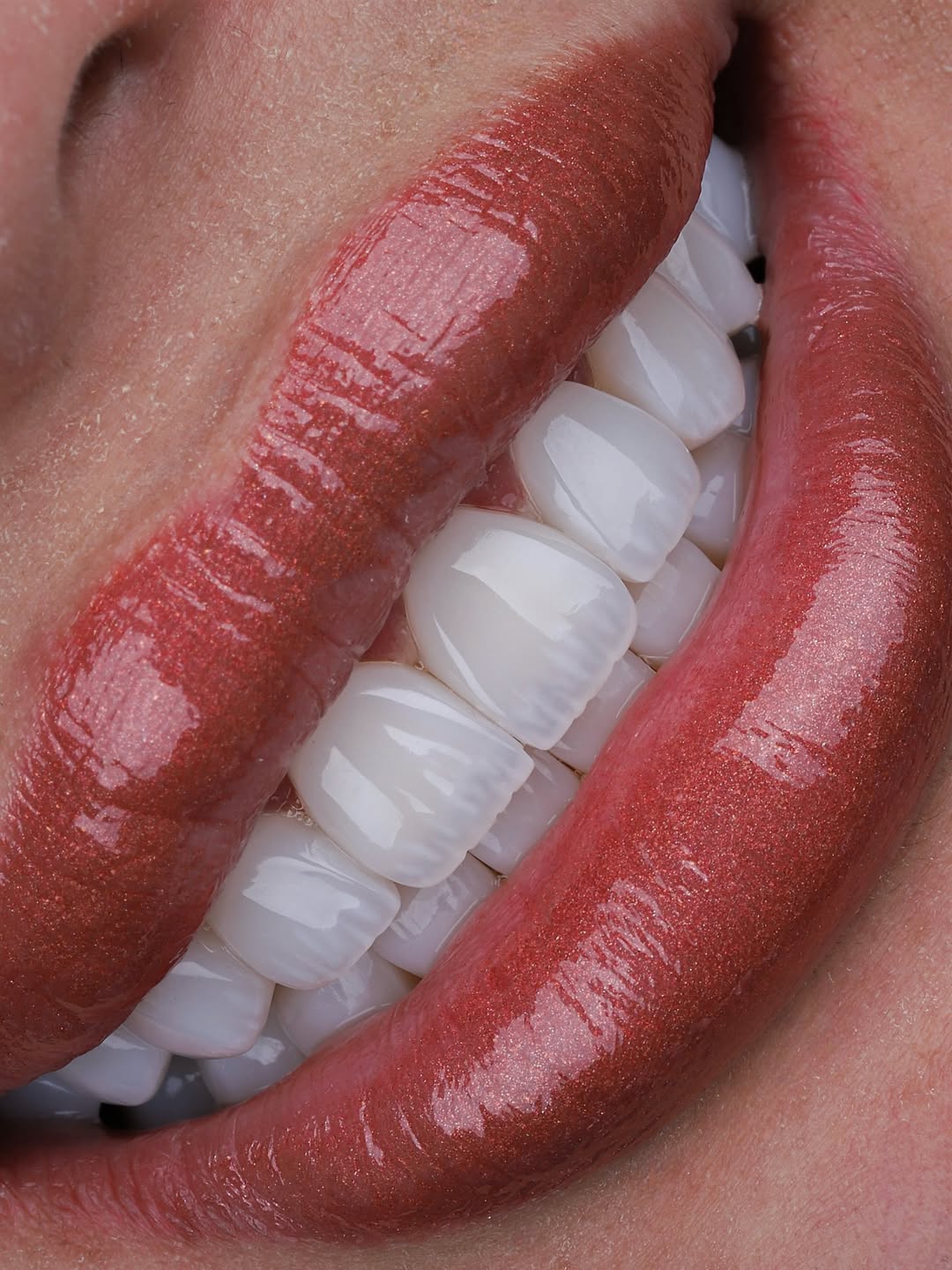
BL3 and BL4 exist beyond that boundary. They belong to the VITA Bleached (BL) extension, a supplementary set of four shades — BL1, BL2, BL3, BL4 — developed specifically to address the whiteness levels achievable through aggressive tooth whitening and cosmetic ceramics. BL4 is the absolute lightest shade in the entire VITA system. BL3 is one step warmer and slightly darker, though both are unmistakably ultra-white by any standard.
To put this in perspective: A1 is already lighter than the average unrestored adult tooth. B1 is lighter still. BL1 surpasses both. BL2 goes further. BL3 and BL4 are at the extreme end — shades that exist not because teeth naturally look this way, but because patients and ceramists pushed the system to accommodate cosmetic demand.
Why They Look Natural on Some Patients and Artificial on Others
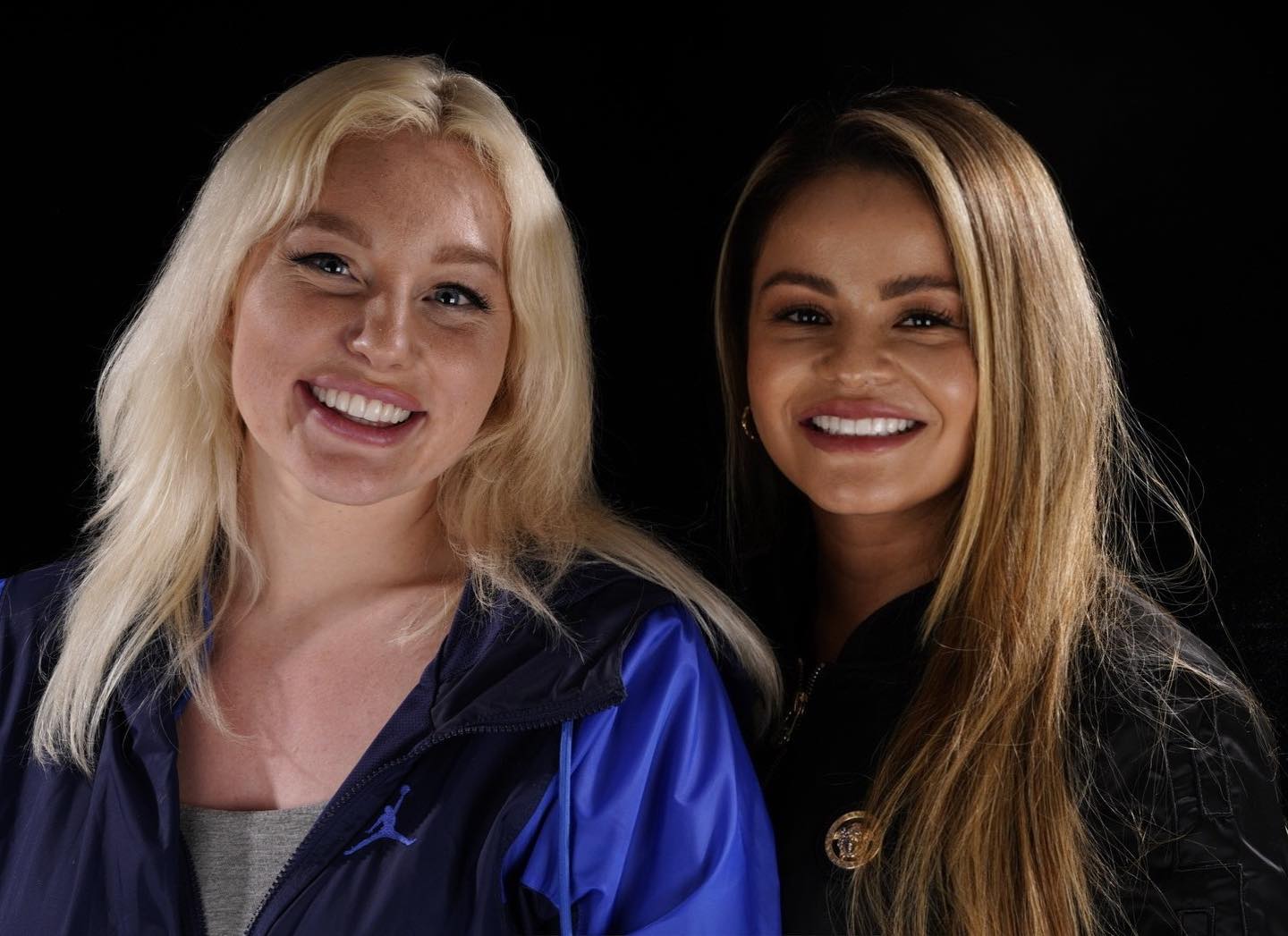
This is the central clinical tension with BL3 and BL4. The same shade code can produce a result that reads as “strikingly beautiful” on one patient and “obviously fake” on another. The difference is rarely the ceramic technique alone — it’s the patient’s baseline anatomy and facial contrast.
Because the entire process is so efficient, you will have plenty of time to enjoy the city after receiving your veneers in Colombia.
Skin Tone and Luminosity
Very light or fair skin has lower inherent contrast against bright white teeth. The eye perceives the overall combination as balanced rather than jarring. On patients with darker or more olive skin tones, the high contrast between ultra-white teeth and warmer skin can make restorations look implanted rather than integrated. The teeth draw attention to themselves as objects rather than features.
Get your veneers in Colombia for up to 70% less.
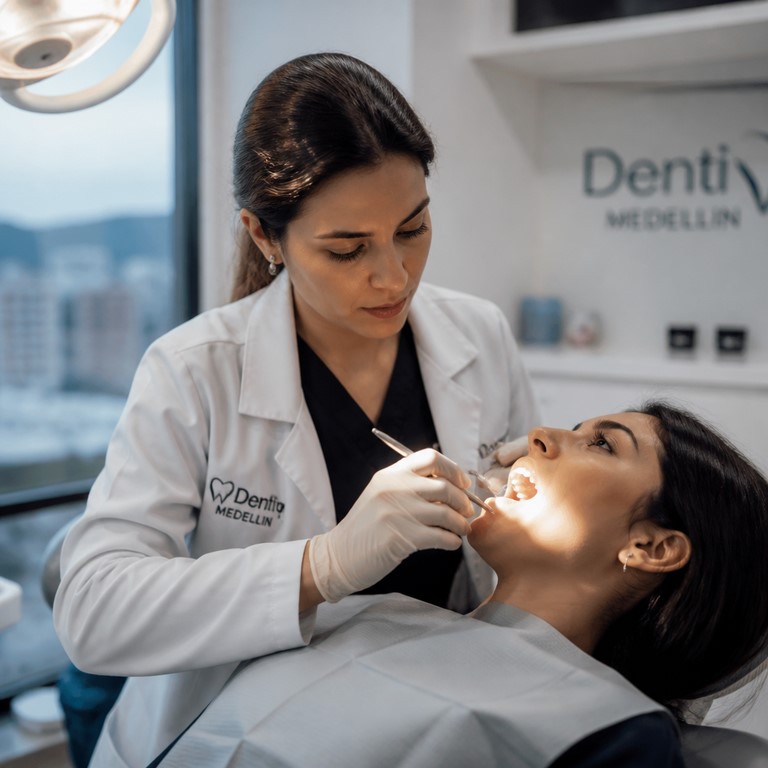
In the US, 20 porcelain veneers run $30,000–$50,000. With Dr. Yazmin in Medellin, it's $6,900, all-inclusive.
Individual patient experience. Prices, inclusions and results are confirmed after a clinical evaluation. A full evaluation is required before any treatment.
Gum Color
Gum tissue in lighter-skinned patients tends toward a lighter pink. Ultra-white veneers against light pink gingiva creates a cohesive aesthetic. In patients with naturally darker or more pigmented gingival tissue — common across many ethnic backgrounds — BL3 or BL4 veneers can create a visual discontinuity at the gum line that amplifies the “prosthetic” appearance.
Facial Contrast
Patients with high-contrast facial features — dark hair, defined brows, strong jawline — can often carry brighter veneers without looking artificial. The BL3 or BL4 smile reads as an intentional, high-impact aesthetic choice. On softer, lower-contrast faces, the same whiteness can dominate the face in a way that feels unbalanced.
The “Refrigerator Teeth” Problem
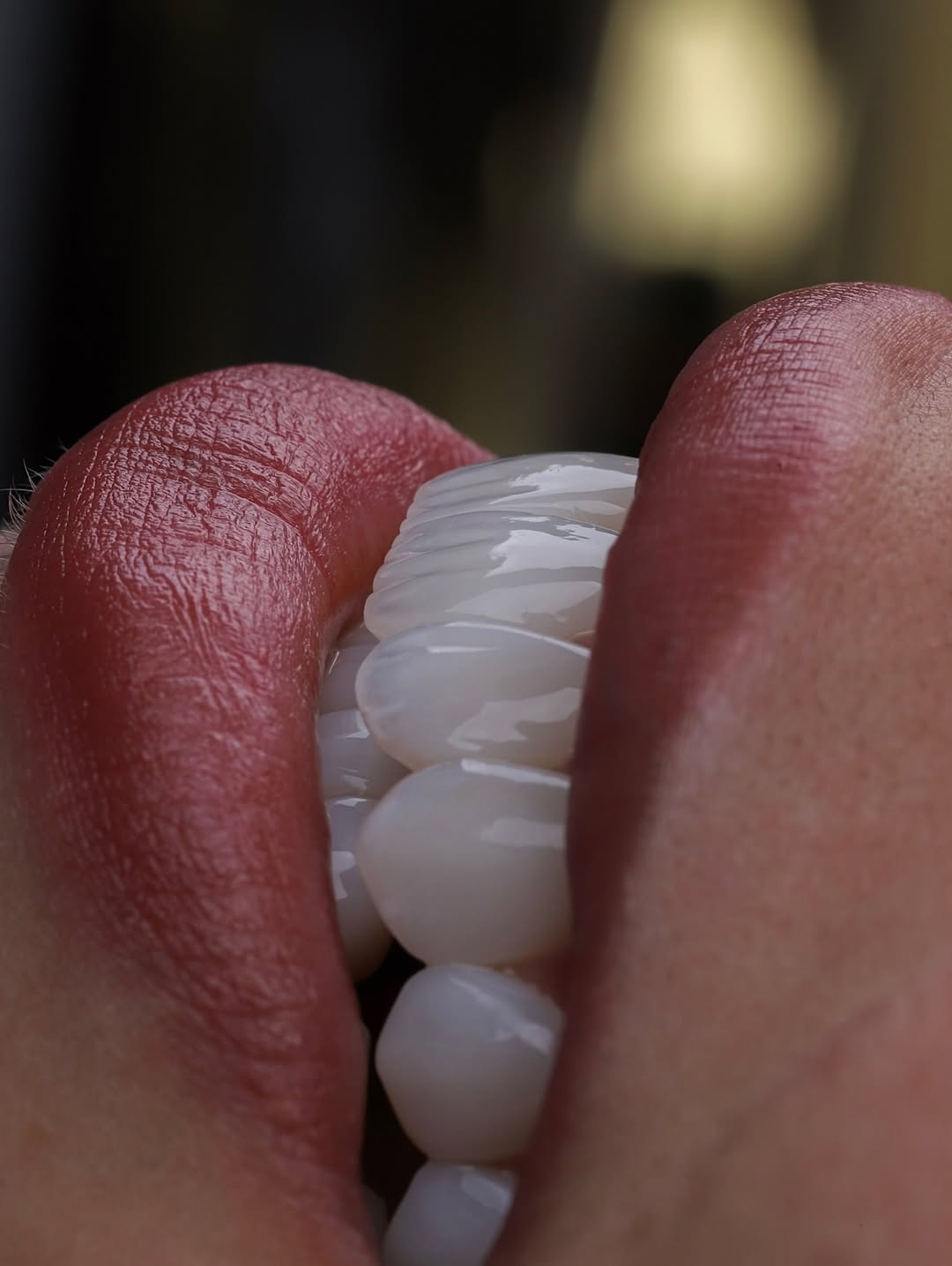
Cosmetic dentists use the term “refrigerator teeth” to describe veneers that are too white, too opaque, and too uniform — restorations that look like small white appliances rather than teeth. The problem isn’t whiteness alone. It’s the combination of maximum whiteness with insufficient translucency and no internal variation.
Natural teeth — even very white natural teeth — have subtle color gradients. The cervical third (near the gum) is slightly warmer and more saturated. The incisal third (the biting edge) is more translucent and often has a slightly grayish or bluish quality from the thin enamel. The body of the tooth transitions between these zones.
When BL3 or BL4 veneers are fabricated with high opacity and no incisal translucency — often a cost-cutting choice in lower-tier labs — the result is a flat, uniform white slab that bears no optical resemblance to a real tooth, regardless of shade. The whiteness becomes secondary to the absence of depth.
Patients pursuing BL3 or BL4 shades should specifically ask whether their lab works in layered porcelain (as opposed to fully pressed or monolithic ceramics) and whether the prescription specifies incisal translucency. These details separate naturalistic ultra-white restorations from refrigerator teeth.
Which Patients Genuinely Suit BL3 and BL4
There is a real patient profile for whom BL3 or BL4 is not just acceptable but genuinely optimal:
Fair Skin and Lighter Gingival Tissue
Patients with very fair or light skin — particularly those of Northern European, East Asian, or light mixed heritage backgrounds — often have the contrast balance to carry BL3 or BL4 without the “implanted” appearance. The brightness of the teeth aligns with the overall luminosity of their face.
High-Contrast Facial Features by Choice
Some patients — particularly in entertainment, media, and high-visibility public roles — actively want their smile to be a standout feature. For them, the “statement” quality of BL4 is a feature, not a flaw. A news anchor or performer whose professional identity involves an impactful on-camera presence has different aesthetic goals than someone seeking a discreet cosmetic enhancement.
Patients Replacing Existing Ultra-White Restorations
Someone who has had BL3 veneers for years and is replacing them has already demonstrated that this shade works for their face. Consistency in replacement cases is often more important than second-guessing the original shade choice.
Those with Naturally High-Value Existing Teeth
Patients who have undergone aggressive in-office whitening and achieved a naturally high-value result may choose BL3 or BL4 veneers specifically because anything darker would look visibly different from their whitened natural teeth on the arches not being restored.
The Role of Translucency in Making Ultra-White Veneers Look Real
Translucency is arguably more important than shade selection when it comes to the natural versus artificial divide. A veneer’s translucency describes how much light passes through it versus how much is reflected back from the surface.
High-opacity BL4 reflects almost all incident light. The result is a bright, flat, high-chroma surface that catches attention because it behaves nothing like natural enamel. Natural enamel is semi-translucent — light enters it, bounces off the dentin underneath, and exits with a warmth and depth that opaque porcelain cannot replicate.
High-quality BL3 or BL4 veneers achieve their whiteness not by maximizing opacity but by using a high-value, low-chroma ceramic body with calibrated translucency — particularly at the incisal edge. This requires more ceramic layering work and a skilled technician, but the difference in final appearance is substantial. These veneers look white because they’re genuinely high-value, not because they’re opaque.
When evaluating ceramic proposals for BL shades, ask specifically: “What is the incisal translucency in this prescription?” If the answer is “none” or the question draws a blank, that’s a warning sign about the quality of the laboratory work.
How Ceramic Layering Technique Affects Perceived Whiteness
Two veneers with the same BL4 shade prescription can look dramatically different based on ceramic construction technique:
Fully Pressed or Monolithic Ceramics
These are fabricated as a single block of glass ceramic pressed or milled to shape. They’re efficient and consistent, but they lack the internal layering that creates optical depth. A fully pressed BL4 veneer reads as flat and artificial more easily than a layered equivalent, simply because there’s no internal color gradient to mimic natural tooth structure.
Layered Porcelain (Cut-Back Technique)
A pressed or milled core is “cut back” at the incisal third, and hand-layered feldspathic porcelain is applied by the ceramist to build in translucency, incisal halos, and natural depth. This technique requires significantly more laboratory time and skill but produces restorations that hold up optically even at BL3 and BL4 shades. The layering allows the ceramist to introduce the subtle internal color variation — slight blue at the incisal edge, warm body, slightly more saturated cervical — that makes even ultra-white teeth look like teeth.
The material choice matters too. E.max (lithium disilicate) is the dominant material for high-aesthetic veneers because it has inherent translucency properties that support natural-looking results even at bright shades. Zirconia, while stronger, is naturally more opaque and requires specific formulations to achieve the translucency needed for BL3 or BL4 to look credible.
Is BL4 Ever a Clinical Recommendation, or Always Purely Aesthetic?
This is a legitimate question. BL4 is not a clinically indicated shade for any dental diagnosis — it’s not prescribed because a patient has a disease that BL4 treats. It exists entirely in the aesthetic domain.
However, there are clinical scenarios where BL shades — including BL3 or BL4 — are the functionally correct choice even if the motivation is cosmetic:
- Fluorosis cases: Patients with severe dental fluorosis have highly mineralized, opaque enamel that can actually be naturally very white or have white spots. BL2 or BL3 veneers may authentically match or complement what their enamel was doing before cosmetic intervention.
- Matching opposite arch post-whitening: If a patient has whitened their lower arch to BL3 levels and is only veneering the upper arch, BL3 may be the clinically correct shade match to create harmony.
- Replacement of existing BL restorations: Stepping down from BL4 to B1 in a replacement case would create visible inconsistency. BL4 becomes the functional requirement for continuity.
Outside these scenarios, BL3 and BL4 are choices made for aesthetic and personal reasons — and that’s entirely valid. But patients should enter that choice with open eyes about the factors that determine whether the result looks extraordinary or unconvincing.
What to Look at in Before/After Photos to Judge Whiteness Fit
Before/after photos in cosmetic dentistry are notoriously variable in quality and honesty. When evaluating whether BL3 or BL4 results look appropriate on patients similar to you, focus on:
Skin Tone in the “After” Photo
Is the patient’s skin tone comparable to yours? A result that looks beautiful on a very fair-skinned patient may not translate to your complexion. Look specifically at the skin-tooth contrast in natural light photos, not studio-lit close-ups where lighting is controlled to minimize this variable.
Photo Lighting Conditions
Studio flash and ring lights make teeth appear whiter and more uniform than they look in natural daylight. The gold standard is natural indirect light — a patient photographed near a window without flash. These photos are rarer but infinitely more informative.
Gum-to-Tooth Transition
Does the veneer edge at the gum line look seamless or like a line drawn on the tissue? Well-placed, well-shaded ultra-white veneers transition naturally into the gum margin. A visible demarcation line suggests shade or margin placement issues that will be apparent in real life.
Incisal Edge Character
Do the biting edges look slightly translucent with subtle variation, or do they look like the edge of a white floor tile? Translucency at the incisal is the single best indicator of ceramic quality in ultra-white restorations.
The Full-Face Photo
Always ask to see the full face, not just the smile close-up. A smile that looks overwhelming or disconnected in a full-face portrait — despite looking beautiful in isolation — is the definition of “too white for this patient.” The smile should enhance the face, not override it.
BL3 and BL4 are legitimate, beautiful shade options when matched to the right patient, executed by the right ceramist, and chosen with realistic expectations. They are also the easiest shades to get catastrophically wrong. The difference lies almost entirely in the decisions made before the ceramic is ever fired.