BL1 and BL2 are the brightest shades people ask for when they want a whiter smile. Most guides talk about them for porcelain veneers, but many patients also want to know whether composite bonding can get that white. Here’s what composite resin can and can’t do with bleach shades, and how a dentist matches it.
The same veneers cost up to 70% less in Colombia.
See if you qualify Free video call in English · on WhatsAppIndividual patient experience. Results and pricing are confirmed after a clinical evaluation.
Short answer: yes, composite resin can be made in very white bleach shades, and many composite systems include extra-white shades meant for whitened teeth. But composite shade names aren’t standardized. A composite labeled “BL” or “extra white” by one manufacturer isn’t guaranteed to match the BL1 or BL2 tab of the ceramic shade guide most labs use for porcelain. Very white composite can also look flatter and more opaque if it isn’t layered well, and it tends to stain and lose gloss over time faster than porcelain. A dentist checks the shade on your own teeth, often with a small test of the actual material, before bonding. Whether BL1 composite is right for you depends on your teeth, your bite and how much upkeep you’re comfortable with.
What BL1 and BL2 mean, and why composite is different
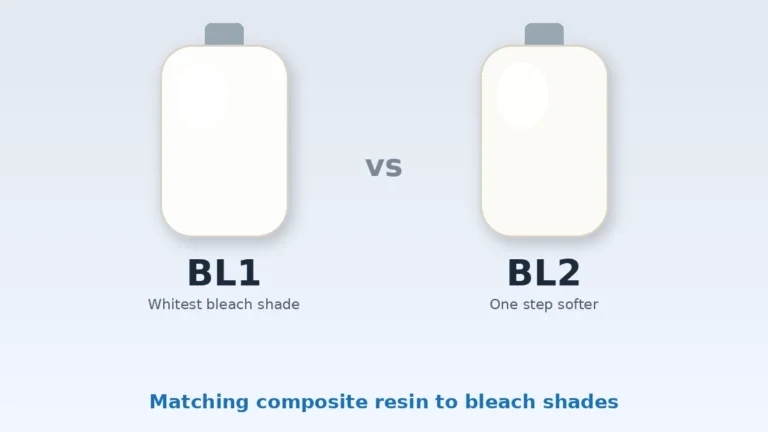
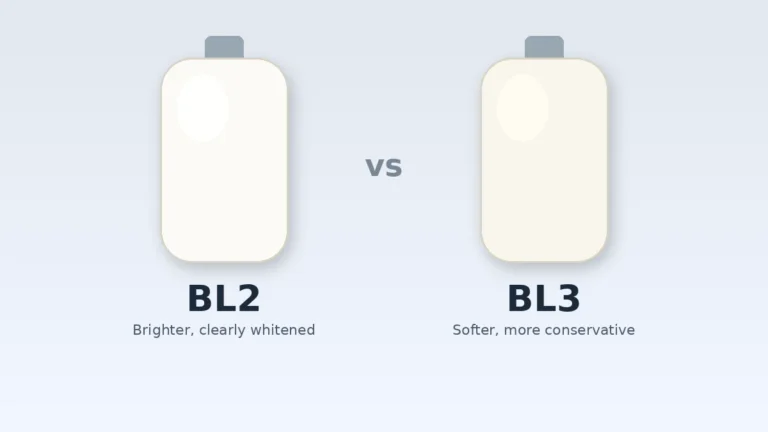
Natural tooth color is usually described with the 16 shades of the VITA classical guide, where B1 is the lightest. Whitened teeth and cosmetic restorations can go lighter than that, so the A–D shade guide used by many dental labs adds four Bleach shades: BL1 (the whitest), BL2, BL3 and BL4. Our teeth whitening shade guide explains the full scale.
Those BL tabs are made to describe ceramics such as porcelain veneers and crowns. Composite resin is a different material made by many different manufacturers, and each one names its own shades. Some use “BL”, others “XL”, “W”, “extra white” or “bleach”, and the same name can mean a slightly different color from brand to brand. So when you ask for “BL1 composite”, what you’re really asking for is a composite that looks like the BL1 tab on your teeth, and that’s something your dentist checks visually rather than reads off a label.
Can composite match a BL1 or BL2 shade?
Often it can come close, but a few things decide how close:
- The composite system. Systems differ in how many extra-white shades they offer and how translucent those shades are. Dentists choose and sometimes combine shades to get the brightness they want.
- Layering. A natural-looking composite veneer is usually built in layers, with a more opaque body and a more translucent enamel layer on top. A single very white, opaque layer can look chalky or “painted on”.
- The tooth underneath. A thin layer of composite over a darker tooth lets some of that color through. Very discolored teeth may need more masking, or may be better suited to porcelain.
- Your other teeth. If you’re bonding only a few teeth, the composite has to match the teeth around it. Composite doesn’t change color with whitening, so whitening is usually done first and the composite is matched to the result.
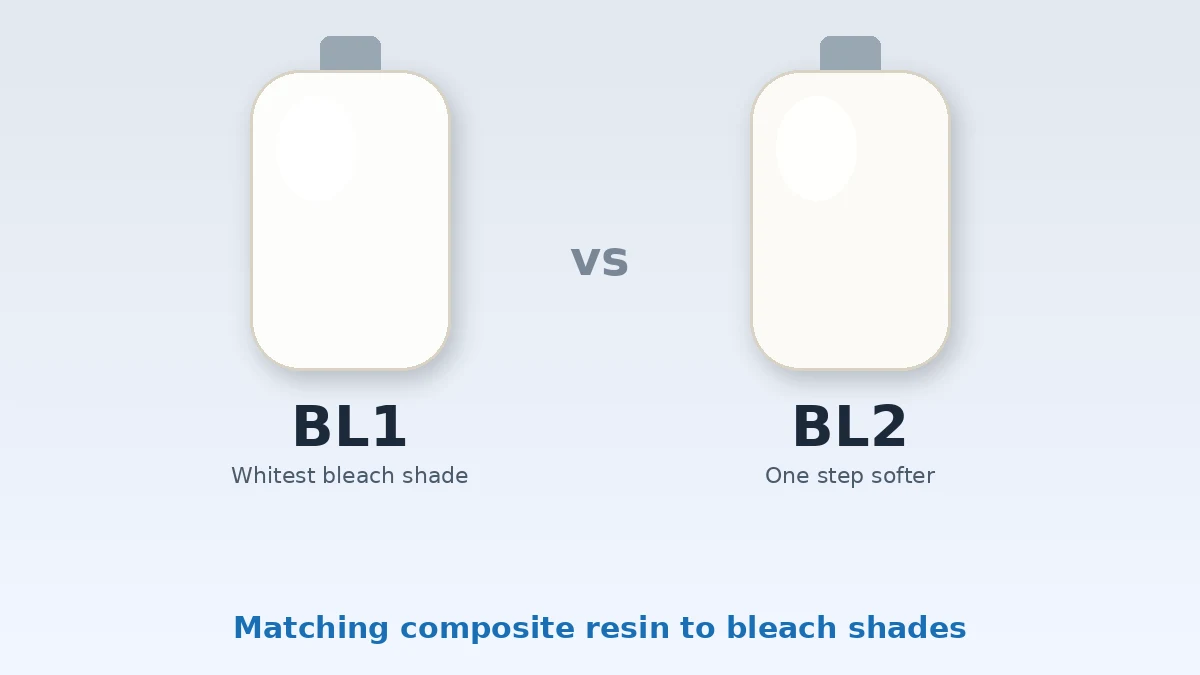
BL2 is often easier to make look natural in composite than BL1, simply because it’s one step less extreme. If you’re still deciding between the two shades themselves, our BL1 vs BL2 veneers guide compares how each one looks.
Get your veneers in Colombia for up to 70% less.
In the US, 20 porcelain veneers run $30,000–$50,000. With Dr. Yazmin in Medellin, it's $6,900, all-inclusive.
Individual patient experience. Prices, inclusions and results are confirmed after a clinical evaluation. A full evaluation is required before any treatment.
BL1 composite vs BL1 porcelain in one table
| Composite bonding / veneers | Porcelain veneers | |
|---|---|---|
| Shade naming | Set by each composite manufacturer; not standardized | Usually described with the lab’s ceramic shade guide (BL1–BL4) |
| How the shade is checked | Visually on your teeth, often with a small test of the material | With shade tabs, photos and the lab’s work; often a trial smile |
| Look at very white shades | Can look flat or opaque without careful layering | Translucency is built in by the lab |
| Color over time | More prone to staining and losing gloss; may need polishing or repair | Highly stain-resistant glazed surface |
| Tooth preparation | Usually little or none | Usually some preparation of the tooth surface |
These are general tendencies. The skill of the dentist, the product used and your habits all affect the result. For a broader comparison of the two materials, including cost and durability, see porcelain vs composite veneers: the ultimate guide.
How white can composite bonding be?
Composite can be made whiter than any natural tooth shade, including B1. The practical limit isn’t how white the material is, but how white it can look while still looking like a tooth. The brighter and more opaque the shade, the harder it is to keep the depth and translucency of natural enamel, especially on the edges of the front teeth.
Lighting also matters. Composite and natural enamel can reflect light a little differently, so a match that looks perfect under clinic lights may look slightly different outdoors or in photos. That’s one reason dentists like to check the shade in more than one kind of light.
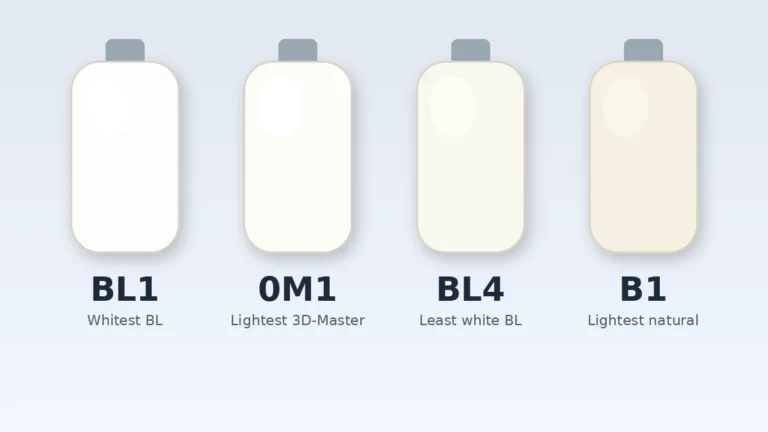
If you want to know which code sits at the very top of the scale, our article on the whitest tooth shade compares BL1, BL4, OM1 and B1.
Keeping a bleach-shade composite white
A very white composite shows stains more easily than a darker one, and composite is more porous than glazed porcelain. Coffee, tea, red wine, tobacco and some foods can dull it over time. Everyday habits that help include:
- Brushing with a non-abrasive toothpaste, since very abrasive “whitening” pastes can scratch the surface.
- Rinsing with water after dark drinks and not smoking.
- Regular cleanings, where the composite can be professionally polished to restore its gloss.
- Wearing a night guard if your dentist finds you grind or clench, since chipping is more common with composite.
Whitening products won’t lighten composite that has darkened, so stained composite is polished, resurfaced or replaced instead. Our guide to veneer staining: causes and removal covers what can and can’t be done.
How the shade is matched with your dentist
With composite, the shade is chosen chairside rather than ordered from a lab, so the first part of the appointment matters. In general, the process looks like this:
- Choosing the shade before the teeth dry out. Teeth get lighter as they dehydrate during treatment, so the shade is usually picked at the start, on moist teeth.
- A small test of the material. Many dentists place and cure a tiny amount of the composite on the tooth to see the real color, then remove it.
- Whitening first, when planned. If you’re whitening your natural teeth, bonding is usually scheduled some time afterwards, because tooth color keeps settling for a while and fresh bleaching can affect how well the composite bonds. Your dentist tells you how long to wait.
- Talking about the look you want. Some people want a bright “Hollywood” smile, others want teeth nobody notices. Saying so clearly helps the dentist choose between BL1, BL2 or something softer.
Dr. Yazmín Escudero’s clinic in El Poblado, Medellín offers composite veneers for international patients. To see how that treatment works, visit our composite veneers in Medellín page, and read the complete composite veneers guide for the process step by step.
Key takeaways
- Composite resin can be made in very white bleach shades, close to BL1 or BL2.
- Composite shade names aren’t standardized, so the match is checked on your teeth, not read from a label.
- Very white composite needs careful layering to avoid an opaque, flat look; BL2 is often easier to make look natural than BL1.
- Composite stains and loses gloss faster than porcelain, and whitening won’t lighten it later.
- If you plan to whiten your natural teeth, that’s usually done before bonding, and the composite is matched to the result.
Frequently asked questions
Can composite bonding be done in a BL1 shade?
Often, yes. Many composite systems include extra-white bleach shades, and a dentist can choose or combine them to get close to a BL1 look. Composite shade names aren’t standardized, though, so the match is checked visually on your teeth rather than read from a label.
Is BL2 composite bonding a better choice than BL1?
It depends on the look you want. BL2 is one step less bright than BL1 and is often easier to make look natural in composite, especially when untreated teeth stay visible. Your dentist can show you both on your own teeth before bonding.
What is the whitest composite shade?
It varies by manufacturer. Each composite system has its own whitest bleach shade, with names such as BL, XL, W or extra white, and they aren’t identical across brands. The whitest shade isn’t always the best choice, because very white, opaque composite can look flat if it isn’t layered carefully.
How white can composite bonding be?
Composite can be made whiter than any natural tooth shade, including B1. The real limit is how white it can look while still looking like a tooth, since the brightest, most opaque shades make it harder to keep the depth and translucency of natural enamel.
Composite vs BL porcelain: which keeps its color better?
Porcelain usually does. Glazed porcelain is highly stain-resistant, while composite is more porous and can stain and lose gloss over time, especially with coffee, tea, red wine or tobacco. Composite can be polished or repaired, but whitening products won’t lighten it.
Can I whiten my teeth after getting white composite bonding?
Whitening can lighten your natural teeth but won’t change the color of the composite, so the two could stop matching. That’s why whitening is usually done before bonding, and the composite is matched to the whitened result. Your dentist will tell you how long to wait between the two.
What colors do composite veneers come in?
Composite resins come in a range of shades that mirror natural tooth colors, plus extra-white bleach shades, in both more opaque and more translucent versions. Dentists often layer several of them to create a natural-looking tooth.
Wondering if composite can give you the shade you want?
Send our team a message on WhatsApp at +57 300 300 0730 to ask about a free photo assessment with Dr. Yazmín Escudero’s clinic in El Poblado, Medellín. Your final shade is always confirmed in person, on your own teeth.
Chat on WhatsApp