The Core Difference: Four Implants vs. Six
All-on-4 and All-on-6 are both full-arch implant solutions — they support a complete fixed bridge of 12 to 14 teeth per arch. The difference is structural: All-on-4 uses four titanium implants per arch, while All-on-6 uses six. That additional support changes the load distribution across the implants, the bone, and the prosthesis — and for certain patients, it makes a clinically meaningful difference in long-term outcomes.
The same veneers cost up to 70% less in Colombia.
See if you qualify Free video call in English · on WhatsAppIndividual patient experience. Results and pricing are confirmed after a clinical evaluation.
Neither option is universally superior. The right choice depends on your specific bone anatomy, bite force, health history, and long-term expectations. The only way to determine which applies to you is with a CBCT scan — three-dimensional imaging of your jaw that maps bone height, density, and width at each potential implant site.
When All-on-4 Is Sufficient
All-on-4 was designed to work precisely in cases where posterior bone has been lost — its angled posterior implants sidestep areas of resorbed bone and anchor into denser anterior bone. This makes it an effective solution for a large proportion of full-arch cases without requiring bone grafting.
All-on-4 is generally an appropriate choice when:
- Anterior bone volume is adequate (sufficient height and width in the front of the jaw)
- The patient is a non-smoker or has quit smoking well in advance of surgery
- There are no significant parafunctional habits such as severe bruxism (teeth grinding)
- The patient has no systemic conditions that impair bone healing
- The patient is at normal body weight (lower BMI typically means lower occlusal loading forces)
In well-selected candidates, All-on-4 delivers excellent results. Studies published in peer-reviewed journals report implant survival rates of approximately 95% or higher at the 10-year mark in good candidates — comparable to conventional implant placement.
When All-on-6 Is the Better Choice
All-on-6 distributes the load of a full-arch prosthesis across six anchor points rather than four. This reduces the stress per implant and per bone contact area — which matters most in patients where bone quality is not ideal or where bite forces are higher than average.
Get your veneers in Colombia for up to 70% less.
In the US, 20 porcelain veneers run $30,000–$50,000. With Dr. Yazmin in Medellin, it's $6,900, all-inclusive.
Individual patient experience. Prices, inclusions and results are confirmed after a clinical evaluation. A full evaluation is required before any treatment.
Clinical indications that favor All-on-6 over All-on-4 include:
- Posterior bone loss: When the CBCT scan reveals insufficient bone for adequate angled implant placement, a sixth implant positioned differently can distribute load without requiring a graft.
- Bruxism or heavy bite: Patients who grind or clench their teeth generate significantly higher occlusal forces. More implants spread this force across a larger area, reducing the risk of implant fracture, prosthesis fracture, or bone stress failure.
- Higher body weight: Heavier patients produce greater occlusal load. The six-implant configuration provides additional mechanical resilience.
- Patient preference for maximum reliability: Some patients simply want the most stable, long-term solution available regardless of added cost — particularly when traveling internationally and wanting to minimize any risk of complications that would require a return visit.
- Compromised bone density: Patients with lower overall bone density (such as those with osteoporosis, though bisphosphonate use requires separate evaluation) benefit from a larger number of implant anchors.
Survival rate data for All-on-6 in compromised bone cases is slightly higher than All-on-4 in equivalent populations, though direct head-to-head long-term data is still limited.
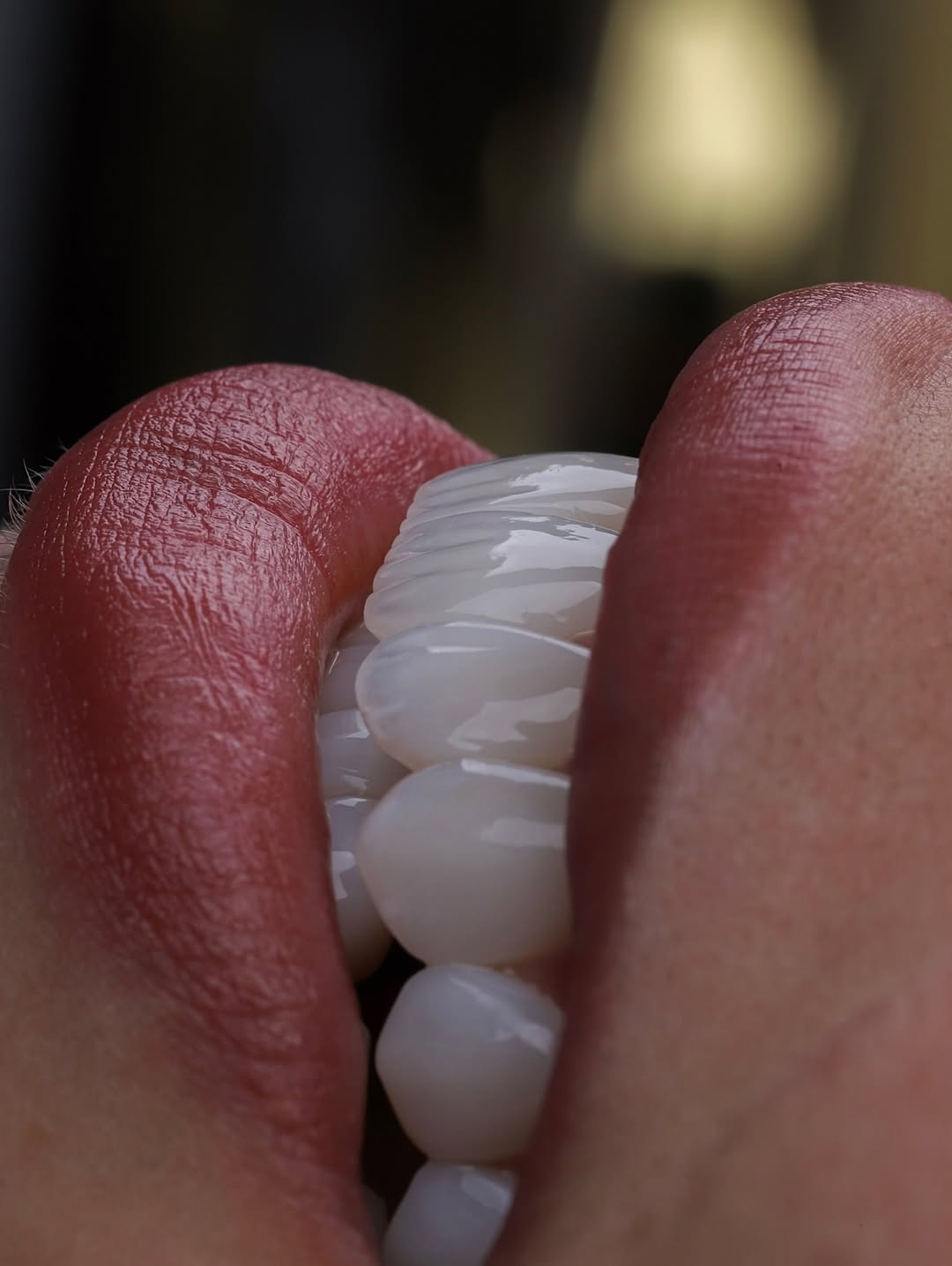
Experience minimal discomfort and a fast recovery time when receiving premium porcelain smile veneers in Colombia.
The “All-on-X” Concept
Some of the most experienced implant surgeons in Colombia — and internationally — have moved away from rigid adherence to “All-on-4” or “All-on-6” as fixed protocols. Instead, they use the CBCT scan to determine the optimal number and position of implants for each specific patient’s anatomy. This is sometimes called the “All-on-X” approach: the number of implants is determined by the case, not the marketing label.
You may encounter clinics quoting All-on-5, All-on-6, or All-on-8 based on this case-specific planning philosophy. This is not a gimmick — it reflects a more individualized treatment approach. The key is that the recommendation should be based on imaging, not on a price point.
All-on-4 vs. All-on-6: Head-to-Head Comparison
| Feature | All-on-4 | All-on-6 |
|---|---|---|
| Implants per arch | 4 | 6 |
| Cost in Colombia (per arch) | $7,000 – $12,000 USD | $9,000 – $14,000 USD |
| Bone requirement | Moderate — uses angled posterior implants to compensate for posterior bone loss | Flexible — accommodates a wider range of bone anatomy with more anchor points |
| Load distribution | Four contact points | Six contact points — lower stress per implant |
| Stability | High in good candidates | Higher in compromised bone or high-force cases |
| Ideal candidate | Non-smoker, healthy bone in anterior region, normal bite forces | Bruxism, posterior bone loss, higher BMI, patients wanting maximum reliability |
| Bone grafting typically required? | No, in most cases | No, in most cases |
| Immediate loading possible? | Yes, when bone quality qualifies | Yes, when bone quality qualifies |
| 10-year survival rate (good candidates) | ~95% | Slightly higher in compromised cases |
| Prosthesis options | Acrylic/hybrid or zirconia | Acrylic/hybrid or zirconia |
How the Decision Should Be Made
No ethical implant surgeon quotes All-on-4 or All-on-6 without a CBCT scan. The number of implants, their positions, and whether immediate loading is possible are all determined by imaging — not by a price catalog.
A reputable consultation process looks like this:
- CBCT scan — three-dimensional imaging of both arches, reviewing bone height, width, and density at each prospective implant site.
- Treatment planning session — the surgeon reviews the scan with you, explains which implant positions are viable, and recommends All-on-4, All-on-6, or a case-specific variant based on anatomy.
- Prosthesis material selection — zirconia vs. acrylic based on budget and clinical factors.
- Immediate loading assessment — whether same-day temporaries are feasible based on expected implant stability at placement.
At Doctor Yazmin’s clinic in Medellín, the CBCT scanner is on-site, which means all imaging, planning, and surgical consultation happen in the same location — reducing both waiting time and the risk of miscommunication that occurs when imaging is done at a separate facility.
The Red Flag: Quoting Without Imaging
Be cautious of any clinic — in Colombia or elsewhere — that provides a firm quote for All-on-4 or All-on-6 based on photographs, dental X-rays, or a phone/video consultation alone. Standard periapical or panoramic X-rays are two-dimensional and cannot provide the bone depth and density measurements needed to plan implant placement safely. CBCT imaging is the non-negotiable baseline for full-arch implant planning.
A clinic that quotes without imaging is either working off an assumption they’ll adjust later (meaning the final price may change significantly), or they are not applying the diagnostic rigor that full-arch implant surgery requires. Either scenario is a problem.
Cost Perspective: Is the All-on-6 Upgrade Worth It?
The difference in Colombia between All-on-4 and All-on-6 is typically $2,000 to $3,000 per arch — significant, but far smaller than the gap you would face in the US or UK. If your CBCT scan shows anatomy that would clearly benefit from six implants, the additional cost in Colombia is relatively modest compared to the long-term implications of premature implant failure requiring surgical revision.
If your scan shows ideal anatomy for All-on-4, there is no clinical benefit to paying more for additional implants. The decision should be driven by the imaging, not by upselling.