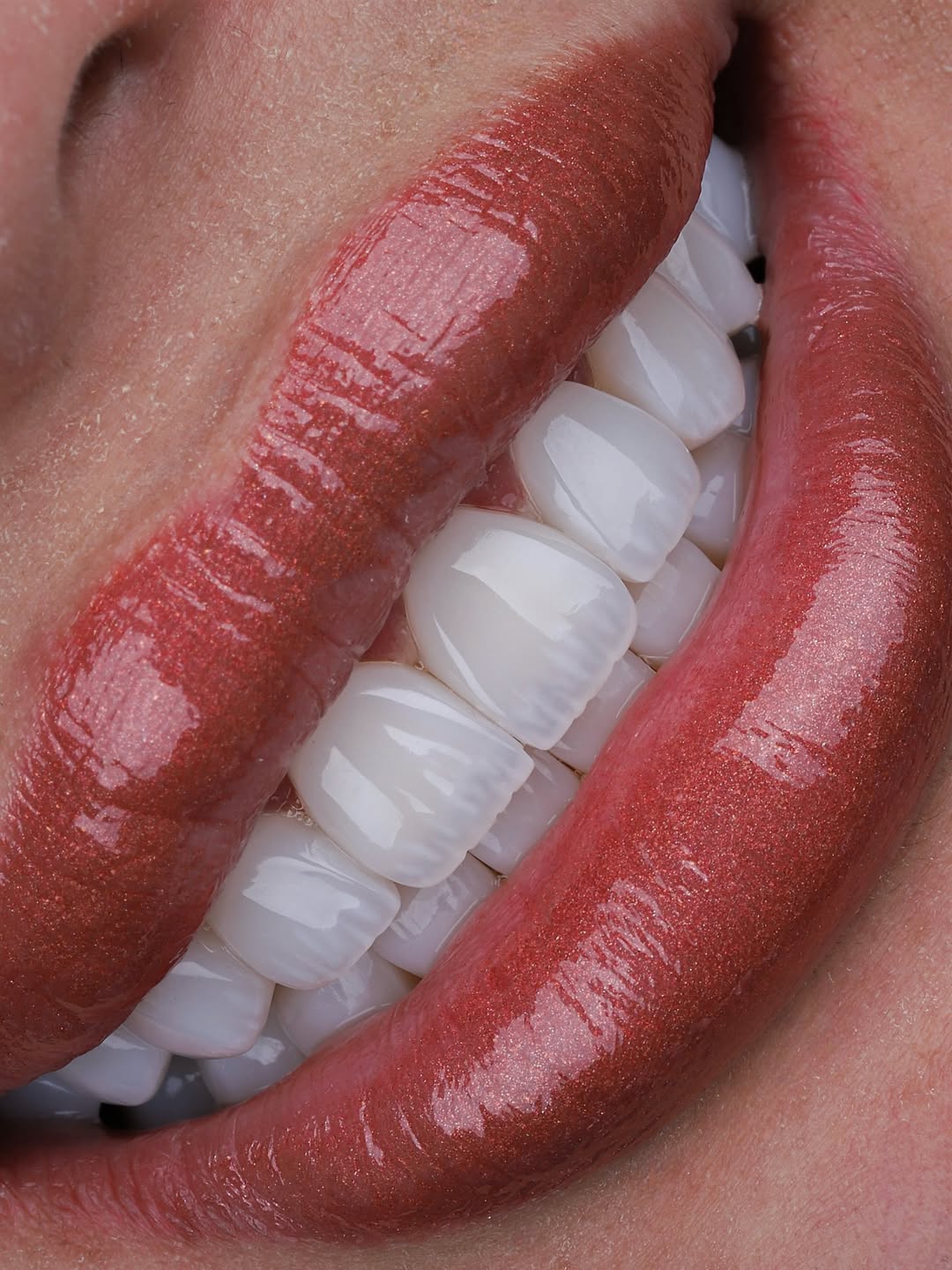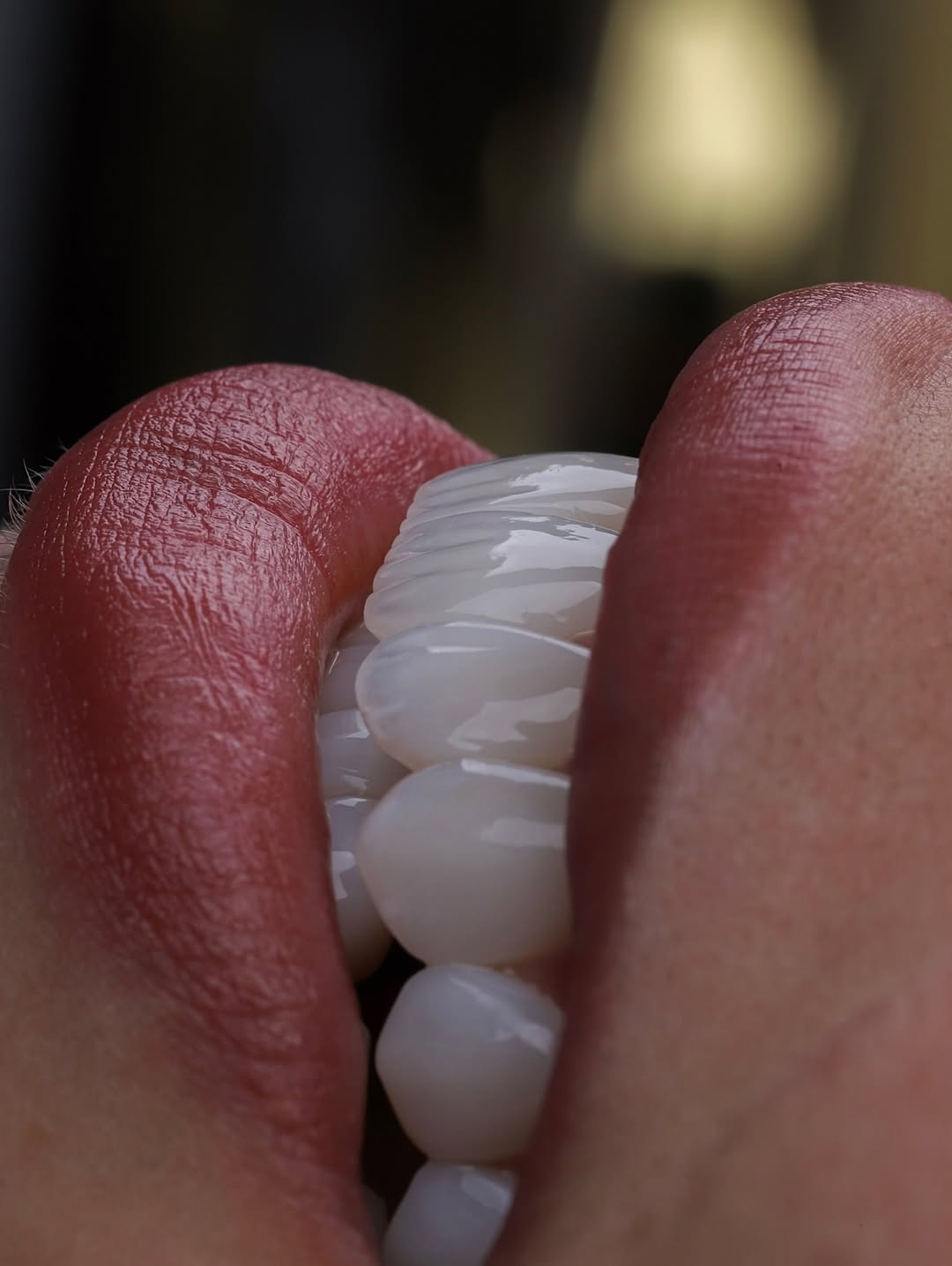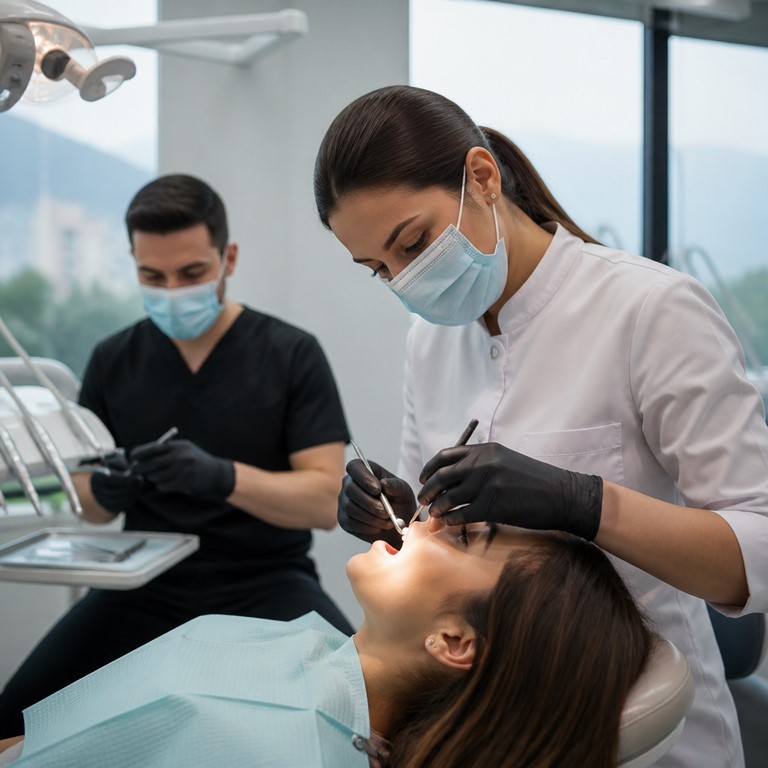
Why Tooth Sensitivity Matters Before You Consider Veneers
Tooth sensitivity and veneers are not mutually exclusive — but the relationship between them is more complicated than most cosmetic dentistry websites let on. If your teeth are already reacting to cold drinks, sweet foods, or even a cool breeze, adding a veneer procedure without addressing the underlying cause can make things significantly worse. Before anything else, you need to understand why your teeth are sensitive.
The same veneers cost up to 70% less in Colombia.
See if you qualify Free video call in English · on WhatsAppIndividual patient experience. Results and pricing are confirmed after a clinical evaluation.
Sensitivity originates at the dentin level. When enamel is thin, worn, or when gum tissue has receded, the dentinal tubules — microscopic channels running from the outer tooth surface to the nerve — become exposed. Hot, cold, sweet, or acidic stimuli trigger fluid movement inside those tubules, stimulating the nerve and producing that sharp, shooting pain. The critical question before veneers: is that exposure going to get worse when your dentist preps the tooth?
How Enamel Removal During Veneer Prep Affects Sensitivity
Traditional porcelain veneers require the removal of 0.3 to 0.7 mm of enamel from the tooth’s facial surface — sometimes more on teeth with significant crowding or alignment issues. For a patient with healthy, thick enamel, this is tolerable. For a patient who already has thin or compromised enamel, you’re shaving off a protective layer that was already doing less work than it should.
Enamel removal is irreversible. Once it’s gone, the tooth is committed to always having a restoration. If a veneer fails in 10 or 15 years and the underlying tooth has been further weakened, your options narrow considerably. For sensitive patients, this permanence is especially significant because you’re locking yourself into a long-term restoration on teeth that were already vulnerable.
The temporary phase is also worth discussing. After prep and before your permanent veneers are bonded, you’ll wear provisional veneers for one to two weeks. During this window, prepared teeth — now with less enamel — can be acutely sensitive. Most patients tolerate this. But patients with pre-existing severe sensitivity frequently report that the provisional phase is the most uncomfortable part of the whole process.
Veneer Types That Are Safer for Sensitive Patients
No-Prep and Minimal-Prep Veneers
No-prep veneers (brands like Lumineers are the most widely marketed) are bonded directly onto the tooth surface with little to no enamel reduction. Because the tooth structure remains largely intact, there’s no exposed dentin, no raw surface period, and far less procedural trauma to the pulp. For patients whose sensitivity is tied to enamel thinning or prior dental work rather than active pathology, no-prep veneers are a legitimate option.
Get your veneers in Colombia for up to 70% less.
In the US, 20 porcelain veneers run $30,000–$50,000. With Dr. Yazmin in Medellin, it's $6,900, all-inclusive.
Individual patient experience. Prices, inclusions and results are confirmed after a clinical evaluation. A full evaluation is required before any treatment.
The trade-off: no-prep veneers are thinner and often can’t achieve the same dramatic color or shape changes as traditional veneers. On teeth that are already slightly protrusive or full, adding a veneer shell without any reduction can make the tooth look bulkier. Your dentist needs to assess your tooth anatomy carefully. Not every tooth is a candidate for the no-prep approach.
Composite Resin Veneers
Composite veneers — applied directly in the dental chair using tooth-colored resin — typically require minimal to no enamel removal. Because the process is additive rather than subtractive, and because composite bonds directly to enamel rather than requiring a thick ceramic shell, the preparation is gentler on teeth that are already struggling.
Composite veneers are also reversible in most cases, which matters for sensitive patients who want to try a cosmetic improvement without permanently altering their teeth. They don’t last as long as porcelain (expect 5–7 years with good care vs. 10–15 for porcelain), and they’re more prone to staining, but for a patient with genuine sensitivity concerns, the reduced trauma is a real clinical advantage.
Ultra-Thin Porcelain Veneers
Some laboratories now produce ultra-thin porcelain veneers (0.2–0.3 mm) that require even less tooth reduction than standard ceramics. Brands like IPS e.max and certain in-house milled options fall into this category. For sensitive patients who specifically want porcelain’s durability and aesthetics, asking your dentist about these ultra-thin options is worth the conversation — they require highly precise impressions and a skilled ceramist, but they can significantly reduce how much enamel has to come off.
What to Fix Before You Even Schedule a Veneer Consultation
Dentin Hypersensitivity
If your sensitivity is diffuse — affecting multiple teeth, triggered by temperature or sweet foods, present without obvious structural damage — you may have dentin hypersensitivity. This is often manageable. Prescription-strength fluoride, desensitizing toothpastes containing potassium nitrate or stannous fluoride, and in-office treatments with fluoride varnish or bonding agents can meaningfully reduce sensitivity before any cosmetic work begins. Many dentists recommend a 4–6 week course of desensitizing treatment before committing to veneers.
Gum Recession
Receding gums expose root surfaces that don’t have an enamel layer at all — just cementum, which is far softer and more porous. Veneering over teeth with active recession is problematic. The veneer margin will likely sit at or near the gum line, and if the gums continue to recede post-placement, you’ll see an exposed root surface below the veneer edge. In moderate to severe recession cases, a soft tissue graft to stabilize the gum line should precede any veneer work.
Cracked Teeth
Cracked tooth syndrome is a frequent source of sensitivity that many patients and even some dentists underdiagnose. A crack running from the biting surface toward the root creates sensitivity that’s sharply localized — often one specific tooth that hurts on release of biting pressure, or with very specific temperature exposures. Placing a veneer over a cracked tooth doesn’t fix the crack. Depending on the crack’s direction and depth, a crown (which encircles the tooth) is often more appropriate. If the crack extends below the gum line, extraction may ultimately be necessary.
Active Decay or Failing Restorations
Sensitivity from decay or a failing old filling needs to be resolved before cosmetic work. No responsible dentist should place veneers over teeth with active cavities or compromised existing restorations.
Post-Veneer Sensitivity: What’s Normal and What’s Not
Some sensitivity after veneer placement is expected and normal. Immediately after bonding, the tooth has been etched, primed, and exposed to the heat of curing lights. Most patients experience mild sensitivity to cold or pressure for one to four weeks post-bonding. This typically resolves on its own as the pulp acclimates.
What’s not normal: sensitivity that intensifies over weeks, spontaneous pain without any stimulus, sensitivity accompanied by a dull ache that doesn’t go away, or pain that wakes you at night. These are signs the pulp may be responding badly to the prep — a risk that’s higher in patients who already had thin enamel or pre-existing sensitivity. In some cases, especially where aggressive preparation was required, a veneer tooth can eventually need a root canal.
If you had significant sensitivity before your veneers, discuss this timeline honestly with your dentist. The expectation should be documented before the procedure so there’s a baseline for comparison afterward.
When Sensitivity Disqualifies You from Veneers
There are scenarios where veneers — even the gentlest options — are not clinically appropriate for sensitive patients:
- Active pulpitis: If the nerve of a tooth is already inflamed (you’ll know — it hurts spontaneously, not just in response to stimuli), a veneer will not help and will likely accelerate pulp damage. That tooth needs root canal treatment or extraction before any cosmetic restoration.
- Severely worn enamel from bruxism: If your enamel has been ground down significantly due to teeth grinding, veneers on unprepared enamel may be possible, but on teeth with little enamel left, any further reduction is extremely risky. Comprehensive bruxism treatment — occlusal guard, possibly orthodontic adjustment of the bite — must precede cosmetic work.
- Untreated periodontal disease: Gum disease causes bone loss and further recession. Placing veneers on teeth with active periodontal disease accelerates these problems and compromises the longevity of the restorations.
- Extreme sensitivity tied to systemic issues: Patients on certain medications (some chemotherapy drugs, bisphosphonates, antihistamines that cause dry mouth) have altered oral environments that affect both sensitivity and healing. These cases need careful coordination between the dental team and the patient’s medical providers.
Practical Checklist: Before Getting Veneers If You Have Sensitive Teeth
- ✔ Identify the cause of your sensitivity — don’t assume it’s just “sensitive teeth.” Ask your dentist to examine enamel thickness, gum levels, and bite.
- ✔ Rule out cracked teeth with a clinical exam; ask about transillumination or bite test if you have localized sensitivity.
- ✔ Complete any necessary periodontal treatment or soft tissue grafting before the veneer consultation.
- ✔ Try desensitizing treatments for at least 4–6 weeks and document whether sensitivity improves.
- ✔ Ask your dentist specifically about no-prep or minimal-prep options and whether your tooth anatomy allows them.
- ✔ Discuss composite resin veneers as a lower-risk trial run if you’re uncertain about committing to enamel removal.
- ✔ Get a full-mouth X-ray series and periodontal charting — any active pathology needs to be resolved first.
- ✔ Ask your dentist what the veneer margin placement will look like relative to your gum line, especially if you have any recession.
- ✔ Establish a clear baseline of your current sensitivity so post-procedure comparison is meaningful.
- ✔ If your sensitivity is severe or getting worse, consider a pulp vitality test before any prep work begins.
Veneers can absolutely be an option for patients with sensitive teeth — but the sequencing matters enormously. Addressing the underlying causes first, choosing the least invasive veneer type that meets your aesthetic goals, and working with a dentist who takes your sensitivity history seriously are the factors that separate a successful cosmetic outcome from a painful, complicated one.