What Is Gum Contouring?
Gum contouring — clinically referred to as gingivoplasty or, when bone is involved, crown lengthening — is a procedure that reshapes the gum line by removing excess or uneven gum tissue to expose more of the tooth surface. In cosmetic dentistry, it’s one of the most impactful procedures for changing the proportions of a smile, yet it remains one of the least discussed.
The same veneers cost up to 70% less in Colombia.
See if you qualify Free video call in English · on WhatsAppIndividual patient experience. Results and pricing are confirmed after a clinical evaluation.
When done correctly, gum contouring creates balance between tooth length and gum display, corrects asymmetry where one side sits higher than the other, and establishes the foundation for veneers or crowns that will look natural rather than disproportionate.
When Is Gum Contouring Needed?
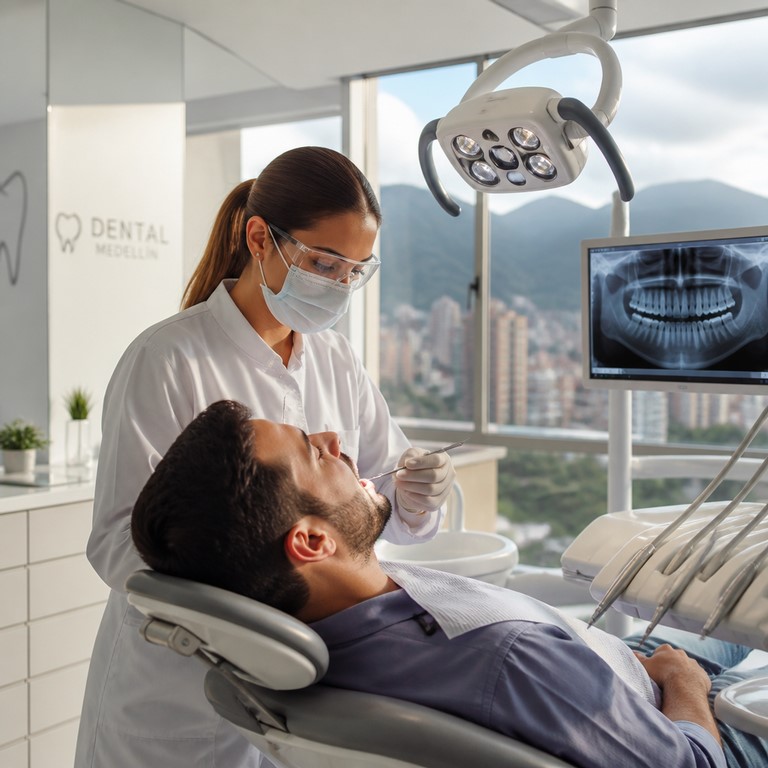
Not every patient seeking a smile makeover needs gum work — but identifying those who do is a critical part of the clinical evaluation. At Doctor Yazmin’s clinic in Medellín, every cosmetic consultation includes an assessment of gum architecture before any restorative treatment is planned.
Gummy Smile (Excessive Gingival Display)
The most common indication. When a patient shows more than 3–4mm of gum tissue above the upper teeth when smiling, this is classified as excessive gingival display — commonly called a gummy smile. The threshold of 3–4mm is the clinical benchmark: below this, gum display is typically considered within normal aesthetic range; at or above this level, contouring can significantly improve smile balance.
Causes of a gummy smile vary: short clinical crowns (teeth that are proportionally short), hyperactive upper lip muscles, vertical maxillary excess (jaw-level), or a combination. For soft tissue and mild cases, gum contouring alone or combined with Botox to the lip elevator muscles resolves the issue. For skeletal causes, orthognathic surgery may be needed — a different clinical pathway entirely.
Uneven Gum Line
Asymmetry in gum height — where one tooth’s gum sits noticeably higher or lower than adjacent teeth — creates a visually distracting smile regardless of tooth color or shape. Laser contouring can correct these discrepancies precisely, often in a single appointment.
Get your veneers in Colombia for up to 70% less.
In the US, 20 porcelain veneers run $30,000–$50,000. With Dr. Yazmin in Medellin, it's $6,900, all-inclusive.
Individual patient experience. Prices, inclusions and results are confirmed after a clinical evaluation. A full evaluation is required before any treatment.
Short-Looking Teeth Before Veneers
Patients with normal tooth size but excess gum coverage may have teeth that appear short not because of actual tooth length, but because gum tissue is obscuring the crown. Contouring exposes the full tooth before veneer preparation — otherwise, veneers placed on an unconcentered crown will look bulky and incorrect. This is why gum contouring is almost always performed before veneer prep, never after.
Laser vs. Scalpel: Which Technique Is Used?
Modern gum contouring can be performed with a diode laser or a traditional scalpel, and the choice depends on the extent of tissue removal required and whether bone reshaping is involved.
Only a small deposit is usually required to lock in your dates and start your journey toward flawless porcelain veneers in Medellín.
Laser Gum Contouring
For purely cosmetic soft-tissue cases — correcting minor asymmetry, reducing mild gummy smile, or evening out the gum line before veneers — laser is the preferred tool. The benefits are clinically significant:
- Faster healing: The laser cauterizes as it cuts, reducing bleeding and inflammation
- More precise: The beam allows millimeter-level control of tissue removal
- Less post-operative discomfort: Fewer nerve endings are disrupted compared to scalpel incision
- No sutures required in most cosmetic cases
Recovery for soft-tissue laser contouring is typically 3–7 days for the gums to heal enough for normal eating and hygiene.
Scalpel and Osseous Crown Lengthening
When the issue requires removal of significant tissue volume, or when the bone level must be reshaped to create adequate biological width before placing a crown or veneer, a scalpel procedure with osseous (bone) contouring is required. This is a more involved surgical procedure:
- A full-thickness flap is raised to access the bone
- Bone is reshaped to establish the correct relationship between the crown margin and the bone crest
- Sutures are placed and left for 7–10 days
- Full healing: 4–6 weeks for soft tissue; 3–6 months for complete bone stabilization
Crown lengthening is also required before certain restorations when a tooth has fractured below the gum line — this is a functional, not purely cosmetic, indication.
The Gum Contouring Procedure: Step by Step
For a standard cosmetic laser gum contouring case at Doctor Yazmin’s clinic in Medellín, the procedure follows this sequence:
1. Initial Consultation and Measurement
The dentist measures gum display, assesses tooth proportions using smile design software, and determines how much tissue needs to be removed and from which teeth. A wax mockup or digital preview may be shown to the patient so both parties agree on the target outcome before treatment begins.
2. Local Anesthetic
Topical anesthetic is applied first, followed by a local infiltration block. The procedure itself is painless once anesthesia is fully active. Most patients report feeling pressure but no pain during the procedure.
3. Tissue Removal and Contouring
The diode laser traces the new gum margin, removing tissue and simultaneously sealing the treated area. The dentist works systematically across each tooth, pausing to check symmetry and proportions. For a full upper arch, the active procedure typically takes 20–40 minutes.
4. Post-Procedure Review
The treated area is rinsed, and the patient is shown the immediate result. Some degree of swelling and temporary gum color change (whitening or redness) is expected immediately after treatment — final results are visible once healing is complete.
Why Gum Contouring Must Come Before Veneers
This sequencing rule is non-negotiable in proper cosmetic treatment planning. The gum line defines the emergence profile of a veneer — where the porcelain meets the tooth and the tissue. If veneers are placed before gum contouring, two problems arise:
- The veneer margins will be in the wrong position relative to the final gum level
- After contouring, exposed margins may be visible as gray lines at the gum edge
The correct sequence: gum contouring → healing (3–8 weeks minimum for soft tissue to stabilize) → veneer preparation → final veneer placement. Clinics that skip this sequence or promise you can do everything in one week are cutting corners that will affect your long-term result.
Gum Contouring Cost in Colombia
Medellín offers significantly lower pricing for gum contouring than North American or European markets, without compromising on equipment or technique. At a specialist cosmetic practice in Medellín:
Laser Gum Contouring (Cosmetic, Soft Tissue)
- Minor laser reshaping (1–3 teeth): $150–$300
- Full arch laser contouring (6–8 teeth): $300–$600
- Both arches: $500–$900
Osseous Crown Lengthening (Surgical)
- Per quadrant: $400–$700
- Full arch surgical crown lengthening: $700–$1,400
International Cost Comparison
| Country | Full Arch Cosmetic Gum Contouring |
|---|---|
| Colombia (Medellín) | $300–$600 USD |
| United States | $1,000–$3,000 USD |
| United Kingdom | £800–£2,000 (~$1,000–$2,500 USD) |
| Canada | $1,200–$2,800 CAD (~$900–$2,100 USD) |
For patients combining gum contouring with veneers as part of a smile makeover, the combined savings compared to the US make the trip cost-effective even for this single procedure alone.
Recovery: What to Expect
Recovery from gum contouring varies by technique. Here’s a practical breakdown:
Soft Tissue Laser Contouring (Days 1–7)
- Day 1–2: Sensitivity and mild swelling; the gum tissue may appear white or yellowish — this is normal healing tissue, not infection
- Day 3–4: Discomfort should be manageable with over-the-counter pain relief (ibuprofen); swelling begins to resolve
- Day 5–7: Most patients return to normal eating; gums begin to take on their final color
- Week 2–4: Tissue continues to tighten and refine; final gum contour stabilizes
Osseous Crown Lengthening (Weeks 1–6)
- Sutures removed at 7–10 days
- Soft diet for 2 weeks minimum
- Return to normal activity within 2–3 weeks
- Wait 4–8 weeks minimum before placing definitive restorations
What to Eat and Avoid During Recovery
Recommended Foods (First 5–7 Days)
- Soft foods: yogurt, scrambled eggs, mashed potatoes, smoothies, soups (not hot)
- Cold or room-temperature foods to minimize sensitivity
- Soft fruits (banana, avocado) and cooked vegetables
Foods and Habits to Avoid
- Crunchy, sharp, or hard foods (chips, raw vegetables, hard bread)
- Very hot foods or beverages — can increase sensitivity and slow healing
- Alcohol — interferes with healing and can interact with medications
- Smoking or vaping — significantly delays soft tissue healing and increases infection risk
- Aggressive brushing near the treated area — use a soft brush and be gentle around the healing gum
Is Gum Contouring Permanent?
For most patients, yes. Once gum tissue is removed and the area heals, the new gum level is stable — tissue does not grow back to its original position in healthy patients. However, certain conditions can affect long-term stability:
- Patients with a history of gum overgrowth due to medications (such as certain blood pressure drugs or anticonvulsants) may see partial regrowth
- Poor oral hygiene can cause gum inflammation that alters the appearance of the gum line over time
- For cosmetic laser-only cases without bone contouring, very small amounts of tissue may regrow in the first few months — this is why some clinics slightly over-correct at the time of treatment
At Doctor Yazmin’s clinic in Medellín, the clinical evaluation before gum contouring includes a review of systemic health, medications, and hygiene habits to identify any factors that could compromise stability — ensuring that what we create together lasts.