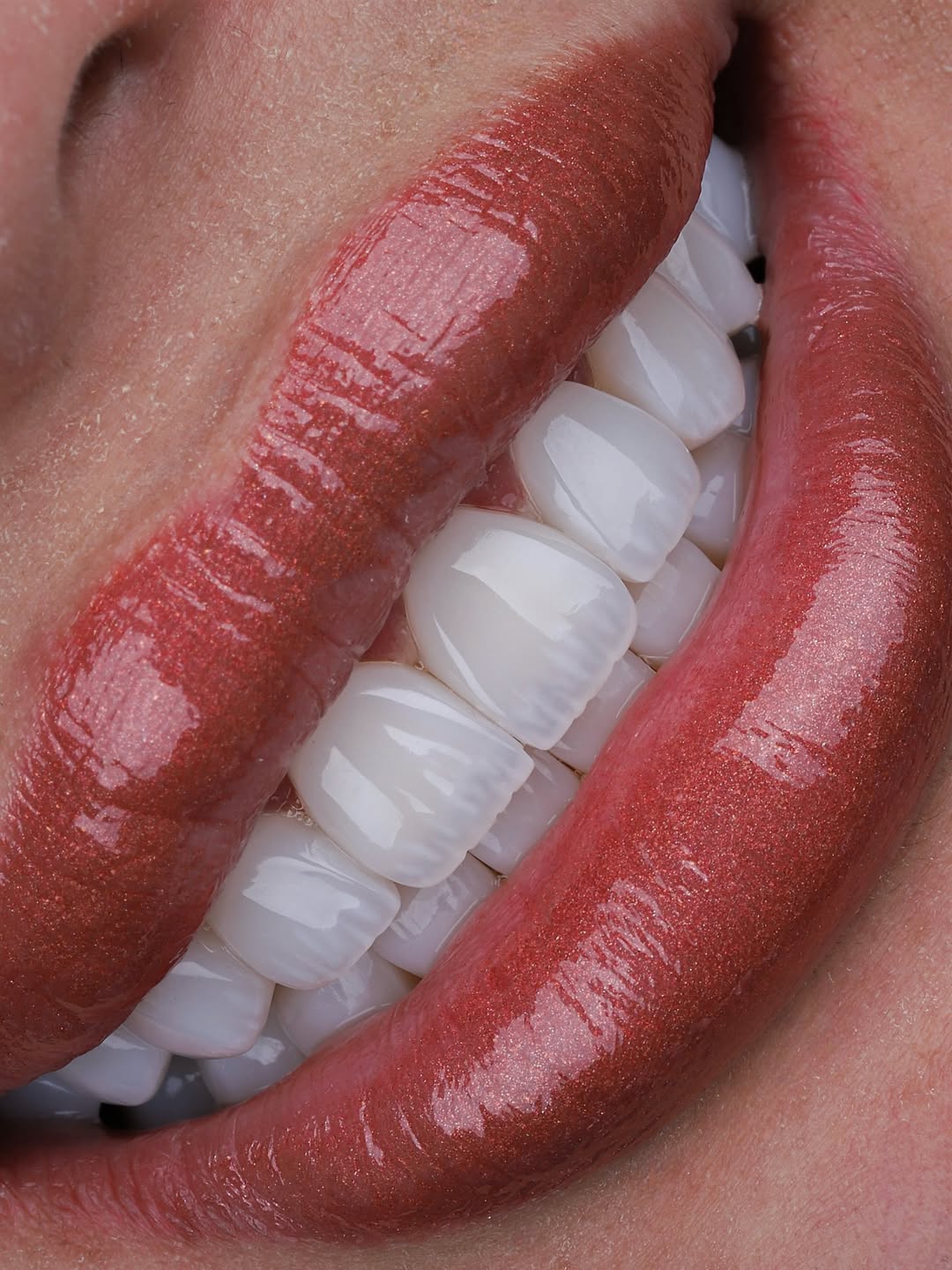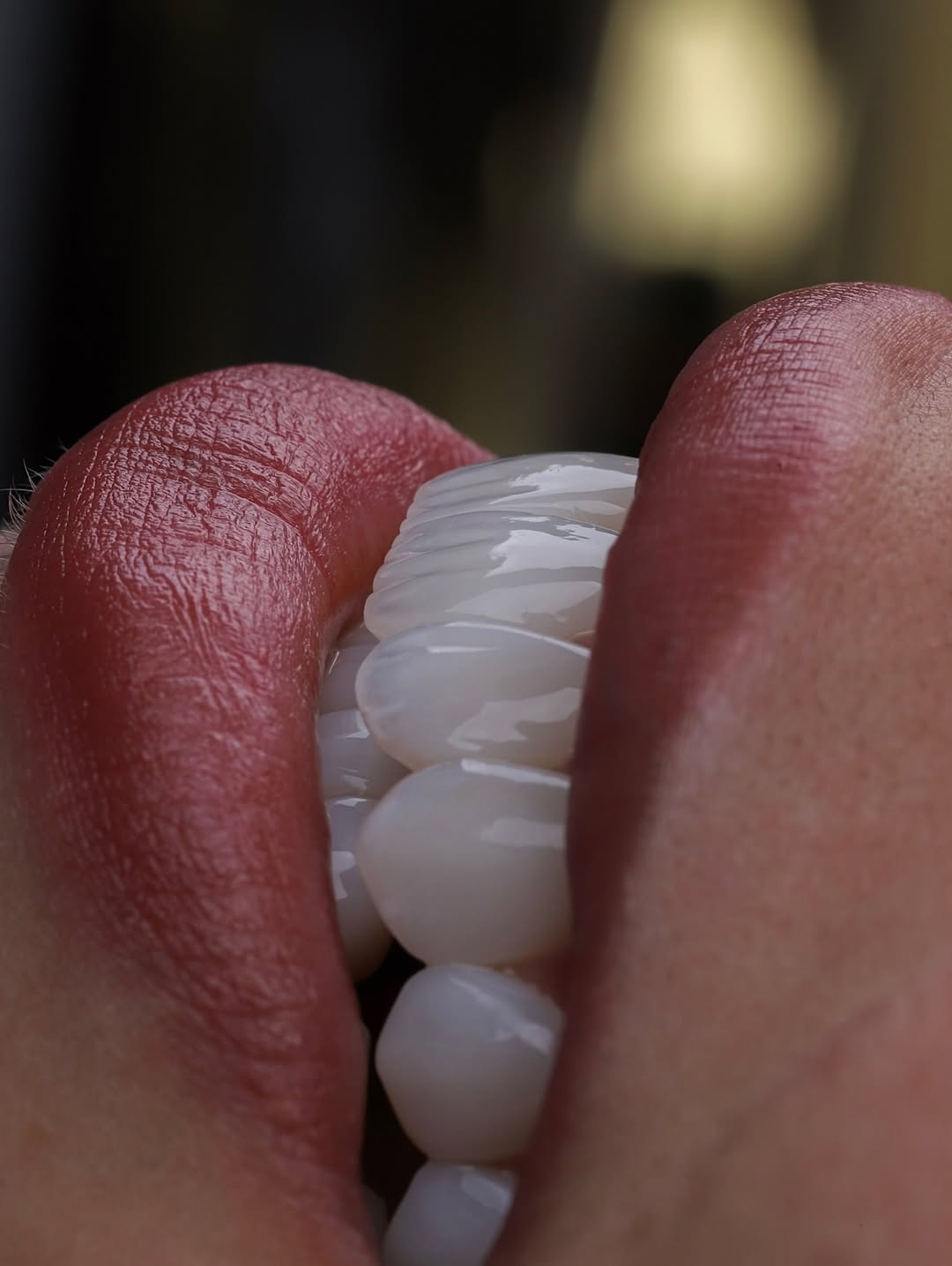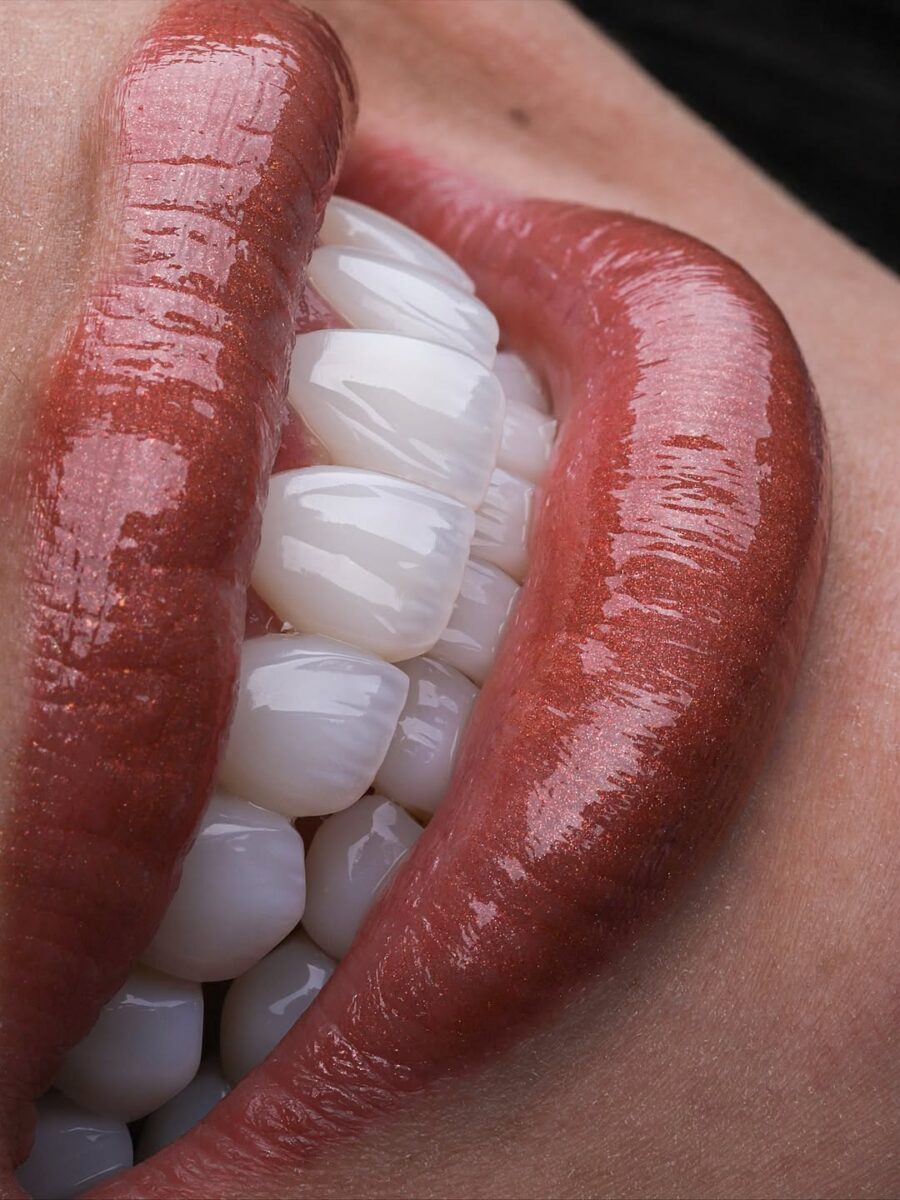
What Are Emax Veneers?
Emax veneers are premium, all-ceramic dental shells made from lithium disilicate glass-ceramic — a high-performance material engineered to deliver exceptional strength without sacrificing the natural translucency of real tooth enamel. The “Emax” name comes from IPS e.max®, a product line developed by Ivoclar Vivadent, which has become the gold standard in cosmetic dentistry for front-tooth restorations.
The same veneers cost up to 70% less in Colombia.
See if you qualify Free video call in English · on WhatsAppIndividual patient experience. Results and pricing are confirmed after a clinical evaluation.
Each Emax veneer is an ultra-thin, custom-fabricated shell bonded permanently to the front surface of a tooth. Unlike older-generation veneers that sometimes contained metal substructures (which could create a grayish shadow near the gum line), Emax is 100% metal-free. The result is a restoration that transmits light almost identically to natural enamel — producing depth, warmth, and translucency that looks indistinguishable from a real tooth.
Emax veneers are used for both full smile makeovers and targeted single-tooth corrections. When applied across the upper and lower front teeth, the result is commonly known as a Hollywood Smile.
Who Are Emax Veneers For? (Ideal Candidates)
Emax veneers are best suited for patients who want to improve the cosmetic appearance of their front teeth, provided their underlying oral health is sound. The most common clinical indications include:
- Stubborn tooth stains that resist professional whitening — especially intrinsic discoloration from medication, fluorosis, or aging
- Chipped, cracked, or worn teeth that affect smile symmetry or confidence
- Small gaps between teeth (diastema) that do not require orthodontic treatment
- Short or narrow teeth that look disproportionate within the smile
- Mildly crooked teeth where the patient wants cosmetic improvement without braces
- Teeth with irregular shape or surface texture that undermine overall aesthetics
Who Should Avoid Emax Veneers?
Not every patient is an ideal candidate. Your dentist should screen for the following contraindications before recommending Emax veneers:
Considering treatment abroad? see e.max veneers in Colombia.
Get your veneers in Colombia for up to 70% less.
In the US, 20 porcelain veneers run $30,000–$50,000. With Dr. Yazmin in Medellin, it's $6,900, all-inclusive.
Individual patient experience. Prices, inclusions and results are confirmed after a clinical evaluation. A full evaluation is required before any treatment.
- Active tooth decay or gum disease — these must be fully treated before any veneer placement
- Bruxism (teeth grinding) or heavy bite forces — the ceramic can fracture under extreme or repetitive pressure without proper management (e.g., a night guard)
- Severely discolored teeth — because Emax is translucent, teeth with heavy intrinsic staining may need whitening first, or a more opaque material (like zirconia) may produce a better result
- Insufficient tooth enamel — adequate enamel is required for a strong, lasting bond
- Untreated periodontal disease — inflamed or receding gums compromise veneer longevity
- Metal posts present in the tooth — these can show through the translucent material
The Emax Veneers Procedure: Step by Step
The Emax veneer process typically requires 2–3 appointments spaced over 2–4 weeks. Here is exactly what to expect at each stage.
Step 1: Initial Consultation and Treatment Planning
The journey begins with a comprehensive dental examination. Your dentist will review your oral health, take X-rays, and capture digital scans or impressions of your teeth. During this appointment, you will discuss:
Learn the basics in our guide to what veneers are.
- Your aesthetic goals (color, shape, size, symmetry)
- The number of veneers needed
- Whether any preparatory treatments (whitening, gum treatment, cavity repair) are required
Many modern clinics now use Digital Smile Design (DSD) software to show you a virtual preview of your new smile before any irreversible preparation begins.
Step 2: Tooth Preparation
This is the most critical clinical step. Using local anesthesia to ensure your complete comfort, your dentist carefully removes a thin layer of enamel from the front surface of each tooth — typically between 0.3 mm and 1.0 mm. This creates space so that the final veneer sits flush with adjacent teeth and does not look bulky or unnatural.
Because Emax can be fabricated in very thin sections, the amount of enamel removed is significantly less than with traditional porcelain-fused-to-metal crowns. However, this preparation is still irreversible — once enamel is removed, veneers must be replaced when they eventually wear out.
After preparation, a detailed digital scan or impression is taken of the prepared teeth and sent to the dental laboratory.
Step 3: Temporary Veneers
While your custom Emax restorations are fabricated in the lab — usually over 1–2 weeks — your dentist will place temporary veneers to protect your prepared teeth and maintain your appearance. This phase also allows you to evaluate the proposed shape and function before permanent bonding.
Step 4: Laboratory Fabrication
A certified dental technician uses your tooth impressions or 3D scans to hand-craft or mill each Emax veneer using CAD-CAM (Computer-Aided Design/Computer-Aided Manufacturing) technology. This process ensures a precise fit, consistent thickness, and accurate color matching to your natural teeth or your desired shade.
Step 5: Final Fitting and Bonding
When your permanent Emax veneers arrive, you return for the bonding appointment. The dentist will:
- Remove the temporary veneers and clean the prepared teeth
- Try each veneer for fit, shape, and color — making micro-adjustments as needed
- Apply an acidic etching gel to create a microscopically rough bonding surface on your tooth
- Coat each veneer with a strong dental resin cement
- Position each veneer precisely and use a curing light to harden the cement almost instantly
- Remove excess cement and polish the final result
The entire bonding appointment typically takes 45–90 minutes. Patients can leave with their complete new smile the same day.
Emax Veneers Cost in the USA
Average Cost Per Tooth
In the United States, Emax veneers are among the most expensive veneer options available, reflecting the quality of the material and the precision of the laboratory work. Based on 2025–2026 pricing data:
| Veneer Type | Average Cost Per Tooth (USA) |
|---|---|
| Emax (Lithium Disilicate) | $1,100 – $2,500 |
| Porcelain (Feldspathic) | $1,000 – $2,000 |
| Composite Resin | $300 – $600 |
Prices at the higher end of the range ($2,500–$3,000+) are typical for celebrity cosmetic dentists in cities like Los Angeles, New York, or Miami. Dentists in smaller markets or mid-sized cities often charge toward the lower range.
Total Cost for a Full Smile Makeover
A full smile makeover typically involves 6–20 veneers, depending on how many teeth are visible when you smile. For a complete treatment in the USA:
- 6 upper front teeth: approximately $6,600 – $15,000
- 10–12 veneers (full upper arch): approximately $11,000 – $30,000
- 20 veneers (Hollywood Smile): approximately $22,000 – $50,000
Does Dental Insurance Cover Emax Veneers?
In the vast majority of cases, no — dental insurance does not cover Emax veneers. Most U.S. insurance providers classify veneers as a cosmetic procedure and exclude them from benefits, similar to teeth whitening or purely elective treatments.
However, partial coverage may be possible in specific scenarios:
- A tooth was fractured in a documented accident or trauma
- The patient has a developmental enamel defect (hypoplasia or severe fluorosis)
- The veneer is replacing a failing, large restoration and is the least invasive option
To explore potential coverage, ask your insurer to review procedure code D2962 (porcelain laminate veneers) and request pre-authorization with supporting clinical documentation.
Financing and Payment Options
Because most patients pay out of pocket, many dental practices offer financing solutions:
- CareCredit or Alphaeon Credit — healthcare-specific credit lines with promotional 0% interest periods
- In-house payment plans — ask your dentist directly about installment arrangements
- FSA/HSA accounts — Flexible Spending Accounts and Health Savings Accounts can sometimes be used if there is a medical justification
- Dental discount plans — some membership programs provide 15–30% reductions on cosmetic procedures
Emax Veneers Pros and Cons
Advantages of Emax Veneers
1. Unmatched Natural Appearance
Lithium disilicate has exceptional light transmission properties, mimicking the natural translucency of real tooth enamel better than almost any other restorative material. Light passes through the veneer and bounces off the underlying tooth structure, creating a three-dimensional depth and warmth that composite and zirconia simply cannot replicate.
2. Exceptional Strength
Despite being incredibly thin, Emax achieves a flexural strength of over 400 MPa — making it resistant to chipping and cracking under everyday bite forces. This is significantly stronger than traditional porcelain veneers.
3. Minimal Tooth Reduction
Because Emax can be fabricated in ultra-thin sections, dentists remove less enamel than with older veneer systems — sometimes as little as 0.3–0.5 mm. This preserves more of your natural, healthy tooth structure.
4. Stain Resistance
The Emax glass-ceramic surface is non-porous, meaning it does not absorb staining agents from coffee, tea, red wine, or tobacco the way composite resin or even natural enamel does. Your smile maintains its brightness for years.
5. Biocompatibility
Emax is a metal-free, all-ceramic material with high biocompatibility, making it suitable for patients with metal sensitivities or allergies. It is also gum-friendly, with a low risk of causing inflammation or gingival recession over time.
6. Longevity
With proper care and maintenance, Emax veneers routinely last 15–20 years. A 17-year clinical study found a 96% success rate at 5–6 years, 93% at 10–12 years, and 91% at 11–13 years — impressive durability for an aesthetic restoration.
7. Customization
Each Emax veneer is individually designed and fabricated to match the precise shape, size, and color of your natural teeth or your desired outcome. CAD-CAM technology minimizes human error and ensures a predictable, high-quality result.
Disadvantages of Emax Veneers
1. High Cost
The premium material, laboratory craftsmanship, and clinical skill required make Emax veneers significantly more expensive than composite veneers and slightly more expensive than traditional feldspathic porcelain. Most patients pay entirely out of pocket.
2. Irreversible Procedure
The enamel reduction required for proper veneer placement is permanent. Once your teeth are prepared, they will always need to be covered with veneers or another restoration. This is not a decision to take lightly.
3. Temporary Sensitivity
Some patients experience mild tooth sensitivity in the days following preparation, as the dentin beneath the enamel becomes temporarily exposed. This typically resolves within a few days to a couple of weeks.
4. Not Suitable for All Clinical Situations
Emax is not ideal for patients with severe bruxism, insufficient tooth structure, active periodontal disease, or severe intrinsic discoloration. A skilled dentist will screen carefully before recommending this material.
5. Requires Expert Placement
The long-term success of Emax veneers depends heavily on the skill of both the dentist and the laboratory technician. Poor preparation, incorrect adhesive protocols, or inadequate case selection are the leading causes of veneer failure.
6. Cannot Be Repaired — Only Replaced
Unlike composite veneers, which can often be patched chairside in 30 minutes, a fractured Emax veneer must be fully remade in the laboratory.
Emax Veneers vs. Other Veneer Types: Comparison
Understanding how Emax compares to alternatives helps you make an informed decision with your dentist.
The key trade-off: Zirconia is physically stronger, but Emax looks more natural. For front teeth where aesthetics matter most, most experienced cosmetic dentists recommend Emax. Zirconia is reserved for back teeth, patients with bruxism, or cases where maximum opacity is needed.
How Long Do Emax Veneers Last?
Emax veneers are engineered for durability. Under ideal conditions — proper case selection, precise placement, and diligent aftercare — they can last 15–20+ years. Here is a realistic lifespan breakdown based on clinical data:
| Clinical Scenario | Expected Lifespan |
|---|---|
| E-max, excellent oral hygiene, no bruxism | 15–20 years |
| E-max, good care with night guard for bruxism | Up to 20+ years |
| E-max, average oral hygiene | 8–12 years |
| E-max, untreated bruxism | 5–8 years |
A 17-year clinical observational study found that approximately 50% of Emax veneers last 20 years, with a 91% overall success rate at the 11–13 year mark.
Emax Veneers Aftercare: How to Make Them Last
Following a proper care routine dramatically extends the life of your Emax veneers and protects your investment.
Daily oral hygiene habits:
- Brush twice daily with a non-abrasive toothpaste — avoid whitening formulas with harsh abrasives that can dull the veneer surface
- Floss once daily; veneer margins are still susceptible to plaque buildup and gum disease
- Use an alcohol-free mouthwash to avoid weakening the resin cement over time
Dietary and lifestyle precautions:
- Avoid biting hard objects directly with veneered teeth (ice, fingernails, hard candy, pens)
- Minimize excessive consumption of highly pigmented beverages (coffee, red wine, dark tea) — while Emax is stain-resistant, the bonding margins can still discolor
- Do not use veneered teeth to open packages or bite into extremely hard foods
Protect against grinding:
- If you grind your teeth at night, always wear a custom night guard — this single habit is the most effective way to extend veneer life under parafunctional forces
Regular dental visits:
- Schedule professional cleanings every 6 months
- Your dentist will check veneer margins, bonding integrity, and overall gum health at each visit
- Address any chips or loosening immediately — early intervention prevents further damage
Frequently Asked Questions About Emax Veneers
Are Emax veneers painful?
No. The preparation is performed under local anesthesia and is entirely comfortable during the procedure. Mild sensitivity in the days following preparation is normal and resolves quickly in most patients.
Do Emax veneers look fake?
Quite the opposite. Emax is one of the most natural-looking restorative materials available. Its high light transmittance creates the same depth and translucency as real tooth enamel, making the veneers virtually indistinguishable from natural teeth.
Can I still drink coffee or wine with Emax veneers?
Yes. The Emax ceramic surface is non-porous and highly stain-resistant. You can still enjoy coffee, tea, and red wine in moderation. However, moderation is recommended to protect the resin cement margins at the gum line.
How many appointments are needed?
Typically 2–3 appointments over 2–4 weeks: one for consultation and planning, one for tooth preparation and impressions, and one for final bonding.
Will my veneers need to be replaced?
Yes, eventually. No dental restoration lasts forever. With proper care, most patients can expect their Emax veneers to last 15–20 years before replacement is needed. At that point, the process is straightforward since the tooth is already prepared.
Are Emax veneers worth the cost?
For patients seeking long-term cosmetic improvement with the most natural-looking result, Emax veneers represent strong value over time. While the upfront investment is significant, their 15–20 year lifespan means the cost-per-year is often lower than composite veneers, which require replacement every 5–7 years.
Does insurance cover Emax veneers in the USA?
In most cases, no. U.S. dental insurers classify veneers as cosmetic and provide 0% coverage. Partial coverage is possible only if veneers are medically necessary — for example, after tooth trauma or for developmental enamel defects.
Finding a Qualified Emax Veneer Dentist in the USA
The outcome of your Emax veneers depends significantly on the experience of both the dentist and the dental laboratory. When selecting a provider, look for:
- Board certification from the American Academy of Cosmetic Dentistry (AACD) or AACD-accredited dentists
- A portfolio of before-and-after photos showing real Emax veneer cases — not stock images
- Use of digital smile design tools and in-house or certified dental lab partnerships
- Transparent pricing with detailed written treatment plans before you commit
- Access to high-quality Emax blanks from certified IPS e.max® labs
Do not choose a provider based on price alone. Under-priced Emax veneers are almost always a sign of untrained technicians or inferior bonding materials — and failures will cost more to fix than the original treatment.
Is Dental Tourism a Valid Option for Emax Veneers?
Some patients explore dental tourism to reduce costs, particularly to countries like Mexico, Turkey, or Colombia, where Emax veneers may cost 60–80% less than in the USA. While significant savings are possible, weigh these factors carefully:
Potential savings: A full set of 16 Emax veneers costs $15,000–$30,000 in the USA versus $4,500–$6,000 in Turkey — a difference that can exceed $20,000.
Risks to consider:
- Difficulty following up on complications or adjustments from abroad
- Variable quality control across international clinics
- Travel, accommodation, and time-off costs reduce net savings
- U.S. dentists may be reluctant to warranty or repair work done overseas
If exploring international options, research the specific clinic thoroughly, verify dentist credentials, and ensure they use certified IPS e.max® materials from Ivoclar Vivadent.
Summary: Is Emax the Right Veneer for You?
Emax veneers are the leading choice for patients who want the most natural-looking, durable, and biocompatible cosmetic dental restoration available today. They excel in the aesthetic zone — the front teeth most visible when you smile — where translucency and light dynamics matter most.
They are the right choice if you:
- Want the most lifelike result achievable with current dental technology
- Are committed to long-term maintenance and oral hygiene
- Do not have active gum disease, severe bruxism, or insufficient tooth structure
- Can invest $1,100–$2,500 per tooth or plan financing in advance
They may not be the right choice if you:
- Are on a tight budget (consider composite veneers as a trial)
- Grind your teeth severely without treatment (consider zirconia)
- Are looking for a reversible option to test cosmetic changes first
Always consult a board-certified cosmetic dentist for a personalized assessment. The best veneer material is always the one that fits your specific clinical situation, aesthetic goals, and long-term commitment to aftercare.
Sources Consulted
Below is the source list in English, using descriptive anchor text and live links.
- In-depth guide to Emax veneers: process, pros and cons https://smilelondon.co.uk/an-in-depth-guide-to-emax-veneers/
- 2025 veneers cost guide: porcelain vs composite https://medicoclinic.net/how-much-do-veneers-cost-in-2025/
- E-max vs traditional porcelain veneers: pros, cons and differences https://dentaltrio.com/e-max-vs-porcelain-veneers-pros-cons-and-differences/
- What is an Emax veneer? Advantages and indications https://snyclinic.com/en/what-is-emax-veneer-advantages-and-areas-of-application-4810
- How much are veneers? 2025 price guide https://www.justluxe.com/community/how-much-are-veneers-your-2025-guide_a_1981501.php
- Emax veneers pros and cons explained https://turkeysmileclub.com/emax-veneers-pros-and-cons/
- What to know about Emax veneers: material and benefits https://mcandental.com/blog/about-e-max-veneers/
- Emax porcelain veneers: making an informed decision https://www.porcelainveneers.sydney/emax-porcelain-veneers-making-an-informed-decision-with-pros-and-cons/
- Ultimate guide to Emax veneers https://dentaltourismalbania.com/blogs/dental-services/emax-veneers
- Emax dental veneers overview https://lemaclinic.com/emax-dental-veneers-overview/
- E-max vs zirconia veneers: expert comparison https://adwcenter.com/blog/emax-vs-zirconia-veneers/
- Emax veneers step-by-step guide: what to expect https://www.contident.com/emax-veneers-step-by-step-guide-what-you-can-expect/
- Emax veneers: everything you need to know https://www.keatingdentallab.com/articles/emax-veneers/
- How to look after your veneers: aftercare guide https://www.maltepedentalclinic.com/blog/how-do-i-look-after-my-veneers/
- How long do Emax veneers last? Lifespan and care https://istsmileexperts.com/how-long-do-emax-veneers-last/
- Veneers cost and insurance coverage https://www.deltadental.com/protect-my-smile/procedures/veneers/cost-and-insurance-coverage/
- Dental insurance for veneers: coverage details https://www.ahix.com/blog/dental-insurance-for-veneers/
- Dental insurance that covers veneers: plans and alternatives https://www.dentaly.org/us/dental-insurance-usa/veneers/
- What are dental veneers? Cost, procedure and advantages https://my.clevelandclinic.org/health/treatments/23522-dental-veneers
- Dental veneers: benefits, procedure, costs and results https://www.healthline.com/health/dental-veneers