What Snap-On Veneers Actually Are
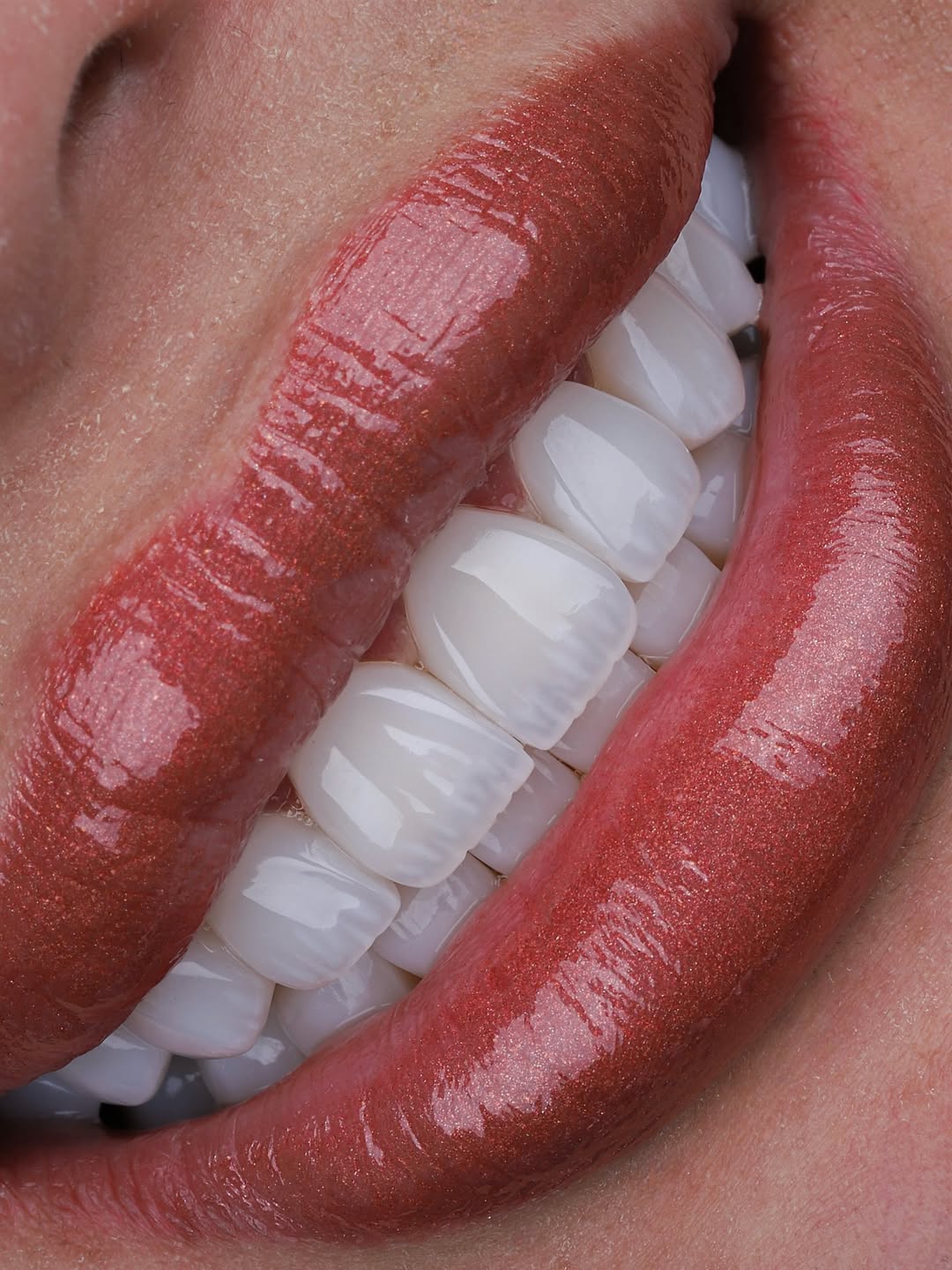
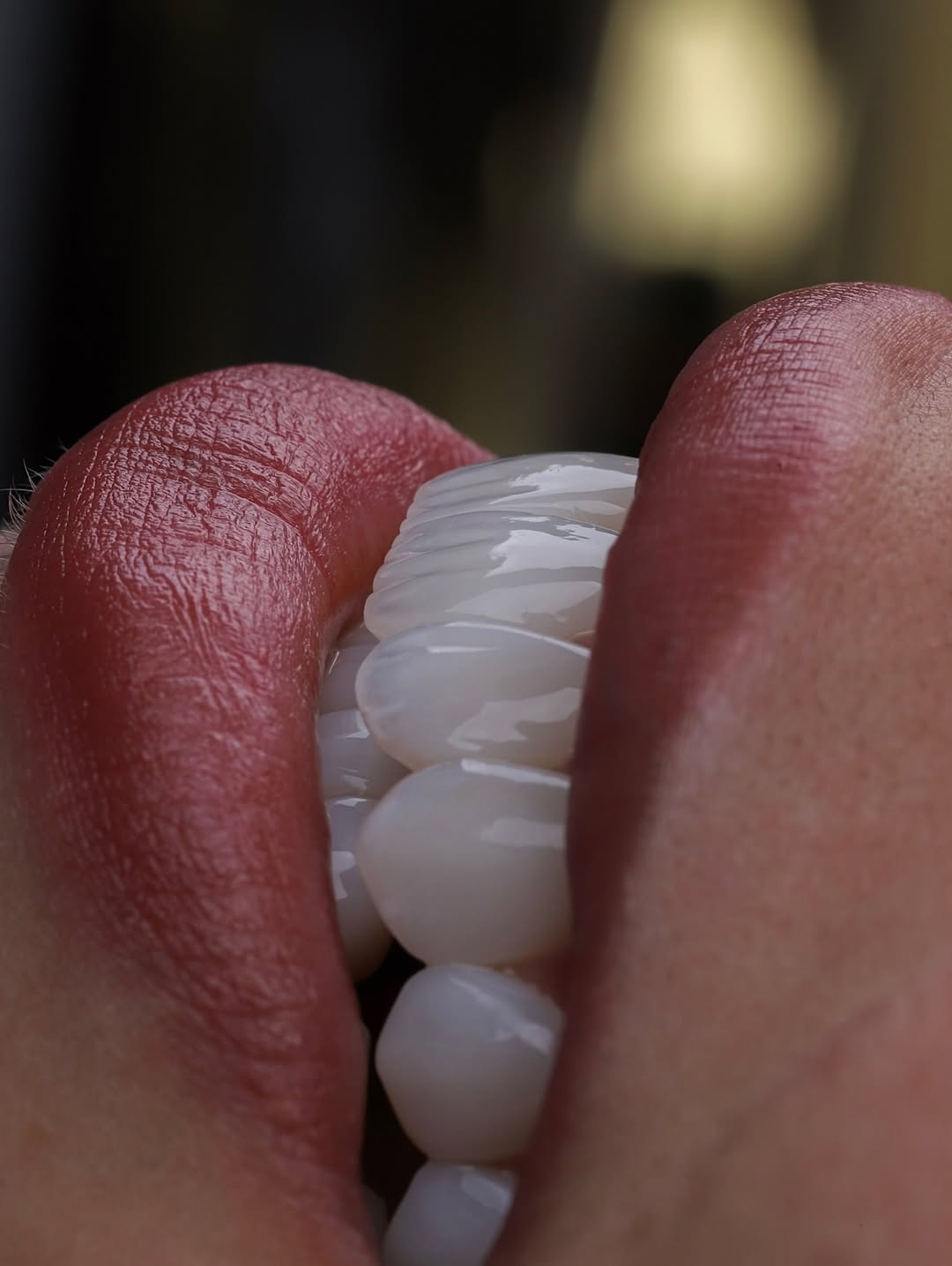
Snap-on veneers — also called removable veneers, clip-on veneers, or temporary veneers — are thin shells made from flexible dental resin that fit over your existing teeth without any drilling, bonding, or permanent alteration to tooth structure. Unlike traditional porcelain or composite veneers, nothing is removed from your teeth. You press them over your upper or lower arch (or both), and they snap into place using the natural contours of your teeth for retention.
The same veneers cost up to 70% less in Colombia.
See if you qualify Free video call in English · on WhatsAppIndividual patient experience. Results and pricing are confirmed after a clinical evaluation.
The shells are typically 0.5 to 1 mm thick and cover the visible surfaces of all teeth in the arch. Most snap-on veneers are custom-made from dental impressions or digital scans — either taken at a dental office or, increasingly, through home impression kits mailed to consumers. The resulting appliance resembles a very thin bleaching tray, shaped to look like a full set of even, white teeth.
They are not dental prosthetics in the clinical sense. They don’t restore function in the way crowns or implants do. They are cosmetic appliances — closer to a retainer aesthetically designed to mask the appearance of your natural teeth while worn.
Honest Pros and Cons
What Snap-On Veneers Do Well
No tooth alteration. This is the biggest advantage. Nothing irreversible happens to your teeth. If you hate them, you stop wearing them. Your natural teeth remain exactly as they were.
For pricing, see composite veneers cost.
See whether veneers are reversible.
Get your veneers in Colombia for up to 70% less.
In the US, 20 porcelain veneers run $30,000–$50,000. With Dr. Yazmin in Medellin, it's $6,900, all-inclusive.
Individual patient experience. Prices, inclusions and results are confirmed after a clinical evaluation. A full evaluation is required before any treatment.
Cost. Quality custom snap-on veneers range from $300 to $1,500 per arch. Compared to traditional porcelain veneers at $1,000 to $2,500 per tooth, this is a dramatic difference — especially if you want to improve the appearance of an entire arch.
Start with what veneers are.
Delivery time. Most custom lab-fabricated sets are ready in 2–4 weeks. Some mail-order brands deliver faster. There’s no waiting for multi-appointment workflows, no provisional period, no post-bonding sensitivity.
Reversibility and trial. For patients seriously considering permanent veneers, wearing a snap-on set for several months lets you live with a new smile shape and color before committing to irreversible enamel prep. This is arguably one of the most clinically useful applications of snap-on veneers.
Significant Limitations You Should Understand
Eating is restricted. Most manufacturers advise against eating hard, crunchy, or sticky foods while wearing snap-on veneers. Biting into an apple or chewing gum can crack the shell or dislodge it mid-meal. In practice, this means many wearers remove them before eating — which significantly limits their day-to-day usefulness for some people.
Speech impact. Because the shells add bulk to your teeth and partially cover the palate (in upper arch sets), many users experience a lisp or altered speech, particularly with “s” and “th” sounds. This often improves over days or weeks as your tongue adapts, but for some people it remains noticeable enough to be a problem in professional or social settings.
Fit degrades over time. Snap-on veneers rely on the friction fit of your existing teeth to stay in place. Over months of use, the material can loosen or warp slightly. Teeth themselves shift over time due to natural forces, aging, and gum changes — meaning a set that fit snugly in year one may feel loose in year two. This is not a one-time purchase with indefinite use; most sets have a practical lifespan of 1–3 years.
Hygiene challenges. Wearing any appliance over your teeth creates spaces where bacteria and food particles accumulate. Unless meticulous about cleaning both the appliance and the underlying teeth, this increases the risk of cavities and gum inflammation. This is a real clinical concern, not a minor footnote.
They look like snap-on veneers. High-quality custom versions from reputable labs can look surprisingly natural. Mass-market, cheap versions — particularly those sold online for under $100 — often look plasticky, uniformly white in an unnatural way, or poorly fitted. The gap between the best and worst options in this product category is enormous.
Who Snap-On Veneers Genuinely Help
Event-Based or Situational Use
For a wedding, professional photoshoot, or high-stakes public appearance, snap-on veneers can deliver a dramatic cosmetic improvement without a dental appointment. If you need a camera-ready smile for two days and don’t need to eat a full meal in them, they can work well for this purpose.
Pre-Veneer Trial Runs
As mentioned, using snap-on veneers as a “wearable mockup” before committing to permanent veneers is a legitimate application. You can get a sense of tooth shape, size, and color before anything irreversible happens. Some cosmetic dentists actively recommend this to patients who are on the fence.
Severe Dental Anxiety
For patients with significant phobia around dental procedures, snap-on veneers provide an entirely non-invasive way to address cosmetic concerns. No injections, no drilling, no dental chair time beyond possibly taking impressions. For someone whose anxiety makes any dental procedure genuinely distressing, this tradeoff can be meaningful.
Budget-Constrained Patients Awaiting Permanent Work
If you’re actively saving toward porcelain veneers or implant work but want an interim improvement, snap-on veneers can serve as a bridge — with clear eyes about their limitations. The key is using them as a temporary measure with a defined endpoint, not as an indefinite substitute for restorative care.
Brands Worth Knowing
Instasmile
One of the more established direct-to-consumer brands, Instasmile uses home impression kits and offers both upper and lower arch options at various price points. Their quality is generally considered above average for the mail-order category, and they offer a fitting guarantee. Expect to pay $300–$700 per arch.
Brighter Image Lab
A US-based lab offering custom snap-on veneers since the early 2000s. Their BilVeneers product is fabricated from dental-grade materials and is among the more natural-looking consumer options. Customer service and communication have mixed reviews, but the actual product quality is generally solid. Price range: $400–$700 per arch.
Custom Dental Lab Options
If you’re working with a dentist who can take proper clinical impressions and send them to a dental laboratory, you can get snap-on veneers fabricated to a higher standard than any mail-order kit. The lab can match adjacent tooth color, account for bite position, and fabricate the appliance with the same materials used for professionally made bleaching trays and nightguards. This route typically costs $500–$1,500 per arch but delivers a notably superior result.
Red Flags in Snap-On Veneer Marketing
The category is saturated with misleading claims. Watch for these:
- “Eat and drink normally” — This is almost universally false. Eating hard or sticky foods risks cracking or dislodging the appliance. Any brand claiming unrestricted eating is overstating their product.
- Before/after photos with obvious dramatic lighting and angle changes — These photos routinely show whitened, straightened results that bear little resemblance to what a real appliance produces on real teeth.
- Claims that they function like real veneers — Snap-on veneers are cosmetic appliances. They do not strengthen teeth, correct bite issues, or provide the structural benefits of bonded restorations.
- One-size-fits-all products — Any snap-on veneer that doesn’t require an impression is not custom-fitted. Generic “universal” shells rarely fit well and look obviously artificial.
- Extreme low pricing — Products under $50–$100 are typically produced from low-grade materials with no custom fitting. These are novelty items, not cosmetic dental appliances.
Cost Comparison: Snap-On vs. Permanent Veneers
| Option | Cost (per arch) | Durability | Reversibility |
|---|---|---|---|
| Mail-order snap-on veneers | $300–$700 | 1–2 years | Fully reversible |
| Dental lab snap-on veneers | $500–$1,500 | 2–3 years | Fully reversible |
| Composite veneers (full arch, 8 teeth) | $3,200–$8,000 | 5–7 years | Largely reversible |
| Porcelain veneers (full arch, 8 teeth) | $8,000–$20,000 | 10–15 years | Irreversible |
When Dentists Recommend Snap-On Veneers — and When They Don’t
Dentists who recommend snap-on veneers typically do so in specific, bounded contexts: as a trial appliance before permanent treatment, as a temporary solution while waiting for implants or bridges to heal, or for patients with anxiety who need a non-invasive entry point into cosmetic dentistry. In these cases, snap-on veneers serve a legitimate function within a broader treatment plan.
Dentists generally don’t recommend snap-on veneers as a long-term substitute for needed restorative work. If a patient has decayed, broken, or periodontally compromised teeth, putting a cosmetic shell over them masks symptoms and delays treatment that could prevent tooth loss. Similarly, patients with significant bite problems won’t have those addressed by a snap-on appliance — and in some cases, an ill-fitting appliance worn regularly can create new bite strain.
The honest clinical view: snap-on veneers are a useful tool in a narrow set of situations. If your situation fits one of those, they’re worth considering. If you’re hoping they’ll serve as a permanent cosmetic solution or replace restorative dental care, they won’t deliver that.