
Patients searching for answers on lumineers veneers price, or trying to compare the cost of veneers vs lumineers, usually want one thing: a brighter smile that looks natural, lasts for years, and does not require destroying healthy tooth structure. The problem is that the price range is wide — from a few hundred to a few thousand dollars per tooth — and the marketing language around “no-prep” options makes it hard to know what you are actually comparing.
The same veneers cost up to 70% less in Colombia.
See if you qualify Free video call in English · on WhatsAppIndividual patient experience. Results and pricing are confirmed after a clinical evaluation.
This guide breaks down the real cost of lumineer veneers versus traditional porcelain veneers, explains how the materials differ clinically, and explores when it makes sense to consider dental tourism — specifically in Medellín, Colombia, where specialists like Dr. Yazmín Escudero offer premium E-max veneers at a fraction of typical U.S. prices.
What Are Veneers, Lumineers, and Their Cousins?
Cosmetic dentistry uses several ultra-thin covers to improve the appearance of teeth, and the names can be genuinely confusing. Porcelain veneers, Lumineers, non-prep veneers, composite veneers, and snap-on smile veneers all belong to the same family — but they behave quite differently.
For Colombia-specific porcelain and Lumineers pricing, see our 2026 veneers in Colombia cost guide.
Think of them like different types of contact lenses for your teeth:
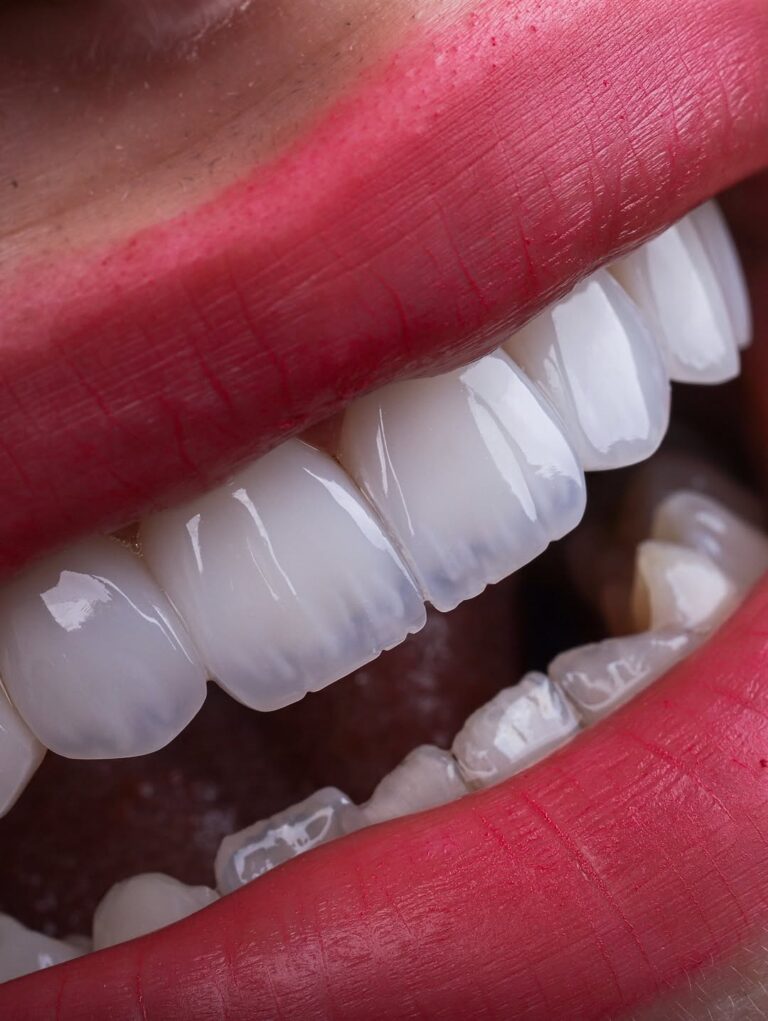
Traditional porcelain veneers (such as E-max) are ultra-thin ceramic shells roughly 0.5–1.0 mm thick, bonded permanently to the front of the teeth after a small amount of enamel is gently reshaped. They are the clinical gold standard for hiding deep discoloration, old fillings, and moderate misalignment, with survival rates consistently above 90% in studies tracking patients beyond 10–15 years.
Get your veneers in Colombia for up to 70% less.
In the US, 20 porcelain veneers run $30,000–$50,000. With Dr. Yazmin in Medellin, it's $6,900, all-inclusive.
Individual patient experience. Prices, inclusions and results are confirmed after a clinical evaluation. A full evaluation is required before any treatment.
Lumineers and other no-prep or minimal-prep veneers are a branded, ultra-thin porcelain product — around 0.2–0.3 mm, similar to a soft contact lens — designed to bond on top of existing enamel with little or no tooth reduction. They work best on relatively straight, small, or slightly set-back teeth where adding thin porcelain will not create a bulky appearance.
Composite veneers are sculpted from tooth-colored resin, either directly in the mouth or fabricated in a lab, at a lower price point than porcelain. Their main drawback is lifespan: composite typically lasts 5–10 years compared to 10–20 years for porcelain. Many patients use composite as a stepping stone before committing to porcelain.
Countless verified patient reviews and stunning before-and-after videos prove the high success rate of these procedures. It is easy to see why cosmetic veneers in Colombia have become the ultimate go-to choice for a Hollywood smile.
Crowns cover the entire tooth and require significantly more tooth reduction. They are reserved for teeth that are heavily cracked, filled, or have had root canal treatment. For structurally healthy teeth, both porcelain veneers and Lumineers are considered far more conservative options.
In short, Lumineers are simply a branded type of ultra-thin, mostly no-prep porcelain veneer. Traditional porcelain veneers — including E-max — involve more customization and often more controlled enamel reshaping.
Lumineers vs. Porcelain Veneers: The Real Comparison
From a patient’s perspective, the core question is usually: what is the difference between Lumineers and veneers in terms of results and price? The table below draws on current clinical literature and cost data.
| Feature | Lumineers / No-Prep Veneers | Traditional Porcelain Veneers (E-max) |
|---|---|---|
| Tooth preparation | Little or no enamel removal; bonded to intact enamel | 0.3–1.0 mm enamel reshaping for space and ideal shape |
| Masking power | Limited on very dark or heavily restored teeth | Excellent — corrects color, shape, and moderate misalignment |
| Average U.S. cost per tooth | $800–$2,000 (often similar to or slightly above traditional veneers due to proprietary lab fees) | $900–$2,500 in most U.S. markets |
| Full-smile cost (8–10 teeth) in the U.S. | Roughly $4,800–$16,000 | Often $5,000–$20,000+ depending on city and provider |
| Best candidate | Mostly straight, small teeth; patient wants a conservative option | Complex smile makeovers, heavy staining, worn or slightly misaligned teeth |
| Main risk | Higher risk of a bulky result or chipping if used in the wrong case | Slightly higher biological cost (more enamel removed), possible transient sensitivity |
| Long-term survival | High — above 90% at 10+ years when properly planned | High — consistent with Lumineers when bonded to adequate enamel |
The clinical difference between Lumineers and veneers is less about brand and more about preparation philosophy and case selection. Modern research on minimally invasive veneers shows that carefully planned no-prep or micro-prep cases can achieve equal or even better long-term survival than conventional veneers — specifically when bonded entirely to healthy enamel.
Which Costs Less, and Which Is Better?
The most common question patients ask is: what is cheaper, veneers or Lumineers, and are Lumineers actually better?
Short answer: In U.S. and Canadian clinics, the cost of Lumineers vs. veneers is usually quite similar — both average about $800–$2,500 per tooth, with Lumineers sometimes running slightly higher due to proprietary lab fees. Neither option is automatically better. The right choice depends on your starting teeth, bite, and aesthetic goals.
Longer answer: Several factors drive the decision.
Your enamel and tooth position matter most. Clinical guidelines on minimally invasive veneers are clear: no-prep Lumineers work well for small or slightly set-back teeth, but teeth that are already prominent, rotated, or heavily filled often need controlled enamel reshaping and traditional veneers. Forcing no-prep Lumineers onto the wrong case frequently produces bulky results and an unsatisfying bite.
Budget — and openness to dental tourism — changes the math significantly. In many U.S. cities, porcelain veneers cost $900–$2,500 per tooth, making a full smile makeover of 16–20 teeth total $15,000–$40,000 or more. By contrast, porcelain veneers in Colombia typically cost $300–$500 per tooth. Full smile packages of 16–20 E-max veneers commonly fall between $4,800 and $10,400 — roughly 60–80% less than U.S. prices, even after accounting for flights and accommodation.
Reversibility is a real consideration. No-prep Lumineers feel more reversible because little or no enamel is removed. However, once significant enamel has been reduced for traditional veneers, the treatment is permanent — you will always need some type of restoration on those teeth going forward, whether new veneers, Lumineers, or eventually crowns.
Matching Veneers or Lumineers to Your Face
Choosing between a Lumineer porcelain veneer and a traditional E-max veneer is not only a budget decision. Smile aesthetics research consistently shows that tooth shade, shape, and proportion must harmonize with skin tone, lip line, and facial features to look genuinely natural.
Several clinical studies have examined how tooth shade and skin tone interact:
- Lighter tooth shades are generally preferred, but the brightest possible white is not always rated as most attractive.
- Extreme shade contrast — very dark skin with ultra-bright teeth, or very fair skin with very dark teeth — tends to be rated as less harmonious than more balanced combinations.
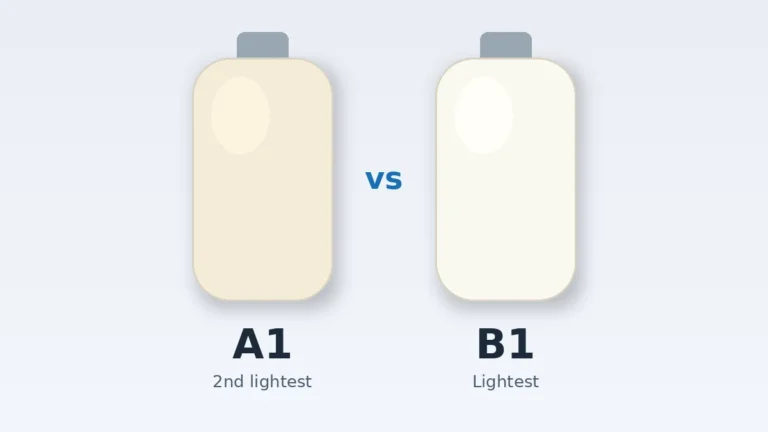
Very fair skin: Ultra-bright shades like the so-called Hollywood BL1 can look striking but may appear slightly artificial under certain lighting without careful planning. Soft white tones in the B1/A1 range often create a more natural balance, particularly for patients seeking subtle enhancement rather than a dramatic transformation.
Medium or olive skin: Studies suggest medium skin tones pair well with mid-range tooth shades that retain warmth while still reading as bright. For patients wanting a celebrity-style smile, slightly cooler and brighter porcelain — whether Lumineers or E-max — can work very well when the dentist carefully controls the value (overall brightness) so the teeth complement rather than overpower the face.
Darker skin tones: Research indicates that smiles combining very dark skin with extremely bright tooth shades can sometimes be perceived as less natural than combinations with slightly softened whiteness. Skilled cosmetic dentists in this scenario often suggest a shade that is bright but not flash-paper white.
Age and lip line also matter. Younger patients often tolerate brighter shades and more geometric alignment without it appearing artificial. Mature patients tend to look more natural with a hint of translucency at the incisal edge and a shade that is visibly brighter than their original teeth but not the starkest bleach tone available. Photographs on Instagram can be misleading — what photographs perfectly may look exaggerated in person.
Bite and tooth position are the final piece. Deep bites, heavy grinding, or significantly crowded teeth almost always require traditional porcelain veneers with carefully planned enamel reduction rather than ultra-thin no-prep designs. On the other hand, small, narrow, or slightly set-back teeth are ideal candidates for Lumineers-style no-prep work, because adding thin porcelain improves width and fullness without creating bulk. The key principle from minimally invasive veneer research is that bonding entirely to intact enamel yields excellent longevity — as long as the design respects the existing bite.
Three Practical Tests Before Your Consultation
Before choosing between Lumineers and porcelain veneers, these three exercises help clarify what you actually want.
Test 1: The photo and shade exercise. Take clear, natural-light photos of your smile from the front and both sides. Use simple editing — no heavy filters — to simulate two versions: one with a natural white and one with a Hollywood-bright result. Show them side-by-side to someone you trust. Studies on smile aesthetics confirm that small changes in brightness significantly affect perceived attractiveness, but the brightest option is not consistently the most beautiful. If you consistently prefer the softer version, you are probably better suited to porcelain veneers in a natural shade. If you love the brighter result, ultra-thin Lumineers designs or very bright E-max veneers may match your goals.
Test 2: The enamel and bite checklist. Go through these questions with your dentist or during a virtual consultation with a dental tourism clinic:
- Are my front teeth already prominent or slightly protruded? If so, adding no-prep Lumineers may make them look thicker. Some controlled enamel reduction with traditional veneers typically creates a sleeker profile.
- Do I have heavy wear, cracks, or large fillings? Extensive damage often pushes the treatment toward traditional veneers with more reduction, or even crowns on select teeth, to restore structural strength alongside aesthetics.
- Do I clench or grind? Long-term veneer studies consistently show that parafunctional habits significantly increase the risk of chipping or debonding. If grinding is present, a night guard and slightly thicker E-max veneers are usually a better choice than ultra-thin no-prep designs.
Test 3: The budget and travel reality check. Get real numbers rather than estimates. Request written quotes from two or three local cosmetic dentists for 8, 16, or 20 veneers. Comprehensive porcelain veneer cases in the U.S. routinely total $15,000–$40,000 or more. Then compare with reputable international clinics: analyses of veneers in Colombia consistently report $300–$500 per porcelain veneer, with 16–20 veneer packages commonly priced between $4,800 and $10,400. Add realistic airfare and hotel costs. Many patients find that — even with travel included — the total cost of veneers in Colombia or Turkey remains 50–70% below what they would pay at home, provided they choose a clinic with clear warranties and structured after-care.
What Patients Are Choosing in 2025–2026
Market data and clinical literature point toward four clear trends this year:
Growing demand for minimally invasive, no-prep veneers, including branded systems like Lumineers, as patients seek options that preserve enamel and feel less permanent.
Strong preference for porcelain over composite among patients who can afford the higher upfront investment, driven by porcelain’s superior stain resistance and significantly longer lifespan.
Surging dental tourism for full-smile veneer packages in Colombia, Turkey, and Mexico, where clinics use the same premium materials as U.S. practices — IPS E-max, zirconia — at roughly one-third the price.
Digital smile design workflows becoming a standard part of the process at leading clinics, allowing patients to preview tooth shape, length, and shade before any permanent changes are made.
| Desired look | Most popular option | Why patients choose it |
|---|---|---|
| Ultra-bright Hollywood smile | Full-arch E-max or no-prep Lumineers-style veneers in very bright shades | Dramatic results that can be tailored to the face with digital design tools |
| Natural, subtle enhancement | Minimally prepared porcelain veneers in warm natural shades (B1/A1) | Rated as more attractive and believable in smile aesthetics studies |
| Budget-conscious upgrade | Composite veneers as a stepping stone | Lower upfront cost, faster placement; shorter lifespan than porcelain |
| International full-smile makeover | 16–20 porcelain veneers in Colombia or Turkey | 60–70% savings with short treatment times and in-house labs |
Within this landscape, porcelain veneers and Lumineers are rarely an either-or decision. Many cosmetic dentists — including practices in Medellín such as Dr. Yazmín Escudero’s clinic — use both approaches depending on tooth position, enamel thickness, and the patient’s aesthetic goals.
What to Demand from Your Dentist Before Committing
Whether you are booking veneers locally or traveling internationally, several non-negotiables should be part of any serious consultation.
Comprehensive diagnosis, not just a smile sale. You need a full clinical exam, bite analysis, and radiographs to rule out decay, gum disease, or occlusal problems that could shorten the life of your veneers. Your dentist should explain specifically why they are recommending Lumineers, traditional porcelain veneers, or crowns for each tooth — not just hand you a treatment plan.
A trial smile before any permanent changes. For cases involving more than a few teeth, best practice is a digital smile design or physical wax-up so you can preview tooth length, shape, and contour in advance. Temporary mock-ups or try-in pastes let you see and feel your result in real life, not only on a screen.
Transparency about materials and the laboratory. Ask exactly which ceramic is being used — IPS E-max lithium disilicate, feldspathic porcelain, or zirconia — and whether the case will be fabricated in-house or outsourced. Clinics with private in-house labs, which are common in leading dental tourism centers like Medellín, can typically deliver 16–20 veneers in 2–5 days while maintaining tighter quality control.
Realistic expectations and a maintenance plan. High-quality clinical studies show that porcelain laminate veneers can last well beyond 10 years — but longevity depends heavily on oral hygiene, bite protection (a night guard for grinders), and regular follow-up appointments. If you are traveling for treatment, you should receive explicit guidance on how to handle any issues once you are back home, whether that means remote check-ins via video call or clear instructions on which situations require in-person evaluation.
Written costs, a clear warranty, and follow-up logistics. Insist on a written treatment plan listing the cost of each procedure, what is included, and how complications are handled after you return home. Clinics that routinely treat international patients — such as those in Medellín’s dental tourism community, where Dr. Yazmín Escudero’s practice is frequently mentioned — typically have structured processes for remote consultations, digital pre-planning, and post-treatment monitoring.
Conclusion: From Confusion to a Clear Next Step
Clarify your goal. Save reference photos of smiles you admire, including Lumineers vs. veneers before-and-after examples, and decide where you fall on the spectrum from a subtle natural refresh to a full Hollywood transformation.
Assess your teeth honestly. Use the enamel and bite checklist with a cosmetic dentist to understand whether Lumineers, traditional porcelain veneers, or even crowns on select teeth make the most clinical sense for your specific situation.
Compare real numbers. Get written estimates from at least one local clinic and one reputable international option — such as a vetted clinic in Medellín, Colombia — so you can see the actual difference in total cost after travel.
Choose your expert, then your material. Once you find a dentist with strong training, an extensive portfolio of completed cases, and transparent protocols, let them guide the final choice between Lumineers and E-max veneers. The material decision follows the diagnosis, not the other way around.
Come to your consultation prepared. Bring your photos, your three test results, and a clear list of priorities — natural versus dramatic, budget ceiling, and travel flexibility. That gives your dentist everything they need to build a plan tailored to your face, not a generic recommendation designed for the average patient.
Combining evidence-based information on the cost of veneers vs. Lumineers with this kind of structured planning — whether you stay close to home or work with an experienced cosmetic dentist in Colombia — makes a confident, medically sound decision about your smile entirely achievable.